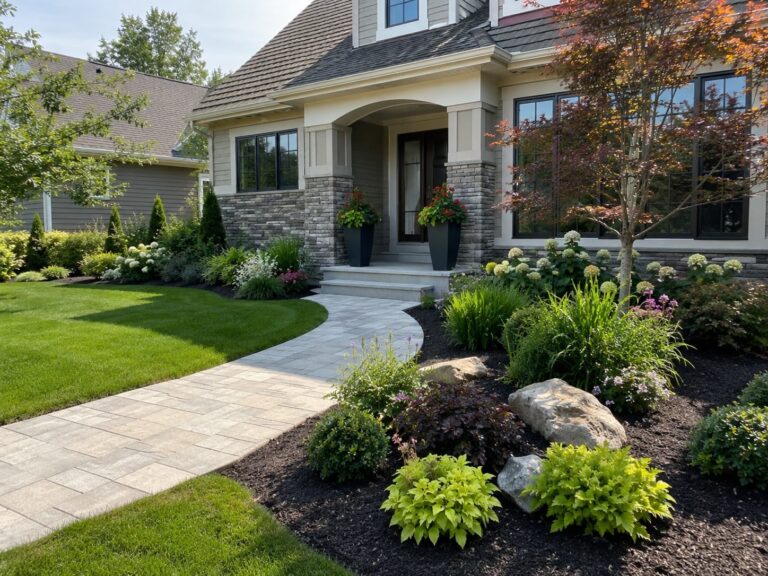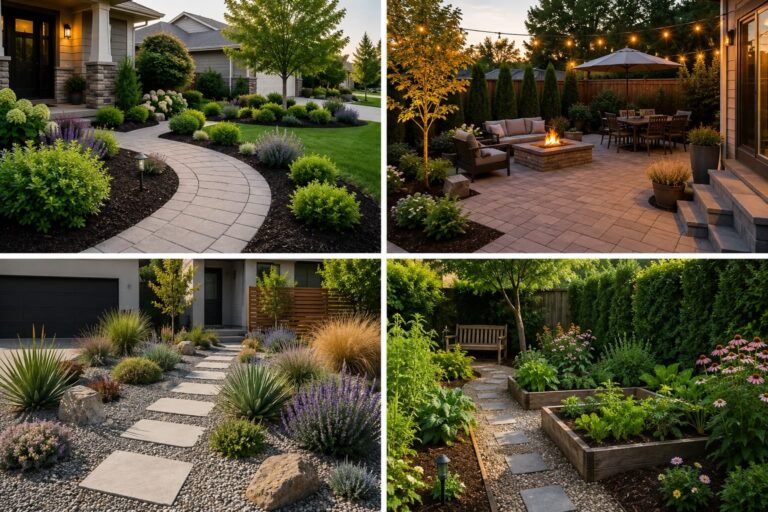
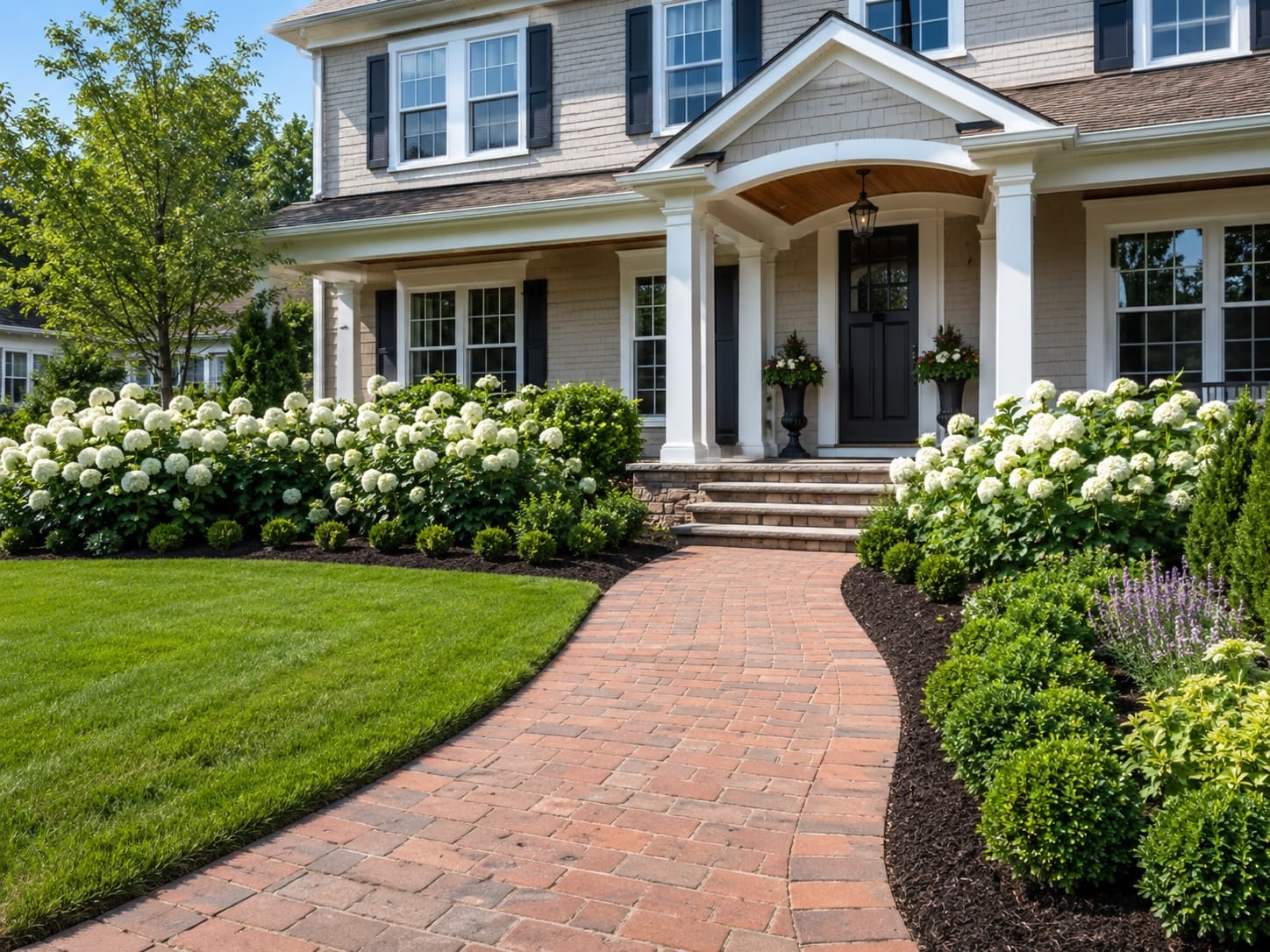
The front yard is the part of your home everyone sees first. Neighbors notice it. Guests walk through it. Buyers judge it before they even step inside. And honestly? You probably notice it too every time you pull into the driveway.
But improving curb appeal does not have to mean ripping everything out or hiring a full design crew for a massive makeover. In many cases, the biggest difference comes from a cleaner walkway, better plant layers, fresh mulch, smart lighting, and a front entry that feels intentional.
A great front yard should do three things well: guide people to the door, frame the home nicely, and look maintained without becoming a second job. 🌿 Let’s look at practical front yard landscaping ideas that can make your home feel more welcoming, polished, and attractive from the street.
Quick Summary
Front yard curb appeal improves when the landscape has clear pathways, healthy plantings, clean edges, balanced lighting, and a welcoming entry area. Start with structure, then add color and detail.
- Point one: Focus first on the walkway, front entry, lawn edges, and foundation beds.
- Point two: Use layered planting with shrubs, perennials, grasses, and small trees for depth.
- Point three: Choose upgrades that match your home style, climate, maintenance level, and budget.
🏡 Start With the View From the Street
Before buying plants or materials, stand across the street and look at your home like a visitor would. This simple step can reveal more than a dozen Pinterest boards.
Ask yourself: Is the front door easy to find? Does the walkway feel inviting? Are the shrubs hiding windows? Does one side of the yard feel heavier than the other? Is the lawn patchy or the mulch faded?
Curb appeal is about first impressions, but it is also about visual clarity. The front yard should help the eye move naturally from the street or driveway toward the entrance.
For many homes, the best starting points are:
- Cleaning up overgrown shrubs near windows and walkways.
- Defining the edge between lawn, beds, and hardscape.
- Refreshing mulch or groundcover areas.
- Improving the path to the front door.
- Adding one or two strong focal points near the entry.
These changes may sound basic, but they create the foundation for everything else.
🌱 Create a Clear and Welcoming Walkway
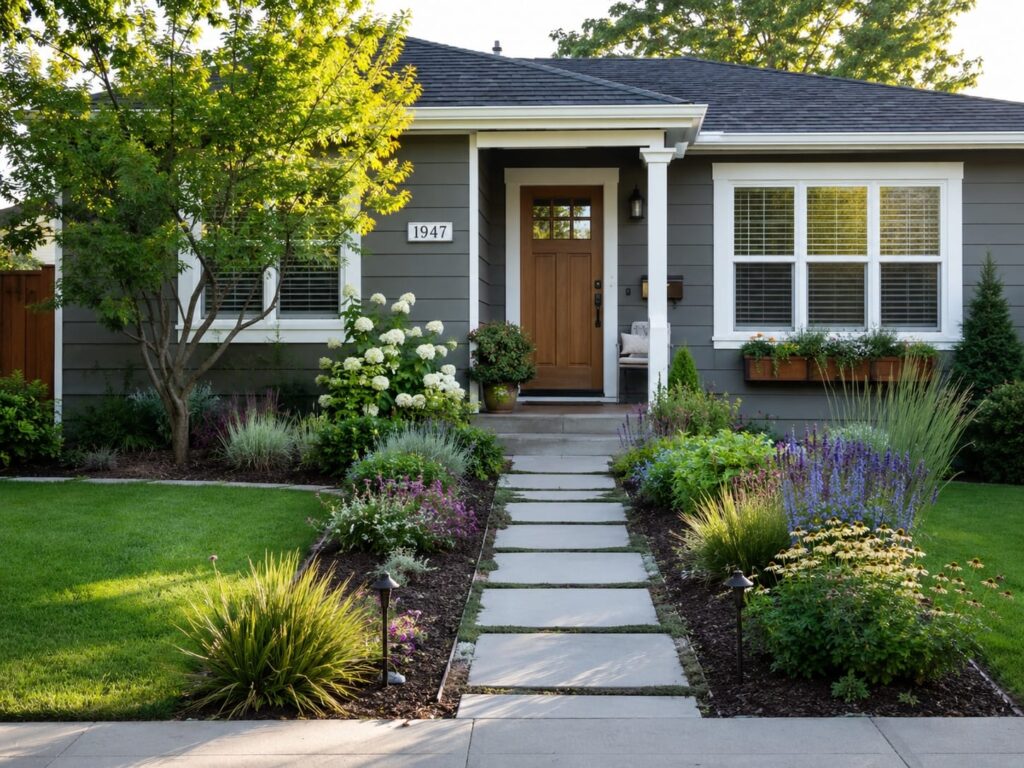
The walkway is one of the most important parts of front yard landscaping. It tells guests where to go and sets the mood before they reach the porch.
A narrow, cracked, or awkward walkway can make the whole front yard feel dated. A wider, well-placed path can make even a simple yard feel designed.
Choose the Right Walkway Shape
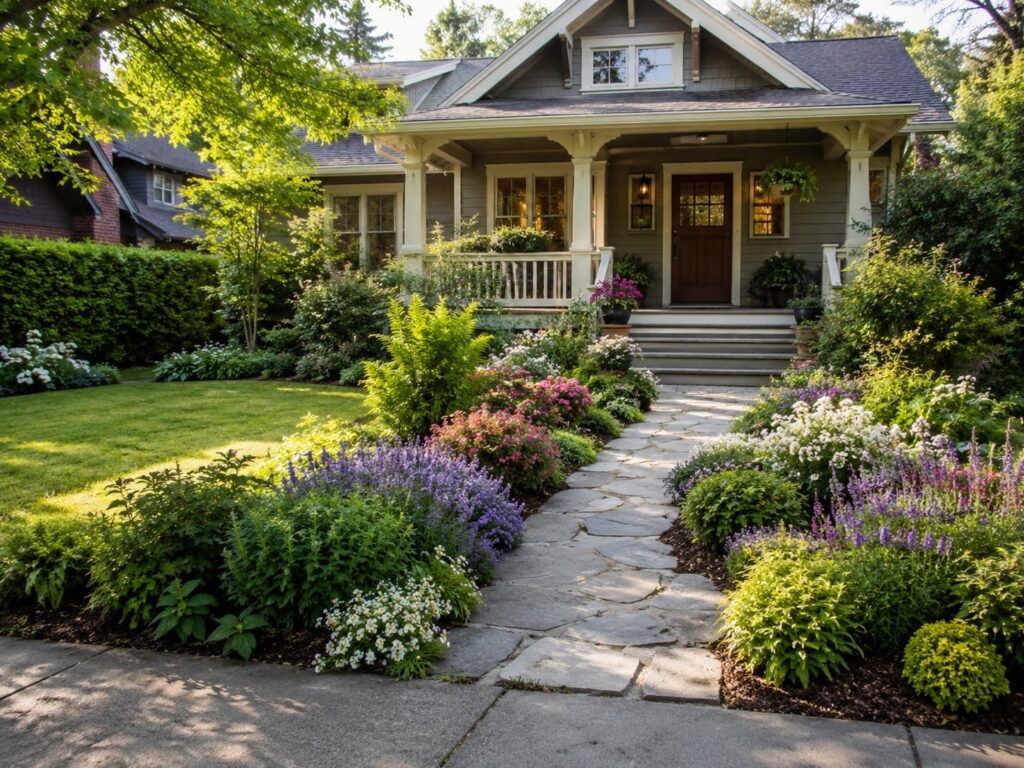
Straight walkways feel formal and direct. They work well with traditional, colonial, modern, and symmetrical homes. Curved walkways feel softer and more relaxed, especially when paired with garden beds or cottage-style planting.
There is no single best option. The right path depends on the home’s architecture, distance from the street, slope, driveway location, and how people actually approach the door.
Use Durable Materials
Common walkway materials include concrete, pavers, brick, flagstone, gravel, and natural stone. Pavers and stone can add texture and character, while poured concrete is often clean and practical.
If you live in an area with freeze-thaw cycles, heavy rain, clay soil, or tree roots, base preparation matters. A beautiful walkway will not stay beautiful if it shifts, settles, or holds water.
🌿 Refresh Foundation Planting Without Overcrowding
Foundation planting can either improve a home’s exterior or make it look smaller and darker. The goal is to soften the base of the house, not bury it.
Many older landscapes have shrubs that were planted too close to the house and then allowed to grow over windows, vents, and siding. Trimming helps for a while, but sometimes replacement is the better long-term fix.
Use Layers Instead of One Flat Row
A single row of identical shrubs can look stiff. A layered bed usually feels more natural and attractive.
Try this simple formula:
- Back layer: compact evergreen shrubs or small ornamental trees.
- Middle layer: flowering shrubs, ornamental grasses, or structured perennials.
- Front layer: low perennials, groundcovers, or seasonal color.
This creates depth, color, and movement while keeping the design organized.
Leave Space for Mature Growth
One of the biggest front yard landscaping mistakes is planting for how plants look today, not how they will grow. A small shrub in a nursery pot may eventually become six feet wide.
Check mature size before planting near windows, doors, walkways, driveways, and utilities. Giving plants enough room can reduce pruning and prevent the yard from looking crowded later.
🌸 Add Color in the Right Places
Color is great for curb appeal, but it works best when it is used strategically. You do not need flowers everywhere. In fact, too much scattered color can make the yard feel busy.
Focus color near high-impact areas: the front door, walkway edges, porch planters, mailbox, or a small focal bed. This makes the color feel intentional instead of random.
Use Seasonal Containers
Large planters near the front door are one of the easiest curb appeal upgrades. They add personality without requiring a full planting bed redesign.
For spring, you might use cool-season flowers and fresh greenery. In summer, drought-tolerant blooms and trailing plants can work well. In fall, ornamental cabbage, grasses, mums, and pumpkins can create a warm entry look. In winter, evergreen branches, berries, and simple outdoor decor can keep the entry from feeling bare.
Mix Flowers With Foliage
Flowers are not the only source of color. Burgundy foliage, blue-green evergreens, golden grasses, silver leaves, and dark mulch can all add contrast. Foliage color often lasts longer than blooms and can make the landscape look interesting even between flowering seasons.
🧱 Use Edging for a Cleaner, More Finished Look
Clean edges are one of the easiest ways to make a front yard look well cared for. Even a simple landscape looks better when the beds are clearly defined.
Edging separates mulch from grass, keeps gravel in place, and helps maintain the shape of planting beds. It also makes mowing and trimming easier in many cases.
| Front Yard Upgrade | Best For | Maintenance Level | Curb Appeal Impact |
|---|---|---|---|
| Fresh mulch | Making beds look clean and reducing weeds | Low to medium | High, especially near the entry and foundation |
| Stone or metal edging | Defining beds and keeping lines crisp | Low | High, because it makes the yard look organized |
| Layered shrubs | Adding structure around the house | Medium | High, especially when sized correctly |
| Path lighting | Improving safety and evening curb appeal | Low | Medium to high, depending on placement |
| Large entry planters | Adding seasonal color near the door | Medium | High, with a small footprint |
| Small ornamental tree | Creating a focal point and vertical interest | Medium | Very high when placed well |
🌳 Add a Small Tree for Height and Character
A front yard can feel flat if everything is the same height. A small tree adds vertical interest, shade, seasonal beauty, and a natural focal point.
Popular choices may include dogwood, redbud, Japanese maple, serviceberry, crape myrtle, magnolia varieties, or ornamental cherry, depending on your region and climate. The best option depends on mature size, sun exposure, soil conditions, and local disease pressure.
Place trees carefully. Avoid planting too close to the house, driveway, sidewalk, sewer lines, or overhead utilities. A tree that looks perfect on planting day can become a problem if it outgrows the space.
💡 Improve Front Yard Lighting
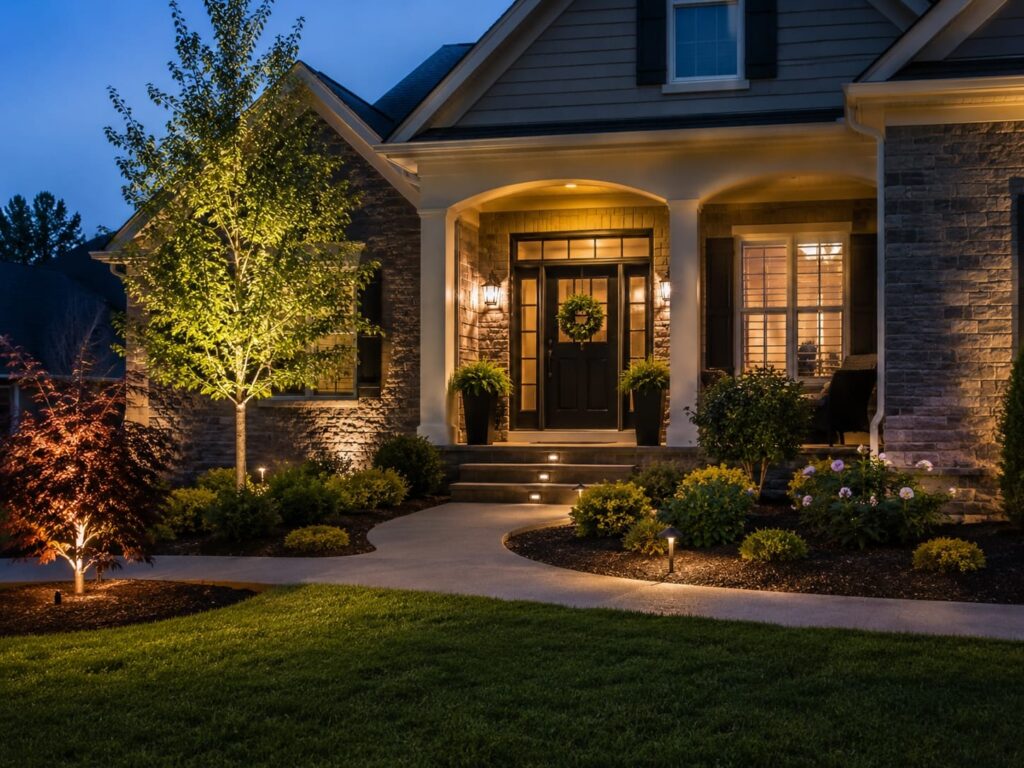
Outdoor lighting does more than help people see at night. It adds warmth, highlights the entry, and makes the home feel more cared for after sunset.
Path lights can guide visitors along the walkway. Uplighting can highlight a tree or architectural feature. Porch lights, sconces, and step lights can make the entrance safer and more welcoming.
Keep lighting soft and warm. The goal is not to make the front yard look like a parking lot. Subtle lighting usually creates a more elegant effect.
🚪 Make the Entry the Star
The front door should be the visual destination of the yard. If the landscaping pulls attention away from the entry, curb appeal suffers.
Simple upgrades near the door can make a big difference:
- Place matching planters on both sides of the door.
- Upgrade the house numbers so they are easy to read.
- Add a clean doormat and simple seasonal decor.
- Trim shrubs that block the porch or steps.
- Use lighting to make the entrance visible at night.
If your front door is set back or shaded, consider adding color nearby with planters, flowers, or a fresh door color that complements the exterior.
🌾 Consider Low-Maintenance Plant Choices
Front yard landscaping should look good, but it should also be realistic to maintain. If every plant needs special care, constant trimming, or frequent watering, curb appeal can fade quickly.
For a lower-maintenance front yard, choose plants that match your climate and property conditions. Group plants with similar water needs together. Use mulch to help reduce weeds and conserve moisture. Select shrubs that naturally fit the available space instead of forcing them into shape every month.
Good Planting Categories to Consider
Every region is different, but these categories are often useful in front yard design:
- Evergreen shrubs: structure and year-round color.
- Ornamental grasses: movement, texture, and seasonal interest.
- Flowering perennials: color without replanting every season.
- Groundcovers: weed suppression and soft bed edges.
- Small trees: shade, height, and focal points.
Local nurseries and extension resources can be helpful because they know which plants perform well in your area.
🪨 Use Gravel and Stone Thoughtfully
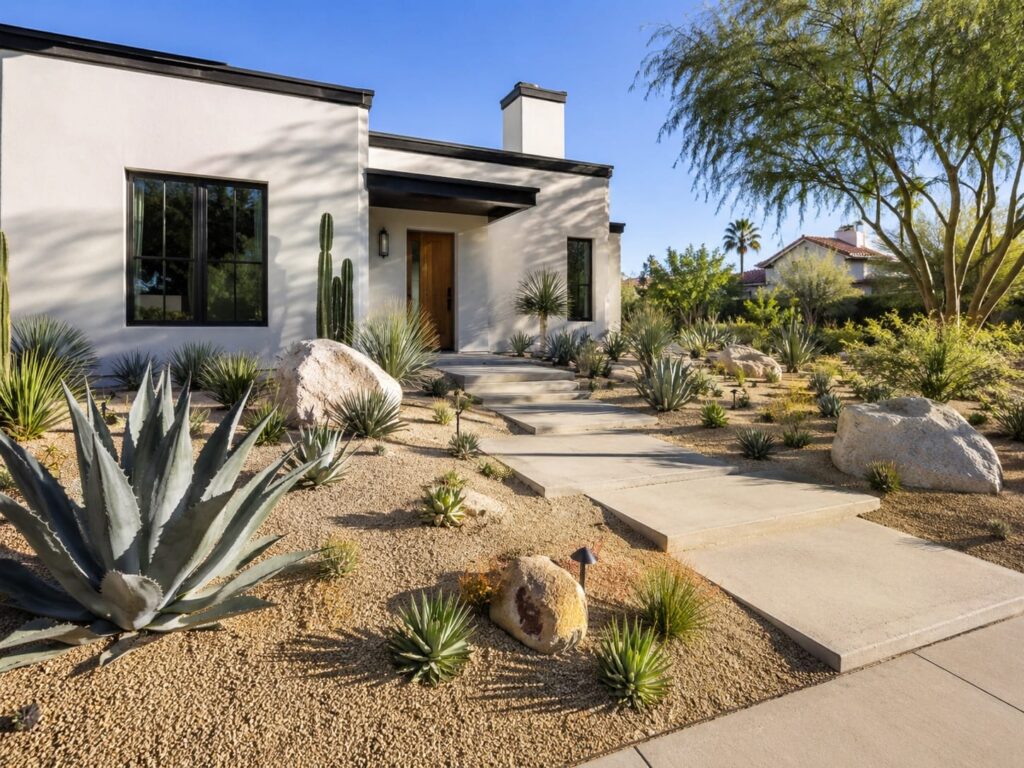
Gravel and stone can look modern, clean, and low-maintenance when used well. They are especially useful in dry climates, side yards, around stepping stones, or in areas where grass struggles.
But too much rock can make a front yard feel hot and harsh. It can also reflect heat toward the house and stress nearby plants in warm climates.
Balance stone with living plants. Mix gravel with ornamental grasses, drought-tolerant shrubs, boulders, and groundcovers so the yard still feels inviting.
🌧️ Do Not Ignore Drainage
Drainage problems can ruin even the prettiest front yard. If water pools near the foundation, washes mulch into the driveway, or leaves soggy spots by the walkway, address that before focusing on decorative upgrades.
Possible solutions may include regrading, downspout extensions, dry creek beds, French drains, rain gardens, or permeable hardscaping. The right option depends on your soil, slope, rainfall, and local requirements.
If you are dealing with water near the foundation or repeated erosion, it is worth talking with a qualified landscaper, drainage contractor, or local professional.
🛠️ Budget-Friendly Curb Appeal Ideas
You can improve curb appeal without doing everything at once. Start with projects that make the yard look cleaner and more intentional.
- Refresh mulch: A fresh layer can instantly revive tired planting beds.
- Shape existing shrubs: Pruning can reveal windows, walkways, and architectural details.
- Add planters: Large containers near the entry provide quick color.
- Install solar or low-voltage path lights: Lighting improves the yard after dark.
- Define bed edges: Crisp lines make the whole landscape feel more polished.
- Replace one tired plant: A single attractive focal shrub or small tree can shift the look of the yard.
If the budget is tight, work in phases. Do the cleanup first, then the walkway or edging, then plants, then lighting and finishing details.
✨ Make the Front Yard Match the House
The best curb appeal comes from a front yard that fits the home. A sleek modern home may look great with gravel, ornamental grasses, structured evergreens, and concrete pavers. A cottage-style house may feel better with curved beds, flowering perennials, natural stone, and a more relaxed layout.
Look at your roofline, siding, trim, porch, windows, and driveway materials. Then choose landscape shapes and materials that support that style instead of competing with it.
When the home and landscape feel connected, the entire property looks more valuable and cared for.
🌿 A Better First Impression Starts Outside
Improving curb appeal does not require a perfect yard. It requires a thoughtful one.
Start by making the entrance clear. Clean up overgrown areas. Add structure with edging, walkways, shrubs, and small trees. Use color near the places people notice most. Improve lighting. Choose plants that can thrive where they are planted.
Little by little, your front yard can become more than a patch of grass and a few shrubs. It can become a welcoming frame for your home — one that looks good from the street and feels good every time you come home. 🌼
❓ FAQ: Front Yard Landscaping and Curb Appeal
What is the easiest way to improve front yard curb appeal?
The easiest improvements are usually refreshing mulch, trimming overgrown shrubs, cleaning bed edges, adding planters near the front door, and improving walkway or porch lighting.
What plants are best for front yard landscaping?
The best plants depend on your climate, soil, and sun exposure. In many front yards, a mix of evergreen shrubs, ornamental grasses, flowering perennials, groundcovers, and one small ornamental tree works well.
How can I make my front yard look more expensive?
Use clean edges, repeated plant groups, quality mulch or stone, balanced lighting, and a clear focal point near the entry. A simple, well-maintained design often looks more expensive than a crowded one.
Should front yard landscaping be symmetrical?
Symmetry can work well for formal or traditional homes, especially around the entry. But asymmetrical designs can also look beautiful if the planting feels balanced and the walkway is clear.
How do I landscape a small front yard?
Use fewer plant varieties, keep the walkway clear, choose compact shrubs, add vertical interest with a small tree or tall planter, and avoid overcrowding. In small yards, clean lines and scale matter a lot.