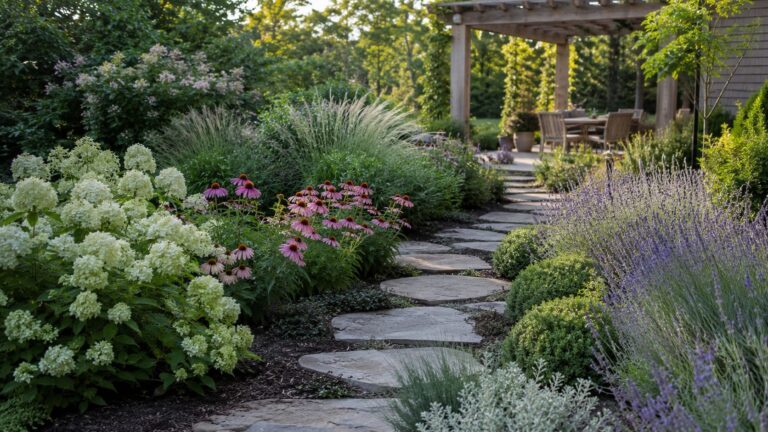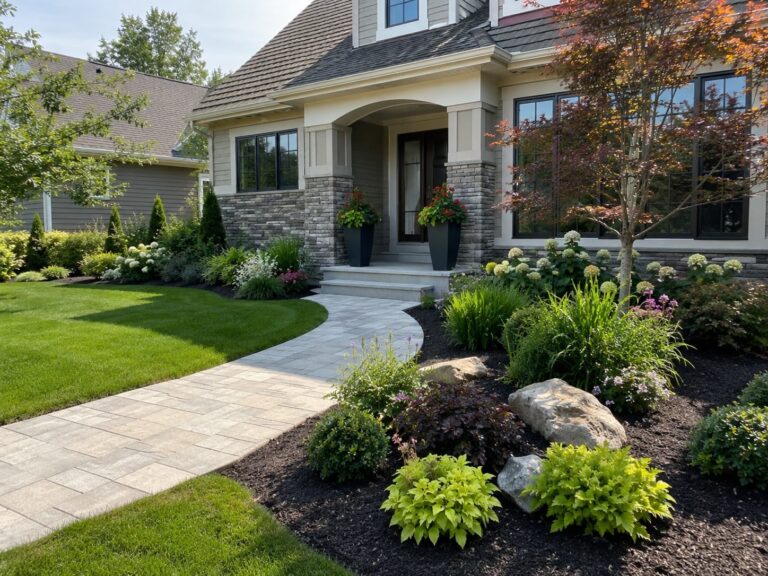
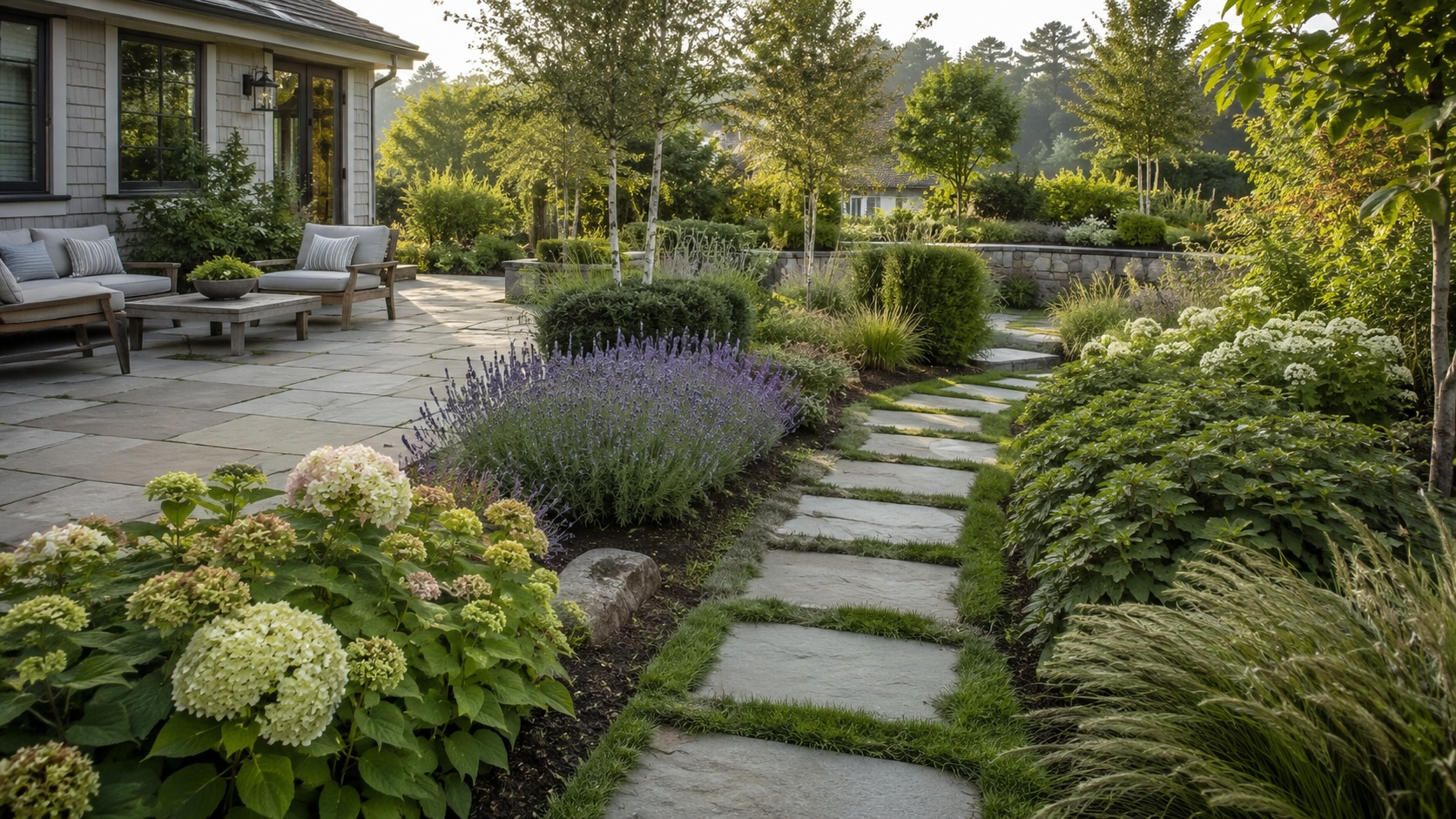
Your yard feels unfinished because the hard parts and the soft parts are out of balance, and the fix is usually simpler than people think.
A patio, walkway, or retaining wall gives a garden shape. Plants give it life. If you lean too hard on one side, the space gets either cold and empty or busy and hard to maintain. Most homeowners do not need more features, they need the right mix for a normal suburban lot, a real budget, and the amount of time they want to spend outside on weekends.
That balance also decides who should do what. A landscaper can handle grading, drainage, masonry, and layout. You may be better off choosing the plants, mulch, and simple seasonal upkeep.
A yard looks intentional when the structure holds up and the planting can grow without taking over.
Start with structure, then add life
Hardscaping is the built part of the yard, things like patios, walkways, retaining walls, edging, steps, and drainage features. Softscaping is the living part, trees, shrubs, perennials, turf, mulch, and groundcovers.
That split matters because each one does a different job. Hardscape gives the yard shape and solves practical problems. Softscape softens edges, adds color, and makes the space feel settled instead of bare.
On a normal suburban lot, the best yards usually start with one or two strong hardscape elements, then get filled in with plants that fit the site. A 12 by 14 foot patio with a clear path to the back door will usually do more for daily use than a bigger lawn with nowhere to sit. People use yards where they can stand, sit, and walk without thinking about it.
If the hardscape is right, the planting has room to work. If the planting is right, the hardscape stops looking harsh.
Balance also affects maintenance. Too much hardscape can make a yard feel hot, empty, and expensive to build. Too much planting can turn into constant trimming, thinning, and cleanup. Most homeowners want the middle ground, a yard that looks finished without becoming a second job. For planning ideas, browse landscaping and garden design alongside your local climate and HOA rules.
Think about how your yard gets used in real life. Kids need open space. Pets need durable paths. Adults need shade, privacy, and a place to set down a drink. The right mix of structure and planting supports all of that without crowding the lot.
Key takeaways
- Use hardscape to solve movement, seating, drainage, and grading problems first.
- Choose plants that fit the yard’s sun, soil, and maintenance level.
- Leave enough open space for daily use, then fill edges with layered planting.
Use hardscape to solve real problems
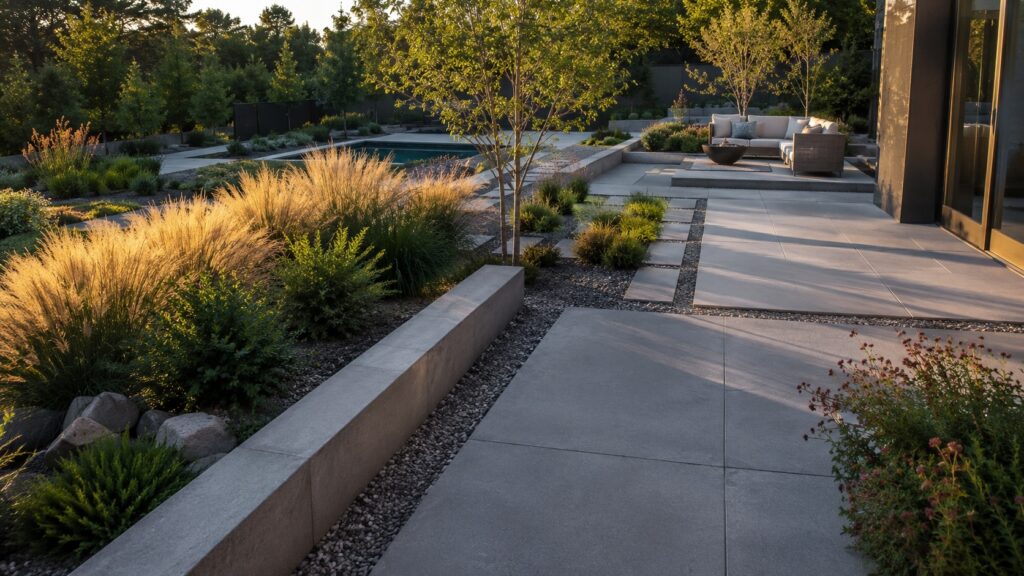
Hardscape earns its keep when the yard has a job to do. A patio gives you a flat place to sit. A walkway keeps mud off your shoes. Edging keeps mulch from washing into beds. Those are everyday fixes, not luxury add-ons.
On a normal suburban lot, the first question is not “What looks fancy?” It is “What keeps the yard usable?” If the back door drops straight into grass that stays wet, a short path or landing helps. If the yard slopes, a retaining wall may be doing more work than any plant ever could. If water pools near the house, drainage should come before flowers. Pretty does not matter much if the ground turns into a mess after rain.
Access matters too. You need a clear route for trash bins, mowers, hose reels, and people carrying food or tools. That is why a well-placed walkway often beats a wider lawn. It also explains why a small, level patio can feel bigger than a large but awkward yard. Good hardscape removes friction.
The best hardscape is the part you stop noticing because it makes the rest of the yard easier to use.
Keep the scope realistic. Most homeowners do not need walls everywhere or a maze of pavers. They need one or two structures that solve the real issues, then room for planting around them. That is where outdoor living and backyard design can help you think through layout without overbuilding the space.
If you are deciding what to build first, use this order:
- Drainage near the house and low spots.
- Access from doors, gates, and utility areas.
- Seating or circulation, like a patio or walkway.
- Edges and grade changes, only where they actually solve a problem.
| Option | Typical cost | Best for |
|---|---|---|
| Patio | $2,500 to $10,000+ | Outdoor seating and dining |
| Walkway | $1,500 to $6,000 | Clean access from house to yard |
| Retaining wall | $3,000 to $15,000+ | Slope control and grade changes |
| Edging and drainage fixes | $500 to $5,000 | Keeping beds neat and water moving |
Let softscape soften the edges
Plants do the job hard materials cannot. They bring color, movement, shade, privacy, and a sense that the yard belongs to the house instead of sitting there on its own. A good mix of lawn, ground cover, shrubs, and trees makes a space feel finished without making it feel stiff.
The trick is to match the plant to the job. Lawn gives you open space for kids, pets, and easy movement. Ground cover helps on slopes or under trees where grass struggles. Shrubs can screen a neighbor’s window or break up a long wall. Trees do the biggest work of all, but they need room, and they need time.
Growth is the part homeowners underestimate most. A small shrub can crowd a walkway in two seasons. A young tree can shade the patio later, but it can also lift edging or block a view if it is planted too close. Cheap plants get expensive when you have to keep correcting them.
That is why spacing matters as much as color. Leave room for mature width, not just the pot size at the nursery. Group plants in layers, then keep the tallest material where it will not fight the house, the fence, or the hardscape. If you want help thinking through plant structure and layout, landscaping and garden design is a good place to compare options before you buy anything.
A yard usually looks best a year after the install, not on installation day, because the plants have settled in and the edges start to feel intentional.
Maintenance should be part of the design, too. If you do not want to prune every month, skip fast-growing hedges and high-maintenance beds. If your soil stays wet, choose plants that can handle it instead of forcing a dry-site plant to survive. That kind of matching saves time and money, and it keeps the yard from turning into a weekend chore list.
From the field
Most planting mistakes show up later, after the shrubs have doubled in size and the tree canopy starts closing in. On paper, a bed can look balanced with young plants spaced tightly, but that same setup can feel crowded by year three. I always look at mature size, sunlight, and drainage first, because those three things decide whether the planting still works after the novelty wears off. Get that right at the start, and the garden keeps its shape without constant correction.
Build a garden balance that lasts
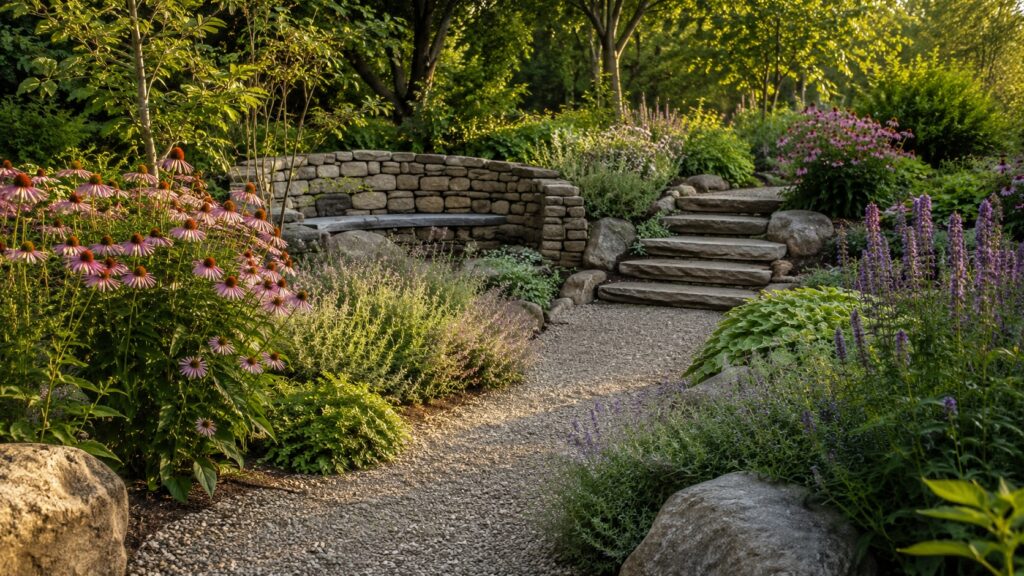
The best yards usually follow a simple split. Use enough hardscape to make the space usable, then let plants do the rest of the visual work. On a normal suburban lot, that often means one patio, one main path, and planted beds around the edges instead of paving every open area.
A good starting point is to keep hardscape under about one-third of the backyard, then fill the remaining space with lawn, beds, shrubs, and trees. That ratio is not a rule, but it keeps the yard from feeling hot, crowded, or overbuilt. In warmer USDA zones, a little more shade and planting can make the space usable in summer. In colder zones, you may want more structure and fewer delicate plants that need replacing.
HOA rules can shape the plan fast. Some neighborhoods limit fence height, require approval for visible retaining walls, or restrict tree removal. Local permits can matter too, especially for drainage changes, walls over a certain height, or work close to a property line. Check those details before the crew starts digging.
Focal points help the design feel intentional. One strong feature is usually enough, such as a fire pit, a specimen tree, a bench at the end of a path, or a small water feature. After that, keep the rest quieter. Too many features make the yard feel busy, and busy yards are harder to maintain.
Here is a practical split for most homeowners:
- Hire a pro for grading, drainage, retaining walls, patios, and anything near utilities.
- DIY simple planting, mulch, basic edging, and seasonal cleanup if you have the time.
- Mix both when the layout needs a contractor, but the beds and plant choices can be finished later.
A balanced yard is not packed full. It has one clear job for the hardscape, one clear job for the plants, and enough open space to breathe.
If you want the whole layout to feel connected, outdoor living and backyard design can help you line up seating, circulation, and planting before you spend money on materials. That is usually the point where a plan stops feeling random and starts feeling like a yard you can actually live with.
Plan the project before you plant
Good yards start with a tape measure, not a shopping cart. Measure the full space, then mark the parts that matter most, like the kitchen door, fence line, downspouts, shade, and any low spots that hold water after rain.
That quick map tells you where hardscape belongs and where plants can do the softer work. It also keeps you from overbuilding. A 12 by 14 foot patio may be plenty on a suburban lot, especially if the rest of the yard needs room for lawn, beds, or a play area.
Before you price anything, check permits, HOA rules, and utility locations. Retaining walls, drainage changes, and work near property lines can trigger approvals in a lot of US towns. Skipping that step is a fast way to lose time and money.
Then choose materials that fit your climate and your maintenance tolerance. In hot areas, lighter pavers and more shade help keep surfaces usable. In wet or cold areas, you may want simpler drainage details and tougher plant choices. If you want help thinking through the full layout, landscaping and garden design can give you a better framework before you commit.
Budget in layers so the project does not stall halfway through:
- Must-haves: grading, drainage, access paths, and the main patio or seating area.
- Good-to-have: edging, lighting, mulch, and a few anchor plants.
- Later: extra beds, decorative features, and anything that can wait until phase two.
Sequence matters too. Fix the ground first, then install hardscape, then run irrigation if needed, and plant last. That order protects roots, avoids damage to finished surfaces, and makes cleanup easier. A yard designed this way is easier to live with because each part has a job, and none of it has to be redone every season.
The cheapest yard is not the one with the lowest bid. It is the one that does not need to be fixed after the first year.
What is the right garden balance?
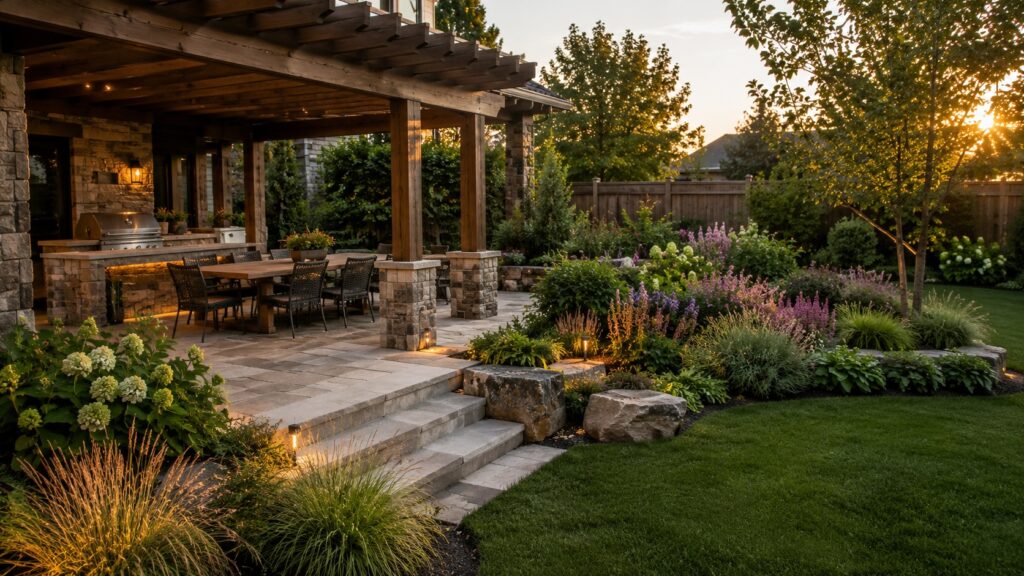
The right balance is the one your yard can support without turning into a maintenance job. For many suburban lots, that means using hardscape for function, then letting plants carry the rest of the look. A patio, a path, and a few strong planting beds usually do more than a yard full of separate features.
The 70/30 rule is a simple planning guide. In plain terms, many homeowners keep about 70% of the yard as planting, lawn, or open space, and about 30% as hardscape. That split is not a law. It just helps you avoid paving so much that the yard gets hot, stiff, and expensive to maintain.
The rule of 3 is about keeping the design readable. Use three main materials, three main plant groups, or three repeated features so the yard feels planned, not random. Too many colors, paver styles, or shrub types can make even a nice yard feel busy. Simple usually ages better.
Hardscaping is the built part of the yard, things like patios, walks, walls, edging, and steps. Softscaping is the living part, including grass, shrubs, trees, flowers, and groundcovers. Hardscape gives structure. Softscape adds color, shade, and movement.
A yard looks balanced when the built parts solve a problem and the planted parts make the space feel alive.
To balance a garden, start with the way you use it. Mark the path from the back door, the main sitting area, and any spots that need screening or shade. Then add plants where they can soften edges, frame views, and hide the parts of the yard that do not need to stay open.
A practical approach for most homeowners looks like this:
- Use hardscape for traffic, seating, drainage, and access.
- Use softscape for privacy, color, shade, and seasonal interest.
- Repeat a few choices so the yard feels calm and easy to maintain.
What is the 70 30 rule in gardening?
The 70/30 rule is a rough design guide that keeps most of the yard planted or open, with a smaller share devoted to hardscape. It helps prevent overbuilding on a normal lot. If your yard needs a patio, wall, or wide path, you can still use the idea as a check against paving too much.
What is the rule of 3 in landscaping?
The rule of 3 means using three repeated elements to make a landscape feel organized. That can be three plant types, three materials, or three focal points spaced with restraint. It gives the eye a pattern to follow, which is why it works better than scattering lots of different choices across a small yard.
What’s the difference between hardscaping and softscaping?
Hardscaping is everything built, and softscaping is everything living. Patios, retaining walls, and walkways are hardscape. Trees, shrubs, flowers, and turf are softscape. The built parts solve practical problems, while the planted parts make the yard feel softer, cooler, and more finished.
How do you balance a garden?
You balance a garden by matching structure to use. Start with the spots that need walking room, seating, shade, or drainage help, then fill the rest with plants that fit your climate and maintenance level. Keep the layout simple, repeat a few materials, and leave some open space so the yard can breathe.
Should I put in hardscape or plants first?
Hardscape usually comes first because grading, drainage, and foot traffic should be settled before planting. Once the patio, path, or wall is in place, you can add plants around it without tearing things up later. That order saves time, protects roots, and lowers the chance of rework after the first season.