Backyards usually start with a simple question: “Where are we actually going to sit?” Maybe you want a place for summer dinners, a grill station, a quiet coffee spot, or a better transition from the house to the yard. Then comes the bigger decision: should you build a deck or a patio?
Both can be great outdoor living spaces. A deck can feel like an extension of the house, especially when your back door sits above ground level. A patio can feel grounded, durable, and natural, especially when it connects directly to landscaping. But the best choice depends on your property, budget, lifestyle, maintenance expectations, and local building rules.
Let’s walk through the practical differences so you can choose the outdoor structure that actually makes sense for your home. 🏡
Quick Summary
A deck is often better for raised entrances, sloped yards, and homes where you want an elevated outdoor room. A patio usually makes more sense for ground-level spaces, lower maintenance, and a more integrated backyard design.
- Choose a deck: if your yard slopes, your door is elevated, or you want a raised entertaining space.
- Choose a patio: if you want a durable ground-level area with fewer structural concerns.
- Compare carefully: cost, drainage, permits, privacy, maintenance, and long-term use all matter.
🌿 What Is the Main Difference Between a Deck and a Patio?
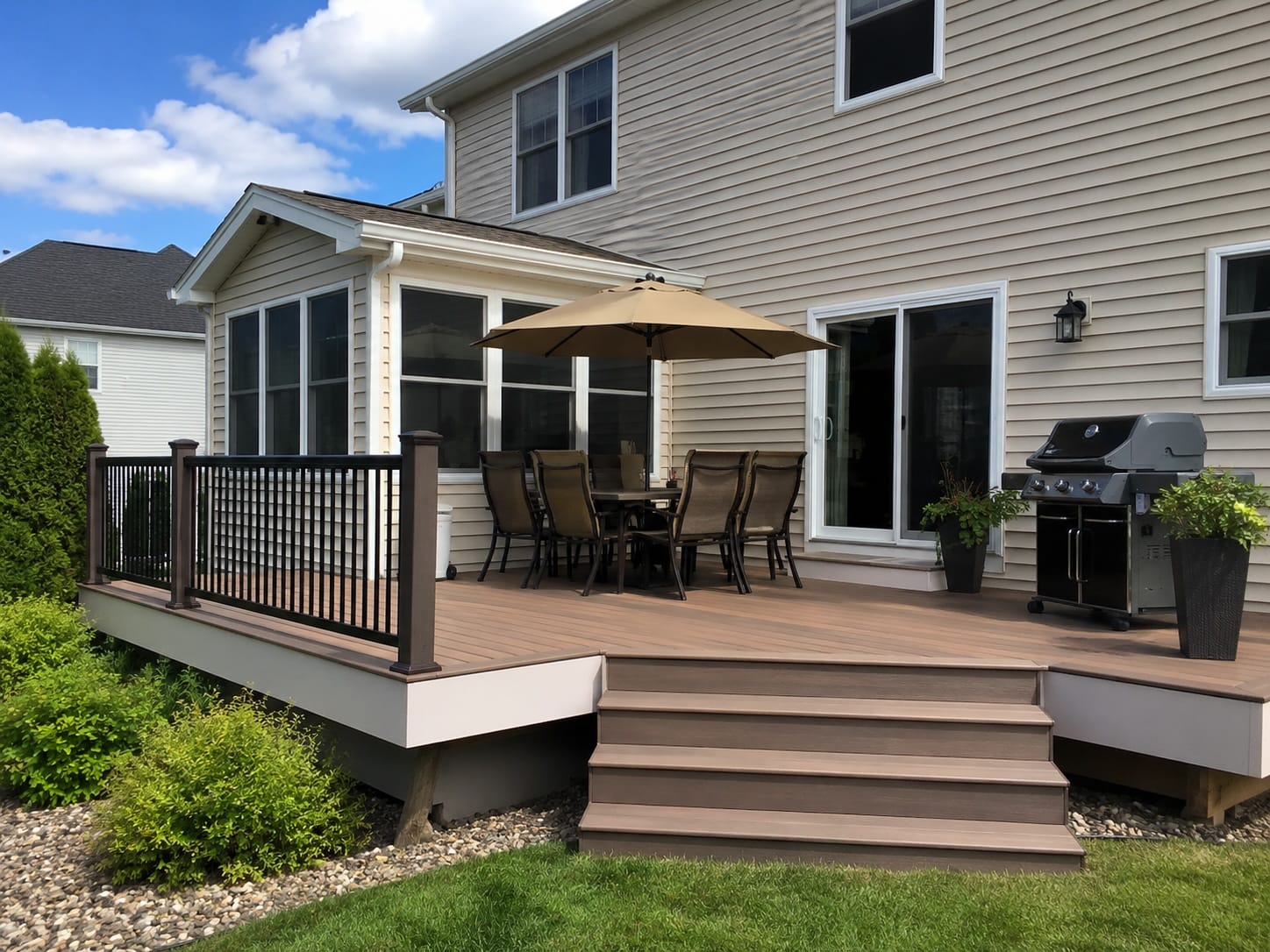
A deck is usually a raised platform built from wood, composite, PVC, or similar decking materials. It is often attached to the house, supported by posts and framing, and may require railings depending on height and local code.
A patio is a ground-level outdoor surface made from materials like concrete, pavers, brick, flagstone, gravel, or natural stone. It sits directly on a prepared base and is usually integrated into the yard or landscaping.
That simple difference — raised versus ground-level — affects almost everything: cost, permits, construction time, maintenance, safety, drainage, privacy, and how the space feels.
🏡 When a Deck Makes More Sense
A deck can be the right choice when your home’s layout naturally points upward. If your back door opens several feet above grade, a patio may require stairs, retaining walls, grading, or a less convenient layout. In that case, a deck can create a smooth transition from indoors to outdoors.
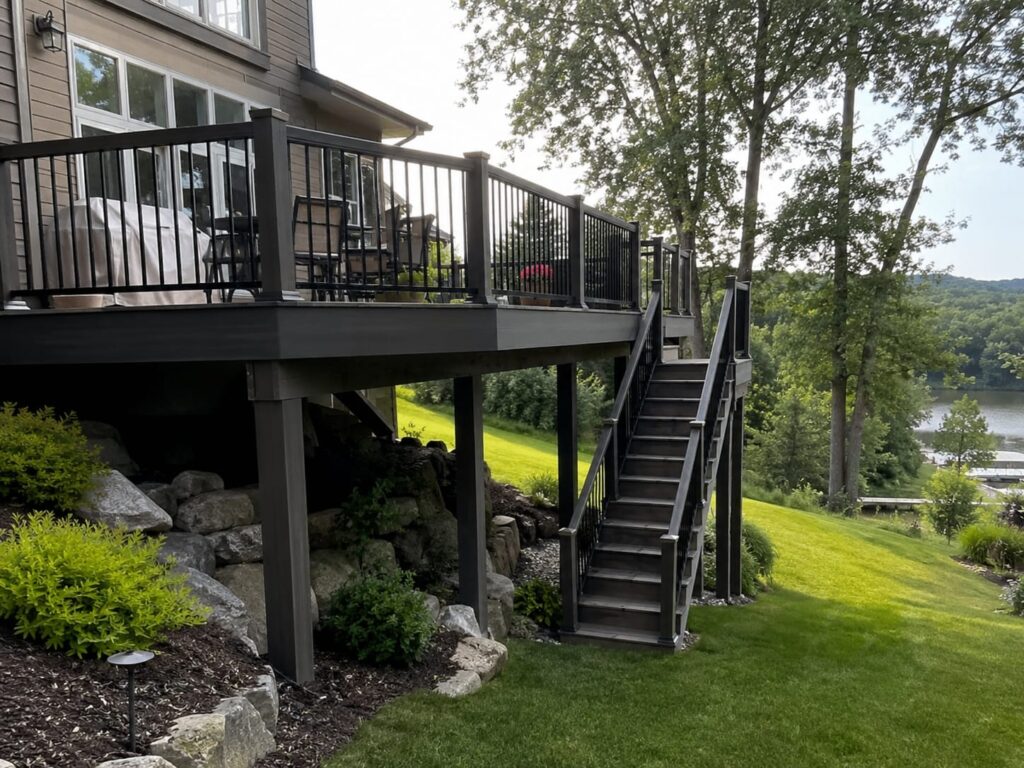
Decks also work well on uneven or sloped yards. Instead of moving a lot of soil or building major retaining structures, a deck can be built above the slope with proper support. This is one reason decks are common on hillside lots, lake homes, and raised foundations.
A deck may be a good fit if you want:
- A direct extension from the kitchen, dining room, or living room
- An elevated view of the yard, pool, woods, lake, or neighborhood
- A level outdoor space on a sloped property
- Room underneath for storage, shade, or a lower patio
- A lighter structure that feels connected to the house
Decks are especially useful for entertaining. Guests can move from the kitchen to the grill or seating area without stepping down into the yard. That convenience matters more than people think.
🧱 When a Patio Makes More Sense
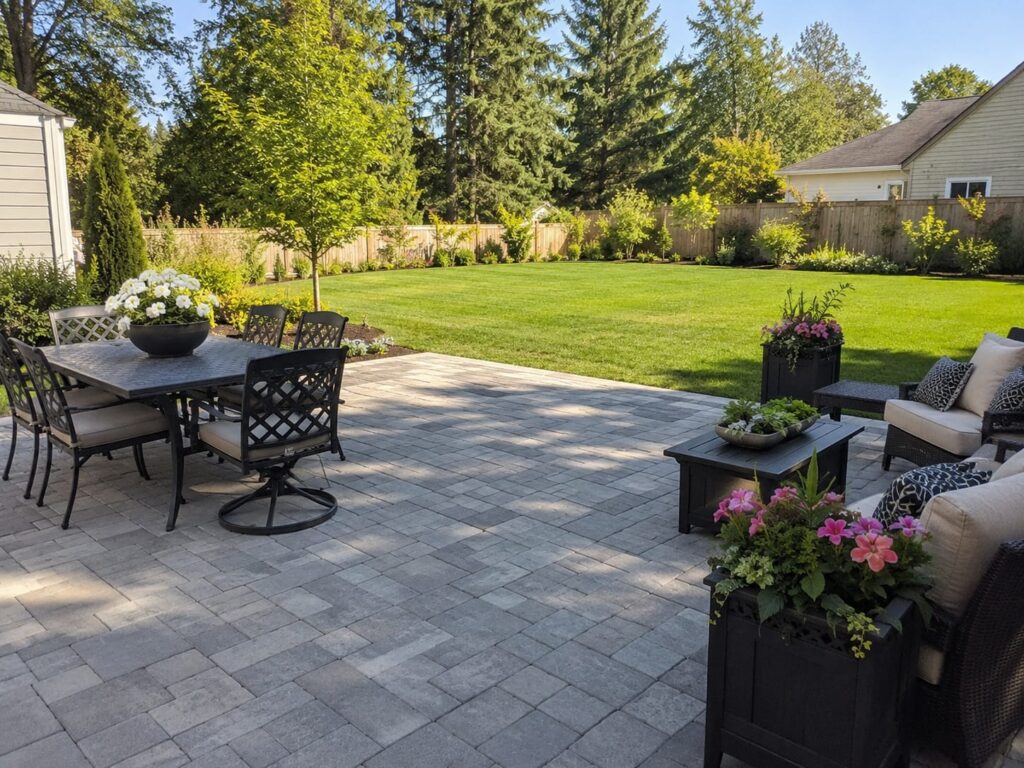
A patio is often the smarter choice for a ground-level backyard. It feels stable, permanent, and connected to the landscape. If your yard is relatively flat and your door opens close to grade, a patio can be simple, beautiful, and practical.
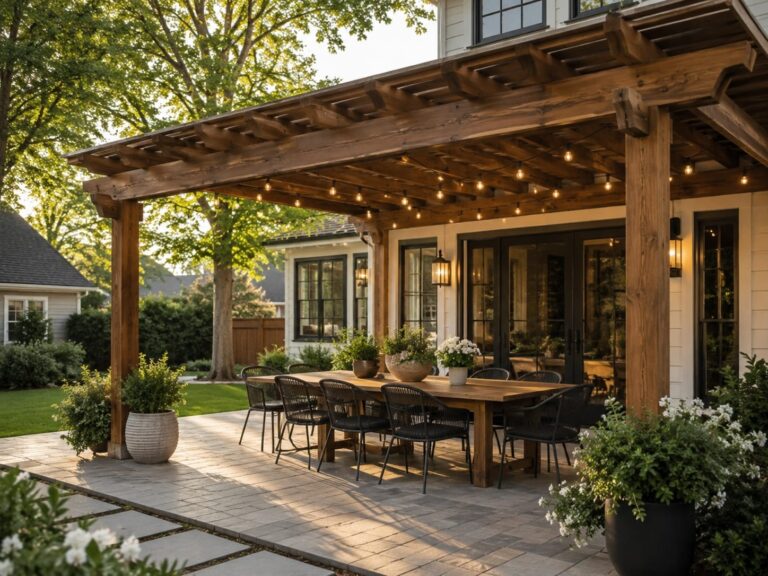
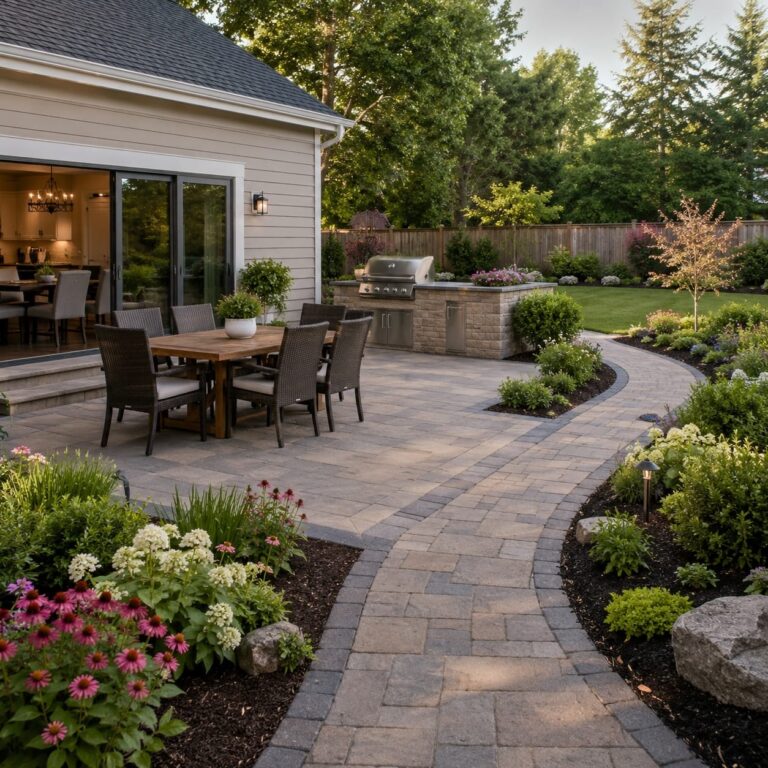
Patios also offer more design flexibility at ground level. You can curve them around planting beds, connect them to paths, frame them with seat walls, or place them under a pergola. They can feel less like an “add-on” and more like part of the yard.
A patio may be a good fit if you want:
- A durable outdoor surface for dining, lounging, or fire pits
- A space that blends with landscaping and garden beds
- Lower long-term structural maintenance than many decks
- More flexibility with shapes, borders, and hardscape design
- A ground-level space with easy access to the lawn or garden
For many homeowners, a patio is the more practical “everyday” outdoor space. It is easy to walk onto, easy to connect to pathways, and often easier to expand later.
💰 Deck vs Patio Cost: Which Is More Affordable?
Cost depends heavily on size, materials, site conditions, labor rates, design complexity, and your region. A basic concrete patio may cost less than a raised deck, while a premium natural stone patio may cost as much as — or more than — a mid-range deck.
In broad terms, patios are often more budget-friendly when the yard is flat and access is easy. Decks can become more expensive because they require framing, footings, hardware, stairs, railings, and structural planning.
But site conditions can flip the decision. If your yard is steep, a patio may require excavation, drainage work, retaining walls, or extensive grading. In that case, a deck may be more practical.
| Factor | Deck | Patio | What to Consider |
|---|---|---|---|
| Best location | Raised entrances, slopes, elevated views | Flat or gently sloped ground-level yards | Start with your home’s door height and yard grade |
| Typical structure | Framed platform on posts or supports | Surface installed over a compacted base | Decks are structural; patios depend heavily on base preparation |
| Maintenance | Varies by material; wood needs regular care | Usually lower, but joints, cracks, and weeds may need attention | Think beyond installation cost |
| Permits | Often required, especially if attached or elevated | May be required depending on size, drainage, and local rules | Check local building and zoning requirements before starting |
| Design feel | Outdoor room connected to the house | Grounded landscape feature connected to the yard | Choose based on how you want the space to feel |
🛠️ Maintenance: What Will You Actually Have to Take Care Of?
This is where many homeowners underestimate the decision. A beautiful outdoor space is only enjoyable if you can keep up with it.
Deck maintenance
Deck maintenance depends on the material. Traditional wood decks can look warm and natural, but they often need cleaning, staining, sealing, and occasional board replacement. Sun, moisture, foot traffic, and freeze-thaw cycles can all wear them down.
Composite and PVC decking typically require less routine maintenance than wood, but they still need cleaning. They can also cost more upfront. Some materials get hot under direct sun, so that is worth considering if your deck will be exposed all afternoon.
Patio maintenance
Patios are often considered lower maintenance, but they are not maintenance-free. Concrete can crack. Paver joints may need fresh sand. Weeds can appear between stones. Natural stone may shift if the base was not prepared correctly.
That said, a well-built patio with proper drainage and a solid base can be very durable. For homeowners who want a long-lasting ground-level space without annual staining or sealing, a patio is often appealing.
🌧️ Drainage and Yard Conditions Matter More Than You Think
Water is a major part of the deck versus patio decision.
A patio must be installed with proper slope so water moves away from the house. If the patio directs water toward the foundation, you can create bigger problems than outdoor seating ever solved. Good base preparation, grading, and drainage are essential.
A deck allows water to pass through the boards or drain below, but that does not mean drainage can be ignored. The area under a deck can become muddy, damp, or unusable without planning. If the deck attaches to the house, flashing and ledger installation are especially important to help prevent water damage.
If your yard already has drainage issues, pooling water, or a steep slope, talk with a qualified contractor or landscape professional before choosing a structure.
🧭 How Will You Use the Space?
A deck and a patio can both hold furniture, grills, planters, and outdoor decor. But the way people move through the space may feel different.
A deck is often best for:
- Outdoor dining close to the kitchen
- Grilling near the back door
- Enjoying a view
- Creating an upper-level lounge
- Connecting to stairs down to the yard
A patio is often best for:
- Fire pits or outdoor fireplaces
- Large lounge zones
- Garden seating areas
- Outdoor kitchens on a stable surface
- Connecting multiple backyard paths or zones
Think about the first thing you want to do outside. Carry food from the kitchen? Watch kids play in the yard? Sit around a fire? Host weekend dinners? The “right” structure is the one that supports your real habits.
🔥 Fire Pits, Grills, and Outdoor Kitchens
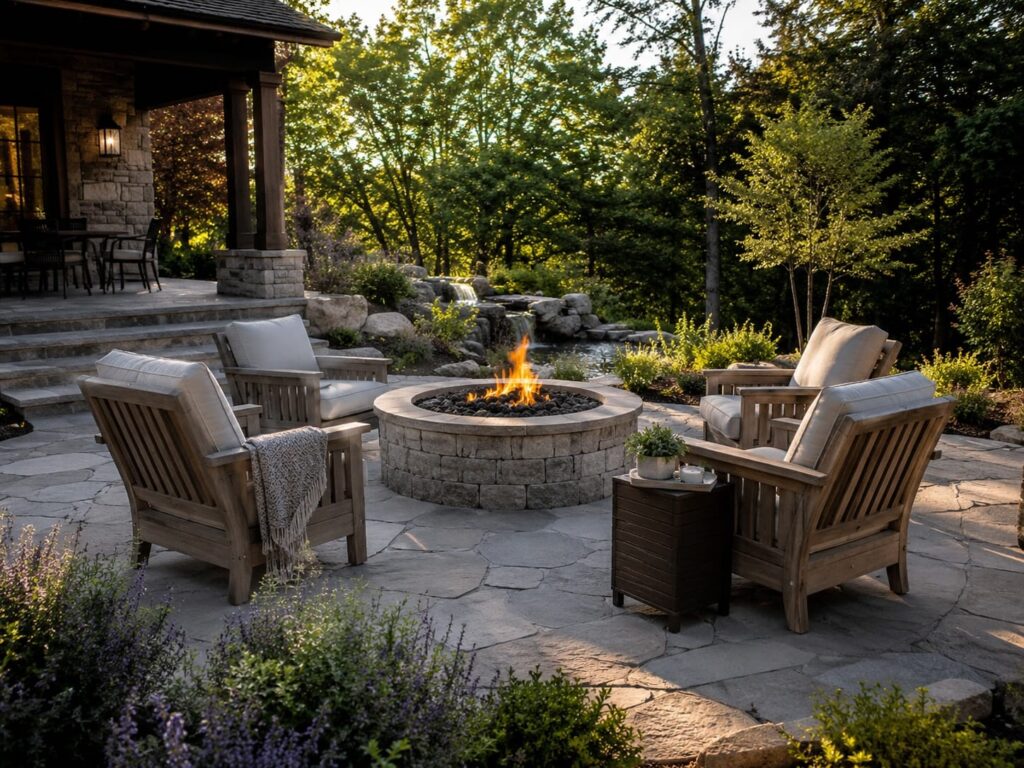
If you are planning a fire pit, patio areas usually have an advantage because they are built with masonry, stone, concrete, or pavers. Fire features still need safe clearance, local code compliance, and careful placement, but a patio often provides a more suitable surface.
Decks can support grills and sometimes outdoor kitchens, but weight, heat, grease, ventilation, and fire safety need extra thought. Protective mats, proper clearances, and manufacturer instructions matter. For heavy outdoor kitchen setups, you may need structural planning.
For any gas line, electrical work, fireplace, or built-in cooking feature, work with qualified professionals and check local requirements.
🌤️ Shade, Privacy, and Comfort
Comfort is not just about furniture. It is about sun, wind, privacy, and how exposed the space feels.
A raised deck may feel more open and breezy, but it can also feel more exposed to neighbors. Railings, privacy screens, pergolas, planters, and shade sails can help. If the deck faces west, afternoon sun may be intense.
A patio can be easier to tuck into landscaping. Shrubs, small trees, fences, pergolas, and garden walls can create privacy and shade at ground level. A patio surrounded by planting beds often feels cozy and protected.
Before building, stand in the yard at different times of day. Notice where the sun hits, where wind comes from, and what neighbors can see. That quick observation can prevent a lot of regret later.
📋 Permits, Codes, and HOA Rules
Decks often trigger more permitting requirements because they are structural, attached to the house, or elevated above grade. Railings, stairs, footings, ledger boards, load capacity, and setbacks may all be regulated.
Patios may also require approval depending on size, lot coverage, drainage impact, materials, and local zoning rules. If you live in a homeowners association, design, color, height, material, and placement may need review.
Do not assume a “simple backyard project” is automatically exempt. Check your local building department and HOA rules before hiring a contractor or ordering materials.
🏠 Which Adds More Value to a Home?
Both a deck and a patio can improve how a home lives and feels. The value depends on the quality of installation, how well the structure fits the house, and whether buyers in your area want outdoor living space.
A well-designed deck can make a raised back entrance much more useful. A beautiful patio can make a flat backyard feel finished and inviting. Poor installation, awkward placement, drainage issues, or high maintenance materials can reduce the benefit.
Instead of asking only which one adds more resale value, ask: Which one makes this specific home more functional? That usually leads to the better investment.
🤝 What About Building Both?
For some homes, the best answer is not deck or patio. It is both.
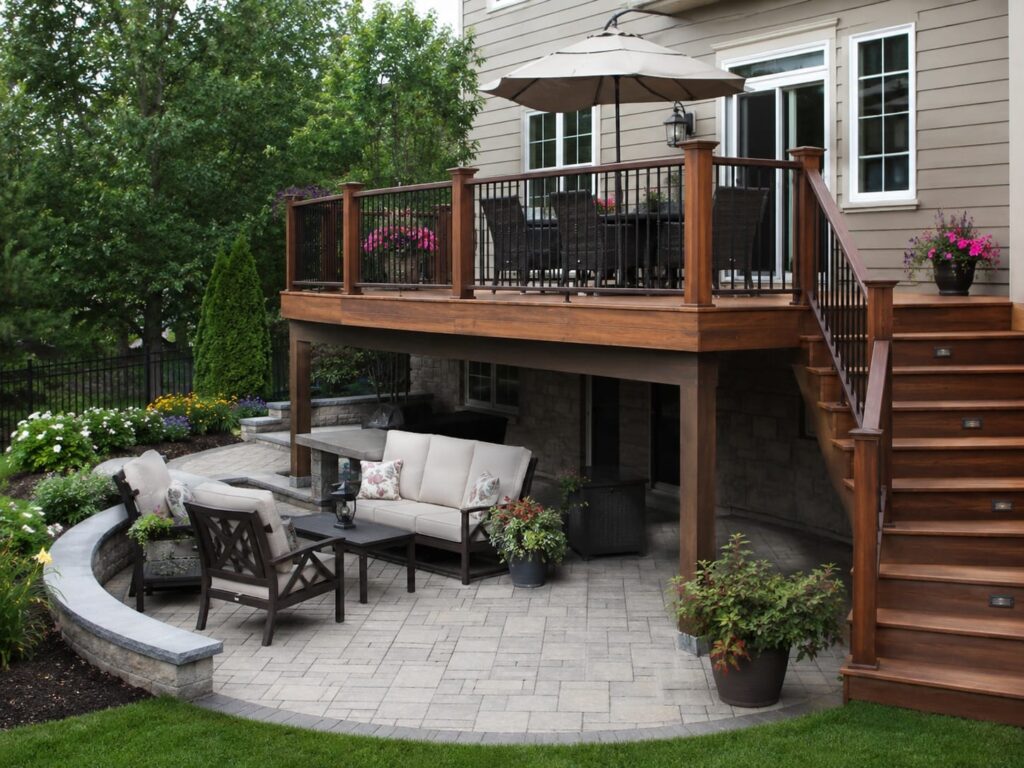
A raised deck can connect the house to the outdoors, while stairs lead down to a patio with a fire pit, dining zone, or garden lounge. This layered layout works especially well on sloped yards or walkout basements.
Just be careful not to overbuild. Outdoor spaces should feel connected, not scattered. Materials, colors, railings, steps, lighting, and planting beds should work together.
✅ How to Decide: A Simple Homeowner Checklist
Use this quick checklist before making the final call:
- Your door height: Is the back entrance raised or close to the ground?
- Your yard slope: Is the area flat, uneven, or steep?
- Your main use: Dining, grilling, fire pit, lounging, view, or garden access?
- Your maintenance comfort: Are you okay with staining wood, cleaning joints, or sealing surfaces?
- Your budget: Are site prep, stairs, railings, drainage, and permits included?
- Your climate: Will heat, freeze-thaw, moisture, or sun exposure affect material choice?
- Your rules: Do your city, county, or HOA requirements limit either option?
If most answers point toward elevation and house connection, a deck may be the better fit. If most answers point toward ground-level use, landscaping, and durability, a patio may make more sense.
🌿 The Better Choice Is the One That Fits Your Yard
A deck can be fantastic when you need elevation, views, or a smooth transition from the home. A patio can be the better long-term choice when you want a grounded, durable, landscape-friendly outdoor room.
There is no universal winner. The best outdoor space is the one that fits your property, your climate, your budget, and the way you actually spend time outside. Start with your yard’s layout, then choose materials and features that make the space comfortable, safe, and easy to enjoy. ✨
❓ FAQ: Deck vs Patio
Is a deck more expensive than a patio?
Often, yes, especially if the deck is raised, attached to the house, or includes stairs and railings. However, premium patios with natural stone, major grading, or retaining walls can also become expensive.
Which lasts longer, a deck or a patio?
A well-built patio can last a very long time with proper base preparation and drainage. Deck lifespan depends heavily on material, construction quality, moisture exposure, and maintenance.
Do I need a permit for a deck or patio?
Decks often require permits because they are structural and may involve stairs, railings, and attachment to the home. Patios may also require approval depending on local rules, size, drainage, and lot coverage.
Is a patio better for a fire pit?
In many cases, yes. Patios made from concrete, pavers, or stone are usually more suitable for fire features than decks. Still, fire pits require safe placement, proper clearances, and compliance with local rules.
Can I build a deck over a patio?
Sometimes, but it depends on the condition of the patio, drainage, height, structural design, and local code. A contractor should inspect the site before you build over an existing surface.
Which is better for a sloped yard?
A deck often works better on steep or uneven yards because it can create a level platform above the slope. A patio may still work, but it may require grading, retaining walls, or drainage improvements.