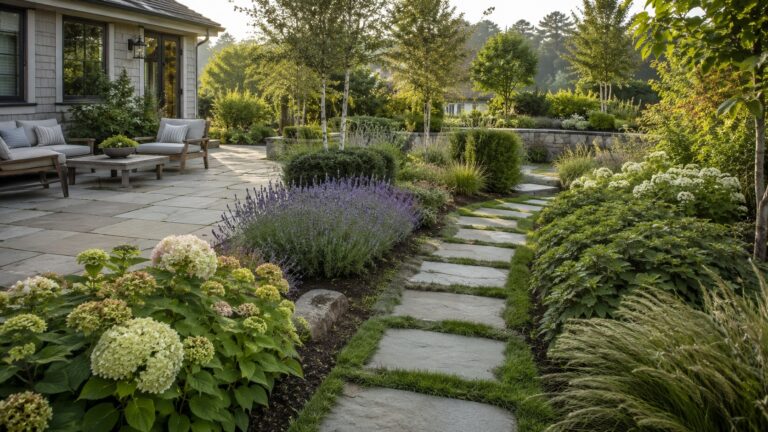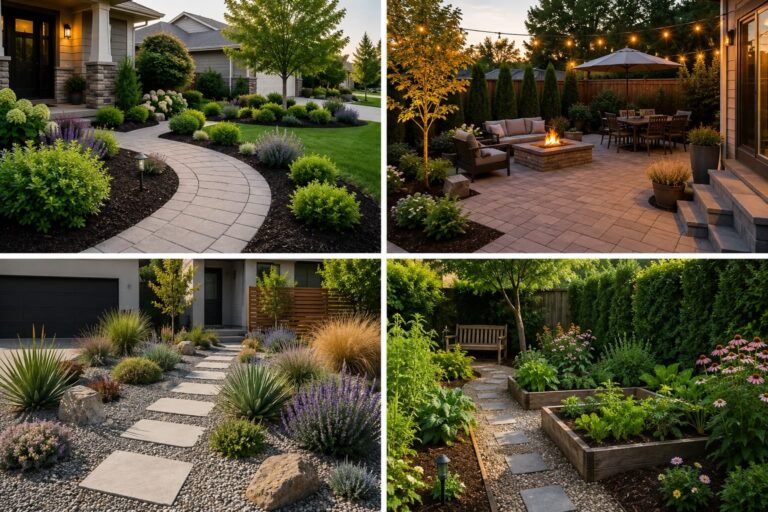
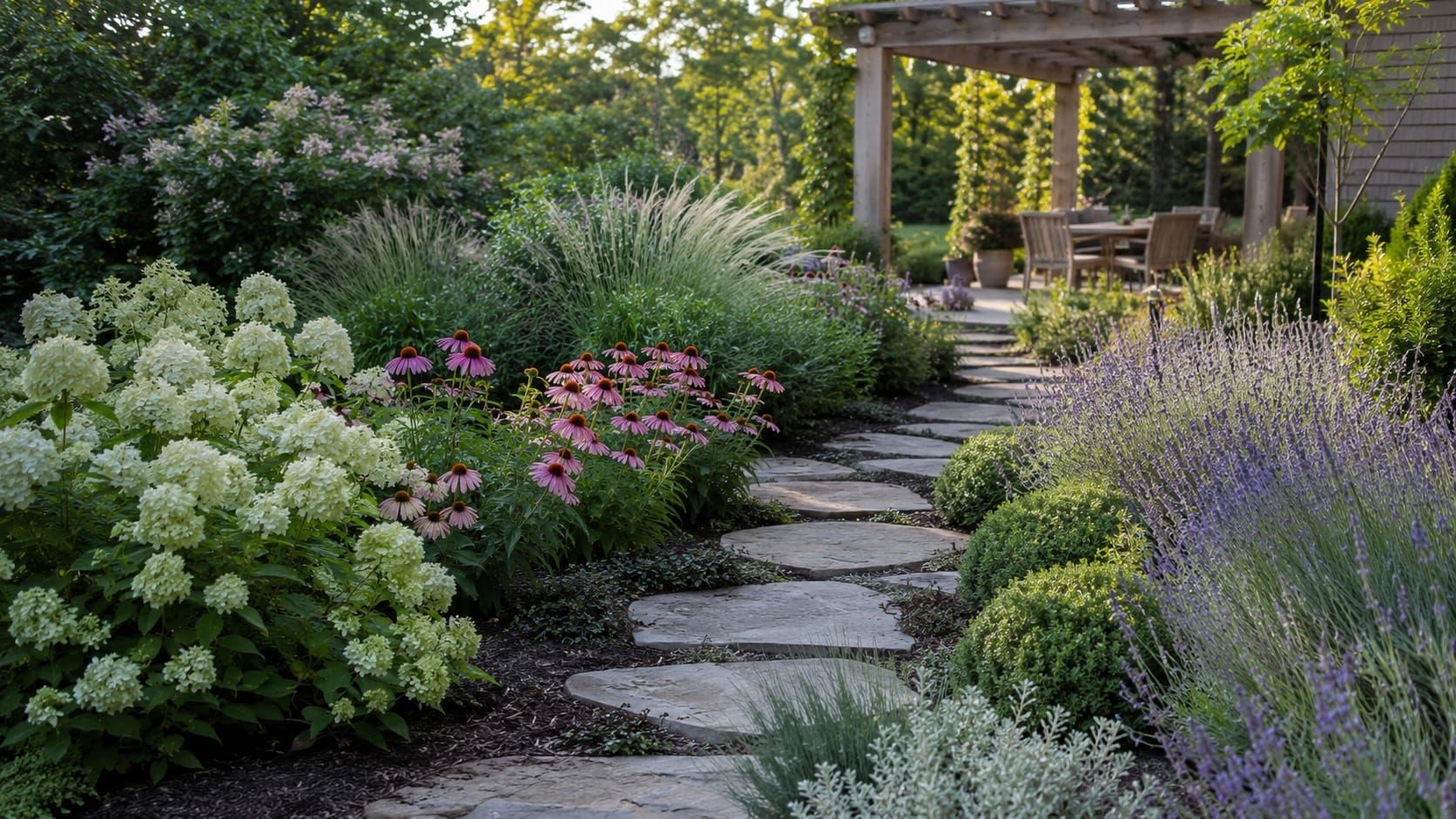
Most homeowners pick plants backward, then wonder why the yard feels messy, crowded, or high-maintenance by year two. The real job is choosing plants that fit your space, climate, and time, so the landscape looks intentional without turning into a weekend chore.
A plant that looks great in a nursery can become a problem fast on a normal suburban lot. A shrub that reaches 8 feet wide will crowd a 4-foot foundation bed. A fast-growing tree can shade the lawn, lift a sidewalk, or block a window if you do not plan for its mature size. That is where most “easy” projects go sideways.
Good garden design is not about filling every gap. It is about choosing plants that still fit after five summers, one hard winter, and a busy month when nobody gets outside to prune.
The right mix lets you handle some of the work yourself, while a landscaper handles the parts that need grading, drainage, or a clear design plan.
Start with your site conditions
Plant choice gets easier when you stop starting with color and start with the yard itself. Sun, shade, soil, drainage, space, and your USDA hardiness zone tell you what will actually live there without constant rescue work.
A bed that gets full afternoon sun needs different plants than a side yard under maple trees. A clay-heavy lot that stays wet after rain needs different roots than a sandy yard that dries out fast. The site decides the plant list, not the other way around.
Before you buy anything, walk the yard at different times of day and notice where the light really lands. A spot that feels bright in the morning may be shaded by 2 p.m. That matters for flowering shrubs, vegetables, and even low groundcovers.
- Check how many hours of direct sun each bed gets in summer.
- Dig a small hole after rain and see how long water hangs around.
- Measure the space, then compare it to the plant’s mature width and height.
- Use your USDA hardiness zone to rule out plants that will struggle in winter.
Drainage problems and cramped spacing cause more plant failures than bad taste. If a shrub needs 6 feet of width and your bed is only 4 feet deep, it is the wrong plant, no matter how good it looks at the nursery.
A plant that fits the site will usually look better with less work than a “perfect” plant forced into the wrong spot.
Once those basics are clear, style choices get simpler. You can use texture, bloom time, and evergreen structure to make the yard feel planned. If you need help connecting plant choices to the rest of the layout, landscaping and garden design ties those pieces together.
Key takeaways
- Match plants to sun exposure first, then narrow choices by color and texture.
- Test drainage after rain so you avoid plants that rot in wet soil.
- Use mature size and hardiness zone to prevent overcrowding and winter loss.
Match plants to the job
Good plant choice starts with function. A hedge for privacy has a different job than a perennial border by the walk, and a slope needs different plants than a flat front bed. If you match the plant to the job, the yard looks organized without constant editing.
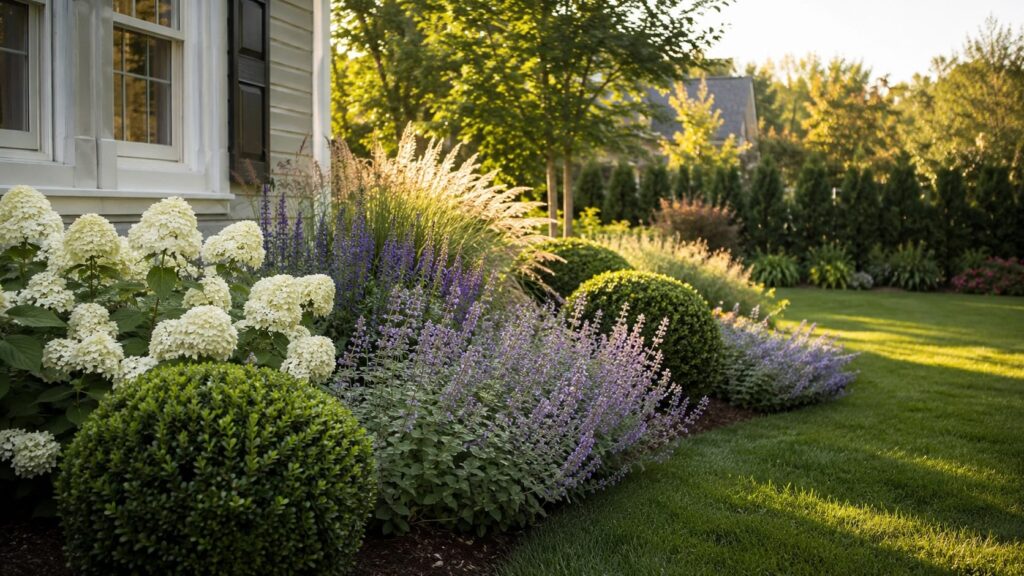
For privacy, use plants that hold their shape and stay dense from top to bottom. For foundation beds, keep plants lower near windows and taller only where they will not block sight lines or crowd the house. Structure matters more than novelty in these spots.
Seasonal color is where many homeowners overdo it. A few repeat plants can carry the whole yard through spring, summer, and fall without turning it into a patchwork. Mix in evergreens so the beds still have form in January. Blank soil in winter makes a yard feel unfinished fast.
The best plant list is usually simple: one or two workhorse shrubs, a few repeat perennials, and a small number of accents used on purpose.
If you have a slope or a spot that washes out during heavy rain, choose plants with roots that help hold soil in place. Groundcovers, ornamental grasses, and tough shrubs often do better there than delicate flowers. For a full yard plan, landscaping and garden design helps connect those plant choices to the rest of the layout.
Low-maintenance structure comes from repetition. Use the same plant in several places instead of buying ten different kinds. That keeps pruning, watering, and replacement work manageable. It also makes the yard feel planned, which is usually the goal on a normal suburban lot.
- Use privacy plants where you need screening, not everywhere.
- Keep foundation plants sized to the wall, windows, and walkways.
- Choose repeat bloomers and evergreens for year-round shape.
- Save high-care plants for small spots you can actually maintain.
Do not let the nursery table decide the design. Buy for the job first, then pick the best-looking plant from the right group. That is how you get a yard that works in real life, not just on planting day.
Compare plant types before you buy
Most suburban yards work best with a mix of plant types, not one of everything. The trick is knowing what each type does and how much time it will ask from you later.
Short-lived plants give fast color. Longer-lived plants give structure. If you mix them well, the yard looks finished in spring and still holds together in winter.
Use annuals when you want a quick burst of color near a front walk or patio. Use perennials when you want plants that come back each year with less replanting. Shrubs and small trees do the heavy lifting, since they give height, shape, and privacy. Ornamental grasses fill space, move in the wind, and usually stay low-fuss once established.
A good rule: spend more of your budget on the plants that will stay in the ground the longest. That usually means shrubs and small trees. Buying cheap plants that outgrow the bed is how a neat yard turns into weekend chores.
If a plant looks great for six weeks but causes pruning headaches for six years, it is the expensive choice.
For a broader plan that ties plant choices to paths, patios, and bed shapes, landscaping and garden design helps you see the whole yard at once.
Think about upkeep in real terms. Annuals usually need the most watering and replacing. Perennials need cutting back and occasional dividing. Shrubs need pruning, but not every week. Small trees need room to grow and usually less fuss once they are established. If you also want a cleaner mowing and edging routine, lawn care and garden maintenance becomes part of the picture.
| Option | Typical cost | Best for |
|---|---|---|
| Annuals | $2 to $8 per plant, or $50 to $300 for a seasonal bed | Fast color, front entry beds, and small accent spots |
| Perennials | $8 to $30 per plant | Repeat blooms and lower-replanting beds |
| Shrubs | $20 to $120 per plant | Privacy, foundation structure, and year-round shape |
| Ornamental grasses | $10 to $40 per plant | Low-maintenance texture, slopes, and mass planting |
| Small trees | $100 to $500+ per tree | Shade, curb appeal, and long-term structure |
Plan for mature size and upkeep
The most common plant mistake is crowding. A bed can look sparse on planting day and still be right if the plants are given room to fill in.
Check the mature height and width before you buy. That little tag in the pot matters more than the flower color. A shrub that reaches 6 feet wide will crowd a 3-foot bed fast, and a tree planted too close to the house can become a pruning problem you never wanted.
Dry front beds and hot side yards are where people get into trouble with thirsty plants. If a spot bakes in July and only gets watered once a week, pick plants that can handle that reality. Save the high-water choices for areas with better soil and easier irrigation, or they will always look tired.
- Leave space for the plant to reach full size without blocking windows, doors, or walkways.
- Match water needs to the driest part of the bed, not the richest-looking plant at the nursery.
- Group similar plants together so pruning and watering stay simple.
- Think about replacement work, because short-lived plants need more attention over time.
Pruning is part of the cost. Some plants stay neat with a light trim once or twice a year. Others need regular shaping just to stay where you put them. If you do not want a second job, skip the plants that grow fast, flop open, or shed constantly.
A plant that fits on paper but outgrows the bed in two seasons is a design mistake, not a bargain.
For a yard that still looks good after the first year, keep your choices tied to the real amount of time you want to spend outside. That is where lawn care and garden maintenance starts to matter, because the best plant list is the one you can actually keep up with.
From the field
Most planting regrets show up after the first full growing season, not on planting day. I look at spacing, mature size, and drainage before I look at flowers, because those three things decide whether the bed still works in year three. Get them right early and you avoid the expensive kind of pruning, digging, and replacing later. That planning costs nothing up front, which is why it saves the most money.
Build a simple plant palette
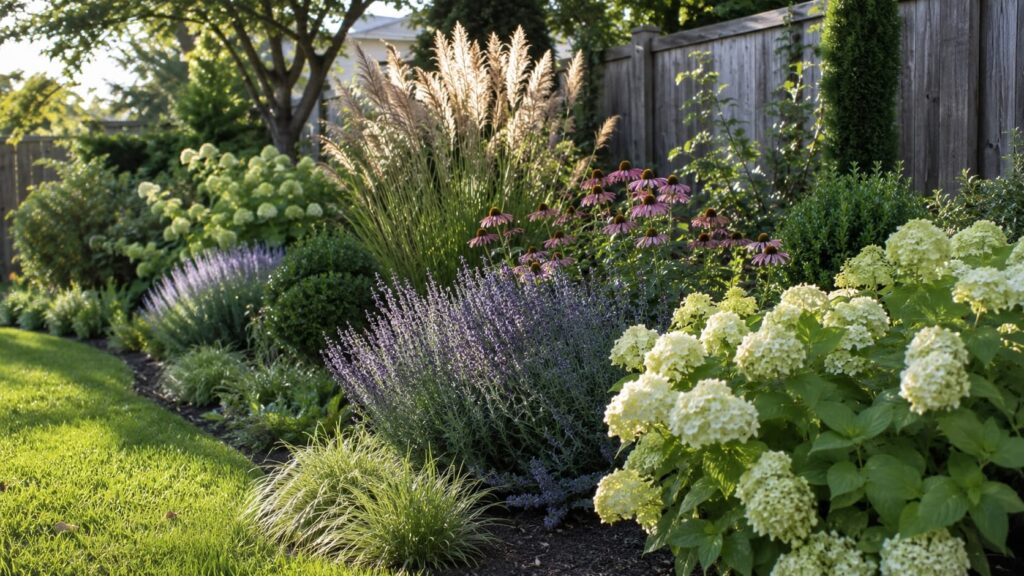
A good yard usually uses a limited plant palette, not a different plant for every empty spot. That is how you get a look that feels planned instead of random. It also makes watering, pruning, and replacement easier to manage.
Start with a few repeatable choices. One or two shrubs, one perennial group, and one accent plant can carry an entire bed if they are repeated in the right places. Repetition creates order. It gives the eye something to follow, even when the plants are not in bloom.
Texture matters just as much as color. Pair broad leaves with finer foliage. Mix upright shapes with mounded ones. A bed with all the same shape starts to look flat fast. That is where many front yards lose their edge.
- Use one main color family, then add a second color as a smaller accent.
- Repeat the same plant in drifts of 3 or 5 instead of scattering singles everywhere.
- Keep the tallest plants toward the back or where they will not block sightlines.
- Limit “special” plants to one or two spots so the bed does not feel busy.
If you are working near the front walk or entry, think about how the palette looks in more than one season. Spring flowers are nice, but evergreen structure and leaf shape carry the design through winter. That is one reason many homeowners lean on landscaping and garden design help for the layout, then handle some of the planting themselves.
Keep maintenance in the mix. A plant palette should match the time you really have, not the time you wish you had. If you want a yard that stays tidy with basic upkeep, use fewer plant types and repeat them well. That also makes lawn care and garden maintenance simpler, because the edges, pruning, and cleanup stay predictable.
A simple palette is easier to maintain, easier to replace, and usually looks more expensive than a bed packed with one-off plants.
When the palette is tight, the yard feels intentional. You do not need dozens of plants. You need a few that work together and can handle your site without constant babysitting.
Common plant selection questions
The 70 30 rule is a simple way to keep a garden from feeling crowded. In plain terms, about 70% of the design should be dependable structure, like shrubs, evergreens, and repeating perennials, while the remaining 30% can be the seasonal color or accent plants that change through the year. That balance keeps the yard steady.
ChatGPT can help you organize ideas, compare plant traits, and build a rough planting plan. It cannot see your soil, drainage, sun exposure, HOA rules, or the way your yard actually feels in July. Use it for brainstorming and sorting, then verify the plan against your site. That last step is where real gardens are won or lost.
The main principles of landscape design are usually unity, balance, proportion, rhythm, focal points, contrast, and simplicity. You do not need to memorize all seven to use them well. If the plants repeat, fit the space, and lead the eye from one area to the next, the design usually reads as intentional instead of random.
A good planting plan is less about buying the prettiest plants and more about choosing plants that can stay put, fill in, and still look right after a few seasons.
Common mistakes to avoid in garden plans are easy to spot once you know what to look for:
- Choosing plants for flower color before checking sun, water, and mature size.
- Using too many different plants, which makes the bed look busy and harder to maintain.
- Ignoring how fast plants grow and how much pruning they will need.
- Forgetting winter structure, so the garden looks empty for half the year.
- Placing high-maintenance plants in the hardest parts of the yard.
One more mistake is treating the plan like a shopping list instead of a layout. A strong garden design gives each plant a job. That is what keeps the yard looking organized without turning into a second job.