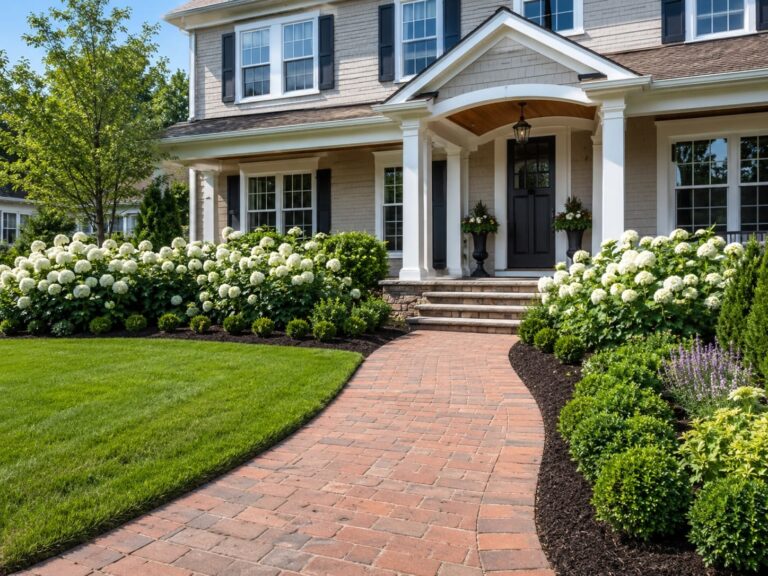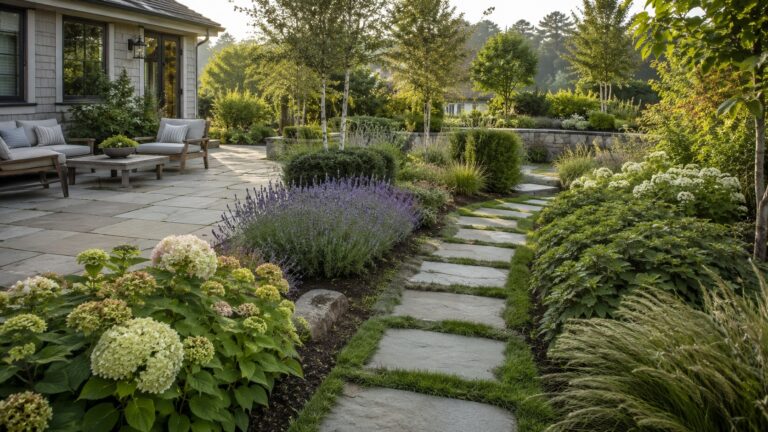
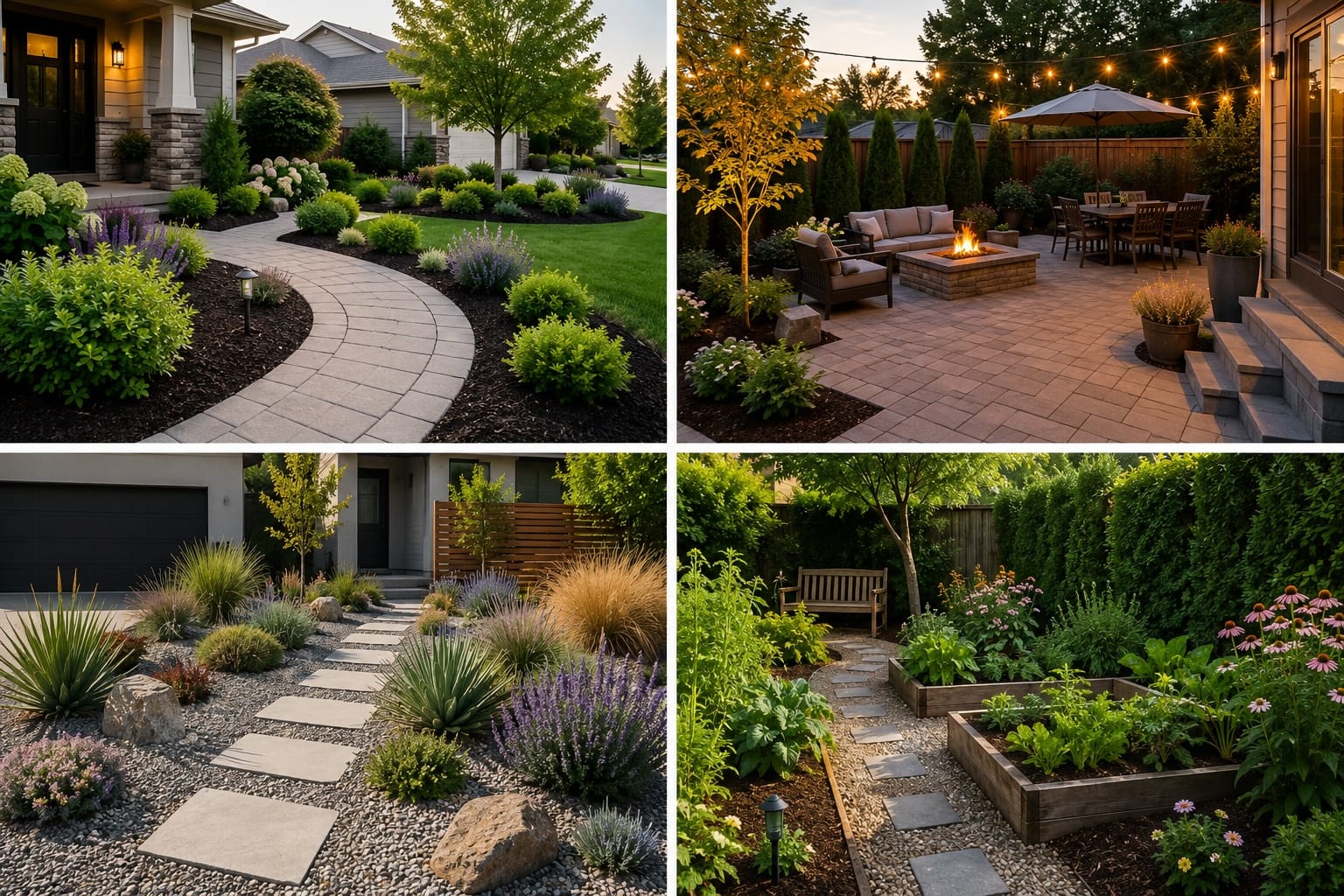
A low-maintenance landscape sounds simple enough: fewer chores, less watering, fewer weeds, and a yard that does not fall apart the minute life gets busy. But here is the catch: “low-maintenance” can easily become “bare and boring” if the design is only about removing work.
A good low-maintenance yard still needs structure, texture, seasonal interest, and a reason to look intentional. Otherwise, you end up with a patch of gravel, a few lonely shrubs, and the feeling that something is missing.
The goal is not to create a yard that never needs care. Every outdoor space needs some attention. The real goal is to build a landscape that looks good most of the year without demanding every weekend from you. That means choosing the right plants, simplifying the layout, improving soil and drainage, and using hardscape where it actually helps. 🌿
Quick Summary
A low-maintenance landscape can still look beautiful when it is planned around structure, climate-appropriate plants, clean edges, healthy soil, and practical outdoor zones.
- Point one: Choose plants that fit your climate, sun exposure, soil, and watering habits.
- Point two: Use mulch, edging, groundcovers, and hardscaping to reduce weekly upkeep.
- Point three: Keep the design simple but layered so the yard looks intentional, not empty.
🌱 Start With How Much Maintenance You Actually Want
Before you redesign anything, be honest about your lifestyle. Some homeowners enjoy pruning, planting seasonal flowers, and adjusting irrigation. Others want the yard to look good with basic mowing, occasional trimming, and a few seasonal cleanups.
Neither approach is wrong. The problem happens when the landscape does not match the person maintaining it.
Ask yourself:
- Do I want to garden regularly, or mostly enjoy the finished space?
- How much time can I realistically spend outside each week?
- Do I travel often or forget to water?
- Do I want lawn for kids, pets, or open space?
- Am I willing to prune shrubs once or twice a year?
Your answers should guide the design. A truly low-maintenance landscape is not just about picking “easy plants.” It is about creating a yard that fits your habits, climate, and property conditions.
🏡 Build the Landscape Around Strong Structure
Plants change. Flowers fade. Leaves drop. But structure is what keeps a landscape looking good even during the quiet seasons.
Structure comes from the permanent or semi-permanent parts of the yard: walkways, patios, edging, trees, evergreen shrubs, retaining walls, raised beds, fences, boulders, and defined planting beds.
A yard with good structure can look clean and attractive even when nothing is blooming. That is especially important for low-maintenance landscaping because you do not want the whole design depending on high-effort seasonal color.
Use Clear Bed Lines
One of the easiest ways to make a yard look maintained is to create clean, defined edges. Curved or straight bed lines can both work, but they should look intentional.
Spade-cut edges are affordable and natural-looking, though they need occasional refreshing. Metal edging, stone borders, brick, or concrete curbing can last longer and reduce the time spent cleaning up messy transitions between lawn and planting beds.
Repeat Materials for a Calmer Look
Low-maintenance design often works best when the material palette is simple. Too many different stones, mulches, borders, pots, and pavers can make a yard feel busy.
Try repeating two or three main materials. For example, you might use natural stone for the walkway, dark mulch in planting beds, and black metal edging throughout. Repetition makes the landscape feel cohesive without needing lots of decorative extras.
🌾 Choose Plants That Want to Live There
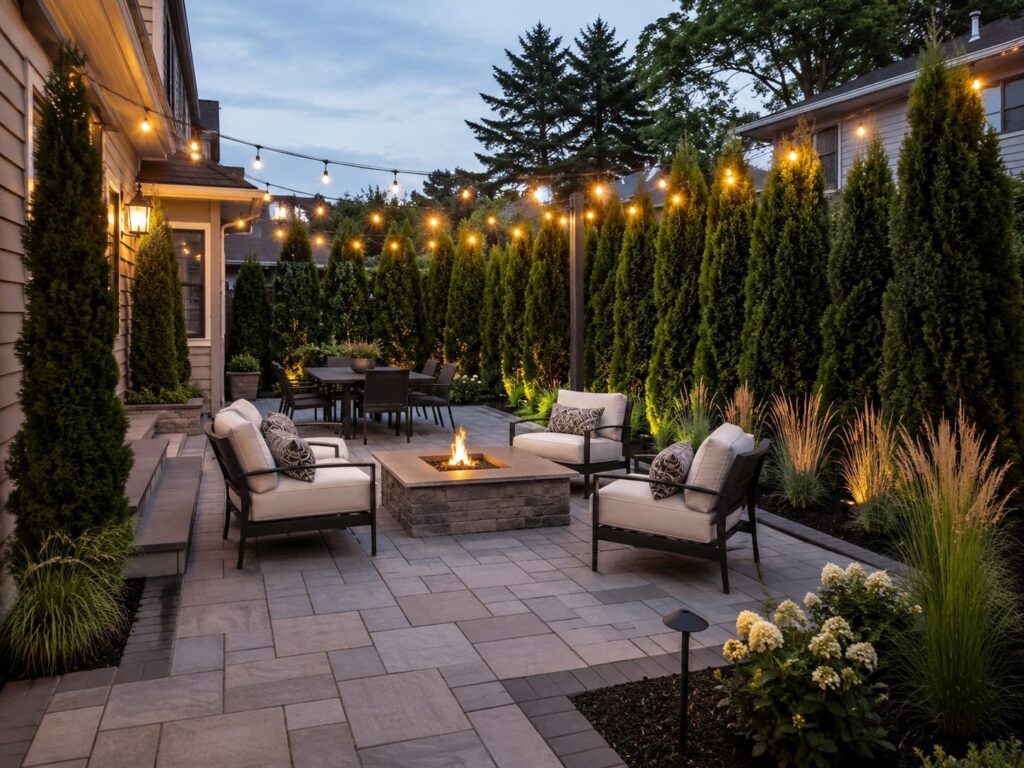
This may be the most important rule: do not fight the site.
A plant that loves dry sun will struggle in soggy shade. A shrub that grows eight feet wide will become a maintenance problem if planted two feet from a walkway. A thirsty plant may look beautiful at the nursery, but it can become frustrating if your area has hot, dry summers and watering restrictions.
For most homeowners, the best low-maintenance plants are climate-adapted, properly sized, and placed in the right conditions from the beginning.
Think in Plant Layers
A good low-maintenance landscape still needs depth. Instead of scattering random plants across a bed, organize them in layers:
- Back layer: small trees, taller shrubs, evergreens, or privacy plants.
- Middle layer: medium shrubs, ornamental grasses, flowering perennials.
- Front layer: low perennials, groundcovers, compact grasses, or edging plants.
This layered approach helps beds look full without needing constant seasonal planting. It also reduces open soil, which can mean fewer weeds over time.
Use Evergreens as the Backbone
Evergreens are helpful because they provide shape and color even in winter. Boxwood, juniper, arborvitae, holly, yew, dwarf conifers, and other regionally appropriate evergreens can create a steady framework.
Just be careful with mature size. A “small” shrub at the garden center can become a trimming headache if it naturally grows much larger than the space allows.
Add Perennials for Seasonal Interest
Perennials come back year after year, which usually makes them easier than annual flowers. Coneflower, salvia, black-eyed Susan, catmint, sedum, daylily, coreopsis, and ornamental grasses are popular options in many US landscapes, though the best choices depend on your region.
In many cases, a few well-placed perennials can provide color without turning the whole yard into a high-maintenance flower garden.
💧 Make Watering Easier, Not Harder
A low-maintenance yard should not depend on constant hand-watering. If you are dragging hoses around all summer, the design is asking too much from you.
Start by grouping plants with similar water needs together. This is sometimes called hydrozoning. It simply means thirsty plants go with thirsty plants, and drought-tolerant plants go with other drought-tolerant plants.
Drip irrigation can be a smart upgrade for planting beds because it delivers water near the root zone and reduces waste. For lawns, properly adjusted sprinklers can help avoid dry spots, overspray, and runoff.
If you live in a dry region, consider reducing lawn areas and using drought-tolerant plants, gravel, mulch, and shaded seating areas. If you live in a wet region, drainage may matter more than drought tolerance.
🧱 Use Hardscaping Where It Reduces Work
Hardscaping can make a landscape easier to maintain when it solves a real problem. A patio can replace a muddy lawn corner. A gravel path can make a side yard more usable. Stepping stones can protect grass from foot traffic. A retaining wall can manage a slope.
But hardscaping should not cover the entire yard just for the sake of “low maintenance.” Large areas of gravel, concrete, or pavers can feel hot, harsh, and lifeless without plants to soften them.
| Feature | Maintenance Benefit | Best Use | Design Tip |
|---|---|---|---|
| Mulch beds | Reduces weeds and helps soil retain moisture | Around shrubs, trees, and perennials | Keep mulch away from trunks, stems, and siding. |
| Gravel areas | Reduces mowing and works well in dry zones | Side yards, paths, modern front yards | Use edging to keep gravel from spreading. |
| Stepping stones | Protects grass and guides foot traffic | Garden paths and informal walkways | Set stones at a comfortable walking distance. |
| Patio pavers | Creates usable space with little weekly upkeep | Dining, lounging, fire pit areas | Install a solid base to reduce shifting and weeds. |
| Groundcovers | Fills open soil and reduces weeds over time | Slopes, shady spots, bed edges | Choose non-invasive varieties suited to your region. |
🍃 Reduce Lawn Without Removing It All
Lawn has a place. It gives kids and pets room to play, creates visual calm, and can make a yard feel open. But not every patch of grass is worth keeping.
The hardest lawn areas to maintain are usually narrow strips, steep slopes, deep shade, high-traffic paths, and oddly shaped corners where mowing is awkward.
Instead of removing the whole lawn, consider reducing problem areas first. Replace them with planting beds, groundcovers, gravel paths, mulch rings around trees, or a patio extension. This can lower mowing time while making the yard look more designed.
For the lawn you keep, focus on healthy soil, proper mowing height, and smart watering. A smaller healthy lawn often looks better than a large stressed one.
🌼 Keep Color Simple and Strategic
Many homeowners assume a beautiful landscape needs constant blooms. It does not.
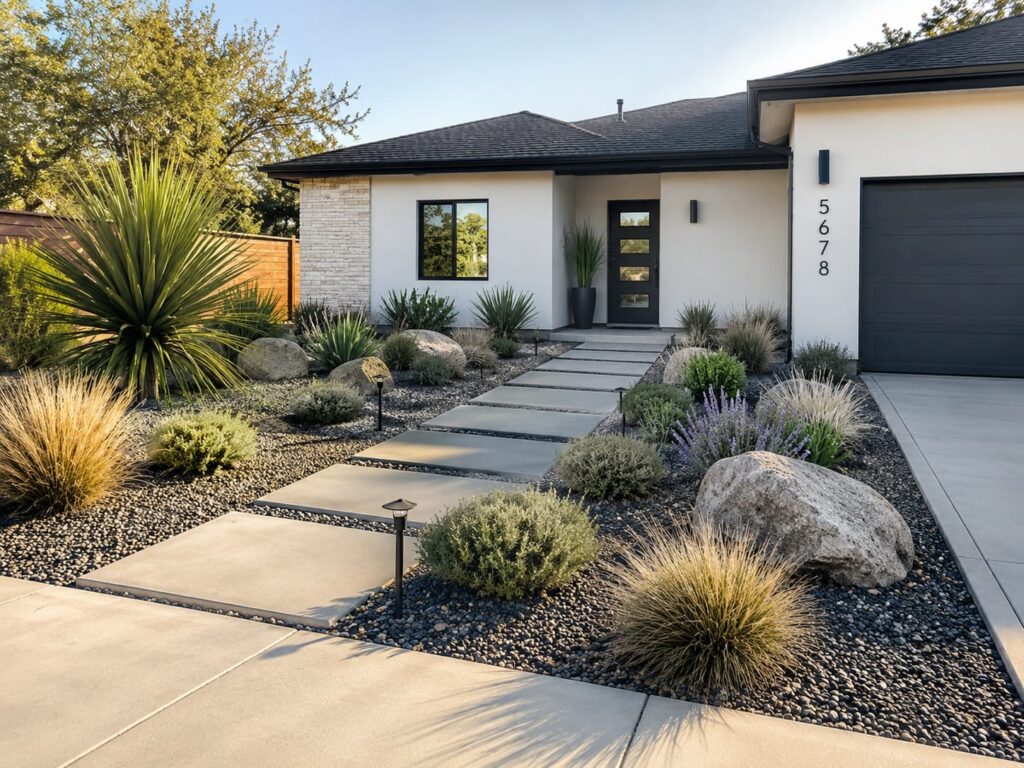
Color can come from flowers, but also from foliage, bark, berries, seed heads, containers, outdoor furniture, and even mulch or stone. Low-maintenance landscapes often rely more on texture and contrast than nonstop flowers.
For example, blue-green evergreens, golden ornamental grasses, burgundy foliage, white blooms, and dark mulch can create a strong visual combination without needing annual replanting every season.
Use Containers Where They Count
Containers are great for adding seasonal color near the front door, patio, or porch. They are easier to change than entire flower beds and can create a big impact in a small area.
Just remember: pots dry out faster than ground plantings. If you forget to water, choose larger containers, drought-tolerant plants, or self-watering planters.
🛠️ Design for Easy Seasonal Cleanup
A landscape may look easy in summer but become a headache in fall or spring. Think about cleanup before you plant.
Large deciduous trees can drop leaves into gravel, ponds, gutters, and planting beds. Some perennials need cutting back. Certain shrubs require frequent shaping. Fast-growing vines can quickly take over fences or trellises.
This does not mean you should avoid these plants completely. It just means you should choose them with open eyes.
For easier seasonal maintenance, limit high-shedding plants near patios and water features, choose shrubs that keep a natural shape, and avoid planting aggressive species where they can spread into walkways or neighboring beds.
🌎 Match the Design to Your Climate
Low-maintenance landscaping in Arizona will not look the same as low-maintenance landscaping in Michigan, Georgia, Oregon, or New England. Climate matters.
In dry western regions, drought-tolerant planting, gravel, shade, and efficient irrigation may be priorities. In humid regions, airflow, disease-resistant plants, and drainage can be more important. In colder climates, salt tolerance, snow storage, and freeze-thaw durability may affect plant and hardscape choices.
Local nurseries, extension offices, landscape designers, and experienced contractors can be helpful resources because they know what actually performs well in your area.
✨ Make It Look Good With Less Effort
The best low-maintenance landscapes do not look neglected. They look calm, balanced, and intentional.
Here are a few design moves that make a big difference:
- Repeat plant groups: Planting in groups of three, five, or seven often looks cleaner than using one of everything.
- Use contrast: Mix fine-textured grasses with broad-leaf plants, or dark evergreens with bright foliage.
- Leave breathing room: Avoid overcrowding plants at installation. Plan for mature size.
- Frame key views: Add attractive planting near entries, patios, windows, and walkways.
- Limit fussy details: Too many small decorations can make maintenance harder and visual clutter worse.
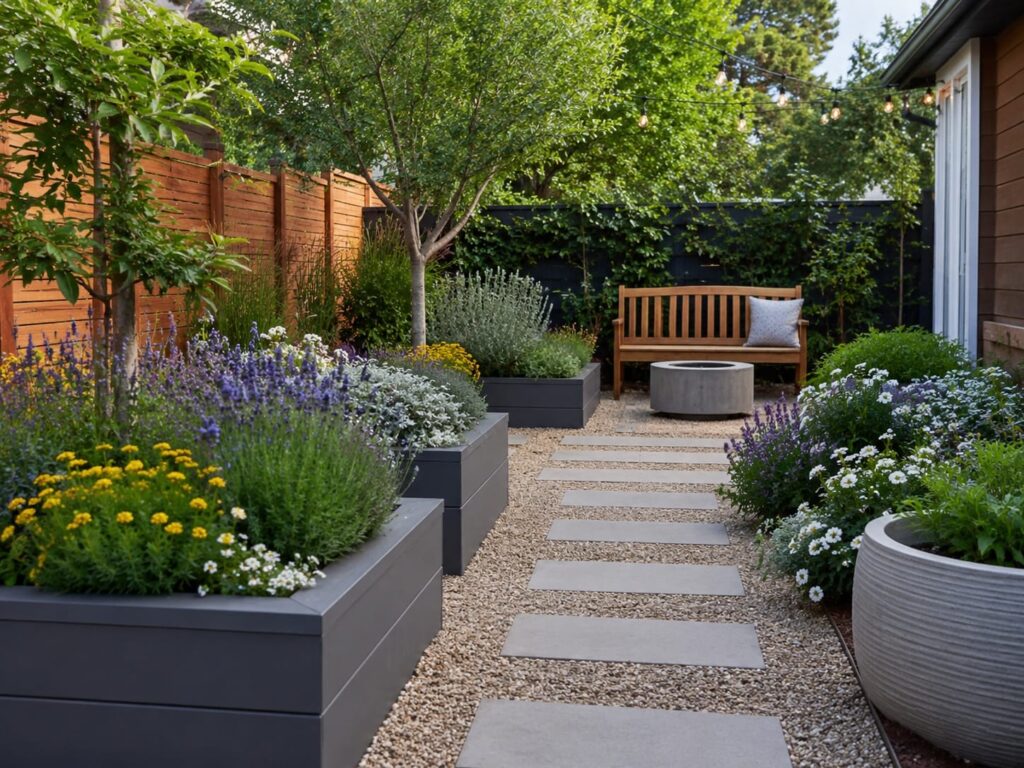
A simple landscape can still feel rich when the plant shapes, textures, and materials work together.
🌿 A Yard That Works With You, Not Against You
A low-maintenance landscape is not about giving up on beauty. It is about designing smarter from the start.
Choose plants that fit your site. Build strong structure with edges, paths, mulch, and hardscape. Reduce problem lawn areas. Use color strategically. Make watering easier. And most importantly, design for the amount of care you are actually willing to give.
With the right plan, your yard can look polished and welcoming without turning into a second job. That is the sweet spot: less stress, better curb appeal, and an outdoor space you can actually enjoy. 🌞
❓ FAQ: Low-Maintenance Landscape Design
What is the easiest landscape to maintain?
The easiest landscape to maintain usually includes climate-adapted plants, defined beds, mulch, limited lawn in problem areas, drip irrigation, and simple hardscaping such as paths or patios.
Does low-maintenance landscaping mean no lawn?
No. Many low-maintenance yards still include lawn, especially for kids, pets, or open space. The key is to keep lawn where it is useful and replace awkward or unhealthy grass areas with easier alternatives.
What plants are best for a low-maintenance yard?
The best plants depend on your region, but good choices are usually properly sized, climate-adapted, pest-resistant, and suited to your sun and soil conditions. Evergreens, ornamental grasses, native perennials, and hardy shrubs are often useful.
Is gravel better than mulch for low-maintenance landscaping?
It depends on the location. Gravel can work well for paths, side yards, and dry-climate designs. Mulch is often better around trees, shrubs, and perennials because it supports soil health and helps retain moisture.
How do I make a low-maintenance yard look less plain?
Use layers, repeated plant groups, contrasting textures, evergreens, clean edges, boulders, containers, and seasonal color in key spots. A simple yard can still look beautiful when the design has structure.