Your lawn is probably not failing because you do nothing, it is failing because a few small mistakes keep stacking up. Wrong mowing height, too much water, fertilizer at the wrong time, and seed thrown down without fixing the soil can all make a yard look tired even when you are trying to do the right thing.
The frustrating part is that bad advice often sounds reasonable. A neighbor swears by weekly watering. A store clerk pushes a bag for every problem. YouTube makes every yard issue look simple. Reality is messier. Grass responds to weather, soil, shade, foot traffic, and the way you cut it.
Most lawn problems start with good intentions and the wrong timing.
That is why some lawns get greener after less work, while others keep getting worse no matter how much money goes into them.
The mistakes that quietly hurt lawns
Most lawn damage does not come from one big mistake. It comes from a few small habits that seem harmless, then slowly wear the grass down.
Mowing too short is the classic one. A lawn that gets scalped has less leaf surface left to feed itself, so it dries out faster and weeds move in. If your mower is set low because it looks “tidy,” you may be making the yard work harder than it should.
Overwatering is just as common. A lot of homeowners water on a schedule instead of checking the soil. That keeps roots shallow. It also wastes water, which matters in dry stretches and in places with watering rules. If you want a simpler way to think about it, see keeping a lawn green without wasting water.
A lawn that looks thirsty is not always dry, and a lawn that looks green is not always healthy.
Another quiet problem is mowing with a dull blade. Torn grass tips turn brown fast, which makes people think the lawn needs more fertilizer or more water. It often needs a sharper blade and a better cut.
Then there is scalping around edges, slopes, and uneven spots. Those places get hit first and recover last. If your yard has dips, ruts, or a rough transition near the sidewalk, those low spots will show stress before the rest of the lawn does.
This section focuses on the mistakes that cost the most time and money, and the ones you can fix without guesswork. If you want a simple baseline, start with how often to mow and keep the basics steady before you chase every new tip.
Key takeaways
- Raise the mower before summer stress makes short grass burn out faster.
- Water only when the soil starts drying, not just because the calendar says so.
- Check blade sharpness often, because torn tips make healthy grass look diseased.
Mowing habits that do more harm than good
Mowing too short is one of the fastest ways to weaken grass. Short grass has less leaf area to feed the roots, so it dries out faster and leaves room for weeds. It may look neat for a day, then start thinning out along sidewalks, driveways, and sunny spots.
Cutting grass when it is wet causes a different set of problems. Wet blades bend under the mower, clump together, and get sliced unevenly. That leaves a messy finish and can spread disease from one part of the yard to another, especially if the lawn stays damp in shade or after a long stretch of rain.
A dull mower blade does damage even if the height is right. Instead of a clean cut, it tears the grass tips. Those shredded ends turn brown fast, which makes the lawn look stressed and can trick you into watering or fertilizing when the real fix is sharpening the blade.
If the lawn looks rough right after mowing, the mower may be the problem, not the grass.
Another common mistake is taking off too much at once. Removing more than about one-third of the grass height in a single cut shocks the plant. It has to spend energy recovering instead of growing strong roots. That matters most during hot weather, when the lawn is already under pressure.
If your yard grows fast after rain, do not wait until it is overgrown. Keep a steady schedule with how often to mow as a guide, then adjust for heat, shade, and rainfall. A little consistency saves more grass than one big cleanup job.
Most mowing problems are self-inflicted, and they are fixable. Set the deck higher, mow when the lawn is dry, keep the blade sharp, and trim a little at a time. That is boring advice. It also works.
Watering errors that waste time and money
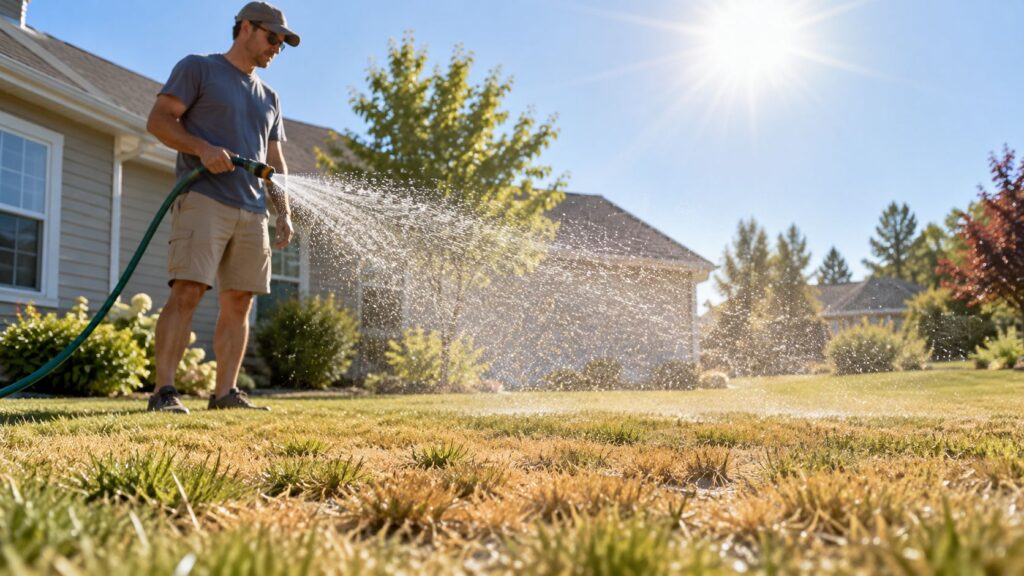
Water is where a lot of good lawns get spoiled. Homeowners see a dry patch, turn on the sprinkler more often, and end up with shallow roots that depend on constant help. That lawn may look fine for a week. Then heat or a missed watering cycle hits, and it falls apart fast.
The better test is simple. Push a screwdriver or a hand trowel into the soil after you water. If the top few inches are still dry, the water is not getting down far enough. If the soil stays soggy for days, you are watering too much or the yard drains poorly.
A lawn that needs water usually shows stress in the leaves first, not in the calendar.
Timing matters too. Watering in the middle of the day wastes a lot to evaporation. Watering late at night can leave grass wet for too long, which is a bad setup in shady yards and during humid weather. Early morning is usually the safest window.
Most lawns do better with fewer, deeper soakings instead of a quick splash every day. That encourages roots to go down where the soil stays cooler and wetter longer. It also fits better with watering rules in many towns, especially during summer restrictions.
If you want a simple rule, watch the grass, then check the soil. Footprints that stay visible, folded blades, and a dull blue-gray color are signs the lawn is drying out. If the grass springs back and still feels firm underfoot, it probably does not need more water yet. For a fuller system, see keeping a lawn green without wasting water.
| Watering approach | Typical cost | Best for |
|---|---|---|
| Hand watering with a hose | $0 to $40 for a nozzle | Small problem spots, new seed, tight budgets |
| Oscillating or impact sprinkler | $15 to $60 | Medium lawns with simple coverage needs |
| In-ground sprinkler system | $2,000 to $6,000+ | Large yards, regular schedules, hands-off watering |
| Smart controller or timer | $50 to $250 | People who forget schedules or need better control |
Soil and feeding problems people miss
A lot of lawn trouble starts below the surface. If the soil is packed tight from foot traffic, clay, or years of mowing the same path, roots cannot spread well. Water runs off faster. Fertilizer sits near the top. The grass looks like it is being fed, but it never really gets ahead.
Compacted soil is easy to miss because the lawn can still look green at first. Then it thins out in hot weather, or bare spots keep coming back in the same places. A simple screwdriver test tells you a lot. If it is hard to push into moist soil, the roots are working in a tough setup.
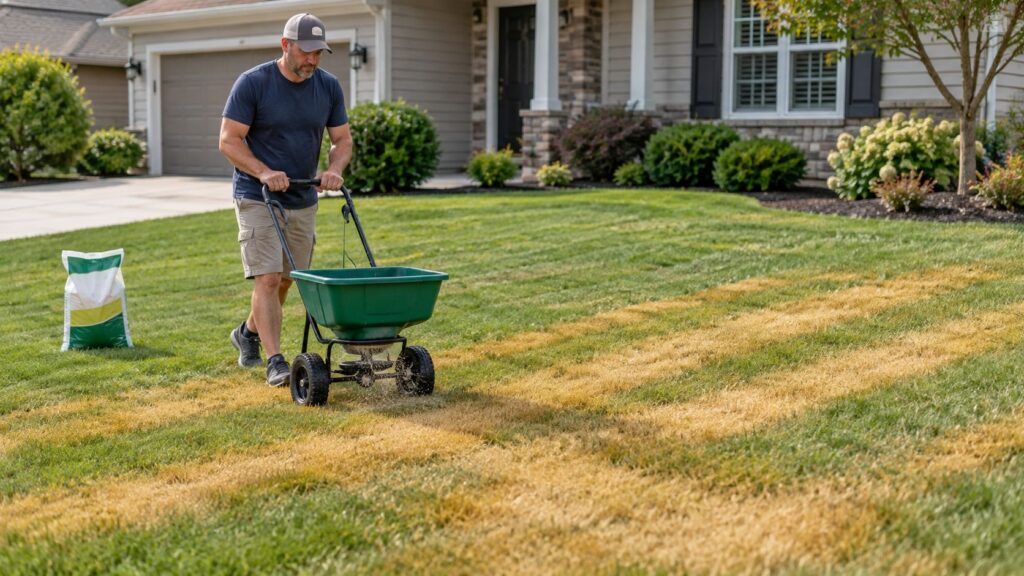
Just as common is skipping a soil test and guessing on fertilizer. That guess often costs more than the test would have. Too much nitrogen can push fast top growth, which means more mowing and more stress. It can also burn grass, especially if you spread it before a dry spell or on a lawn that is already thin.
If your lawn keeps needing more products, the problem may be the soil, not the feed.
Grass type matters too. A cool-season lawn in the North does not follow the same schedule as warm-season grass in the South. Fertilizing at the wrong time can waste money or push growth when the plant should be settling down. Local climate, USDA zone, and even HOA rules can change what makes sense. For a broader plan, see a practical lawn care routine.
A simpler approach works better for most homeowners:
- Test the soil before buying a full season of fertilizer.
- Loosen compacted areas with aeration if the ground stays hard.
- Match the product and timing to your grass type and region.
- Use smaller doses instead of one heavy application.
More fertilizer is not the same thing as better care. In many yards, the smarter move is less guessing and more restraint.
A quick field check before you fix anything
Before you spend another dollar, walk the yard and look for patterns. A problem that shows up in every sunny strip is usually different from one that stays in one shady corner or along the driveway edge.
Start with the mower. If the tips look shredded, brown, or frayed, the blade is dull. If the lawn is scalped in spots, the deck is set too low or the ground is uneven. That kind of damage makes grass work harder than it should, and it shows fast during heat.
Then check how the yard feels underfoot. Soft, spongy ground after rain points to drainage trouble. Hard soil that is difficult to push a screwdriver into points to compaction. If the grass looks weak in patches but the soil is neither dry nor soggy, the issue may be shade, traffic, or poor timing on mowing and feeding.
Most lawn fixes fail because the homeowner treats the symptom first and the cause later.
A simple way to avoid waste is to sort the problem before you buy anything:
- Cutting problem, grass looks torn, too short, or stressed right after mowing.
- Water problem, leaves fold, footprints stay visible, or the soil stays wet too long.
- Soil problem, the ground is hard, bare spots repeat, or water runs off.
- Timing problem, the lawn gets fed or cut at the wrong season for your grass type.
If you are unsure, how often to mow is a better place to start than a bag of fertilizer. The same goes for water, since keeping a lawn green without wasting water usually comes down to fewer, better-timed soakings.
From the field
Most lawns that look “hungry” are not asking for more product. They are asking for a better cut, a steadier watering pattern, and a little patience between treatments. I see homeowners spend on fertilizer before they fix mowing height, and that usually just buys more growth to manage. If the grass is cut too short every week, no feeding schedule is going to make up for that stress.
What homeowners ask about lawn mistakes
The biggest mistakes are usually simple. Cutting too short, watering too often, skipping mower blade sharpening, and guessing on fertilizer all cause more trouble than most people expect. The fix is usually less dramatic than the damage. Small habits done on time beat expensive rescue work later.
The 1/3 rule means never remove more than one-third of the grass blade in a single mow. If the lawn is 3 inches tall, cut no more than 1 inch off. That keeps the plant from going into shock. If you miss a week and the grass gets too tall, mow in stages instead of scalping it all at once.
Most lawn damage comes from trying to force a quick fix on a plant that needs steady care.
The 150 rule is a simple mowing guide that says to mow when the grass reaches about 1.5 times your target height. If you want a 3-inch lawn, mow around 4.5 inches tall. It helps you stay ahead of growth without cutting too much off at once. Different grass types still matter, so treat it as a guide, not a law.
What are the most common lawn care mistakes to avoid?
Cutting too low, watering on a fixed schedule without checking the soil, and using fertilizer as a first response are the big ones. Dull mower blades, compacted soil, and ignoring shade or drainage problems also cause a lot of repeat damage. The lawn usually tells you what it needs.
What are common mistakes killing my lawn and how can I fix them?
Scalping, overwatering, and heavy fertilizer use can weaken or burn grass. Start by raising the mowing height, checking whether the soil is staying wet too long, and pausing any feeding until you know the grass type and season. If bare spots keep spreading, test the soil and check for compaction or poor drainage.
What is the 1 3 rule for lawn care?
It is the rule that says you should not cut off more than one-third of the grass blade at one time. That keeps the plant from losing too much leaf surface, which it needs to make energy. If the lawn got too tall, mow more than once over a few days instead of taking it down in one pass.
What is the 150 rule for lawns?
It is a mowing shortcut that tells you to cut when grass is about 1.5 times your ideal height. It helps prevent shock and keeps you from waiting until the lawn is overgrown. For example, if your target height is 2 inches, mow when it reaches about 3 inches.