Your yard feels too small because the space you have is not set up to be used, and that usually means you are paying for the wrong thing. A bigger patio, a roof, or a pergola can help, but the real question is what fits your home, your budget, and your climate without turning into a headache later.
Most homeowners get stuck between price and peace of mind. One option looks cheap until you add drainage, permits, or site prep. Another looks expensive until you realize it will hold up better through five winters and save you from repairs. That gap is where a lot of upselling happens.
The best outdoor space is not the fanciest one. It is the one you will actually use after the first season.
If you are comparing patios, decks, and outdoor structures, start with the basics: space, sun, slope, and local rules. Those four things shape cost more than most sales pitches do.
Start with the space you have
A good patio idea starts with a tape measure, not a sales pitch. If your yard only gives you a narrow strip behind the house, a large entertaining patio may crowd the rest of the space. If you have a wider back yard, you may be able to separate dining, grilling, and seating without making it feel packed.
Size sets the ceiling for what feels comfortable. A 10 by 10 foot patio can work for two chairs and a small table. A 12 by 16 foot patio gives you more room for a dining set and a clear walking path. Once you start adding a grill, planters, or a fire feature, the footprint needs to grow fast.
Layout matters just as much. A patio that sits right off the kitchen door is easier to use every day. A patio at the far end of the yard may feel quiet, but it can also feel like a trek with food, drinks, and kids in tow. Convenience gets used. Pretty but awkward usually does not.
If the yard slopes, has drainage trouble, or shares space with a side yard path, those details should shape the design early. That is where planning a patio around your layout saves money later. It helps you avoid building around problems after the crew is already on site.
The right patio is the one that fits your daily habits first, because that is what you will notice every week.
Before you compare materials or finishes, think through how you will actually use the space:
- Walk the route from the kitchen door to the patio and note any tight spots.
- Measure the furniture you already own, then add room for pulling chairs out.
- Check where shade, wind, and water collect during the parts of day you use the yard.
Key takeaways
- Measure your usable yard first, then match patio size to how you plan to sit, eat, and move.
- Keep the patio close to the house if you want it used often on weeknights.
- Factor in slope, drainage, and furniture clearance before choosing materials or a final shape.
Patio ideas that fit real homes
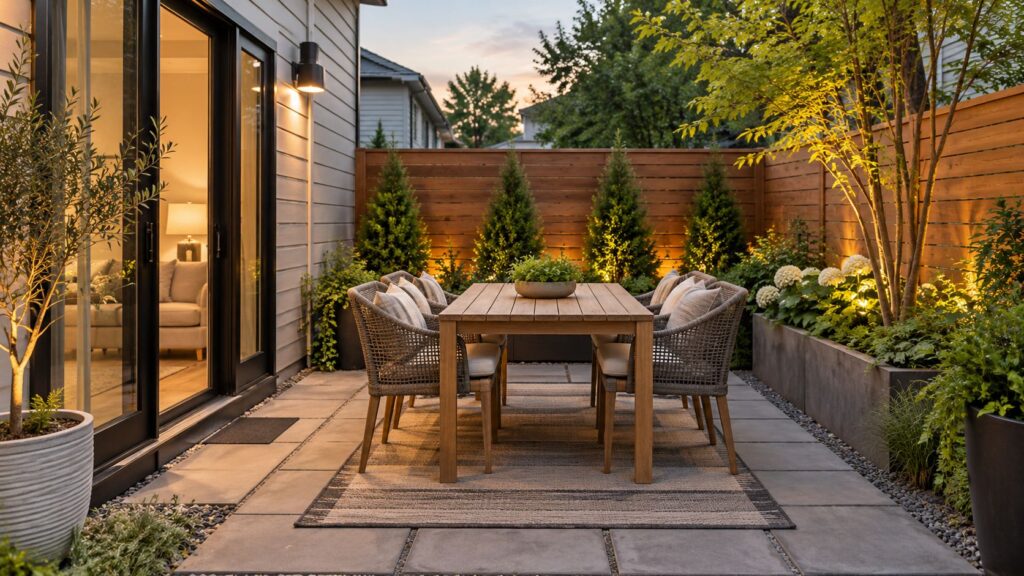
If your goal is weekday dinners outside, start with a simple dining patio. A 12 by 14 foot layout usually gives you room for a table, chairs, and a walking path without feeling cramped. Keep it close to the kitchen door if you plan to carry food back and forth often.
For a place to unwind, a smaller lounge area can work better than one big open slab. Two chairs, a side table, and a fire feature or planter edge can make a corner feel finished. You do not need to pave the whole yard to make it usable.
Privacy changes how a patio feels. A low wall, tall planters, lattice, or a pergola with side screening can block views from neighbors without making the space feel boxed in. If you are dealing with close lot lines or an HOA, keep the design simple and check rules before you build.
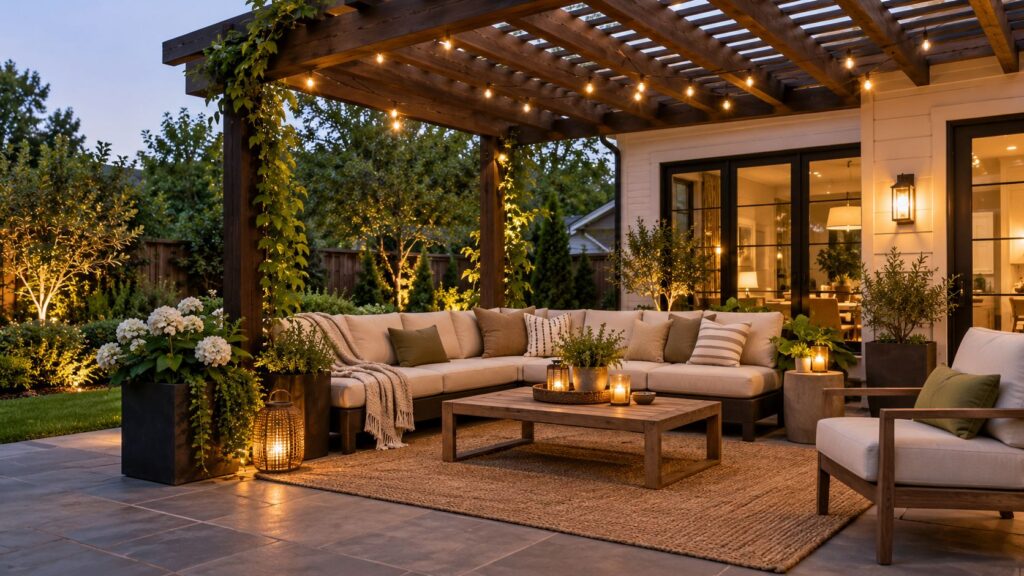
Shade matters more than many homeowners expect. In hot climates, an uncovered patio can be uncomfortable by late afternoon. A pergola, roof extension, or even a well-placed tree can make the space usable longer through the summer. For more planning help, the decks, patios and outdoor structures category can help you compare the bigger options.
The best patio ideas usually solve one problem well, instead of trying to do everything at once.
Small yards need restraint. A compact patio extension, maybe 8 by 10 feet or 10 by 12 feet, can add real living space without eating the whole lawn. Use one clean shape, one seating zone, and materials that match the house. That keeps the yard from looking overbuilt.
- Dining, keep it near the kitchen and size it for chair clearance.
- Relaxing, use a smaller lounge zone with shade and soft edges.
- Privacy, add screening where neighbors can see in.
- Small-yard expansion, build just enough space for daily use, not a full resort layout.
If you are still comparing layouts, planning a patio around your layout is the safest place to start. It keeps the project grounded in how your yard actually works, not how a sales sketch looks on paper.
What drives patio expansion costs
Patio pricing starts with square footage. A bigger patio uses more base material, more pavers or concrete, and more labor. A simple 10 by 12 foot pad can stay fairly modest. Once you move into 14 by 20 feet or larger, the cost climbs fast because every extra foot needs excavation, leveling, and finish work.
Material choice is the next big swing. Poured concrete usually costs less than stone or premium pavers, but it can crack and may need more care in freeze-thaw climates. Pavers cost more up front, yet they are easier to repair one section at a time. Natural stone sits higher on the budget because the material and labor both run up quickly.
Then there is the yard itself. If the ground slopes, holds water, or needs a deeper base, you are paying for grading and drainage before the patio surface even starts. That is where a lot of upsells hide. If the contractor cannot explain why the base needs more work, ask again.
Access matters too. A tight side yard, steps, or a backyard with no easy equipment route can add labor. Crews may need to move material by hand, which takes longer. Permits can also add time and cost, especially if the patio is attached to the house, changes drainage, or includes a roof, retaining wall, or electrical work.
Extras are where a basic patio turns into a bigger project. Lighting, seat walls, fire pits, pergolas, and outdoor kitchens all add price. Some are worth it. Some are just ways to stretch the invoice. Ask what is structural, what is cosmetic, and what can wait.
A fair estimate should show you where the money goes, not hide every hard part under one lump sum.
If you are still sorting through options, planning a patio around your layout helps you see which costs are real and which ones are just design extras.
| Option | Typical cost | Best for |
|---|---|---|
| Poured concrete | $8 to $18 per square foot | Simple, budget-conscious patios with a clean look |
| Concrete pavers | $15 to $30 per square foot | Repairable surfaces and more design flexibility |
| Natural stone | $25 to $50+ per square foot | Higher-end finishes and long-term curb appeal |
| Patio with grading, drainage, or add-ons | Varies widely, often $5,000 to $20,000+ | Problem yards, attached patios, and projects with lighting or walls |
What permits and climate can change
Permits are not the same everywhere. A simple patio on grade may be fine in one town and need review in another, especially if it is attached to the house, changes drainage, or includes a roof, wall, or electrical work. Your local building department is the place to check first, not the sales pitch.
HOA rules can matter just as much. Some neighborhoods care about material color, patio height, screening, or how close the work sits to a property line. If you live under an HOA, ask for the rules in writing before you approve a layout. That avoids a lot of back-and-forth later.
Climate is where a patio either settles in or starts to show its age. In freeze-thaw areas, water that gets under the surface can lift pavers, crack concrete, or push joints apart. In snow country, a flat surface that drains poorly turns into a mess every winter. In hot, sunny yards, some finishes stay cooler underfoot than others, which matters more than people expect in July.
Sun exposure also changes how usable the space feels. A patio that bakes from noon to 5 p.m. may need an awning, pergola, or at least a shade tree plan. A patio in deep shade may stay damp longer, which affects algae, staining, and slip risk. That is why the same size patio can feel great in one yard and awkward in another.
A patio that looks good on day one still has to survive the fifth winter. That is where drainage, base work, and material choice start to show their value.
If you are comparing layouts across outdoor living and backyard design, think about where snow slides, where runoff goes, and which areas stay usable after a storm. Good drainage and a proper base are usually what separate a patio that settles in from one that keeps asking for repairs.
From the field
On paper, two patios can look like the same job. On site, grade, drainage, access for the crew, and how far the work sits from the house can move the price a lot. A yard with a clean run for equipment and a level pad is one thing. A yard with a slope, tight gate, or water problems is another. That is why a contractor who only talks about square footage is usually leaving out the part that drives the real labor.
How to make it feel finished
A patio starts to feel like a real outdoor room when the layout works with how you live. That means the table is close enough to the kitchen door, chairs have room to pull out, and nobody has to squeeze around a fire pit to get to the yard.
Furniture spacing matters more than people think. A 12 by 14 foot patio can work well for a small dining set and a grill. If you want lounge seating too, you need more breathing room, or the space will feel crowded fast.
Lighting does the same job after sunset. A few low, warm fixtures along the edge or near steps are usually better than one bright floodlight. Good lighting should help people see the path, the table, and the grade changes without making the yard feel harsh.
Shade changes how often you use the space in summer. A pergola, umbrella, or roof extension can make a patio usable for more of the day, especially on south- and west-facing yards. If your patio sits in full sun, shade is not a luxury, it is what keeps the space comfortable.
A patio feels finished when the edges, steps, and transitions are handled cleanly. That is usually what separates a project that looks planned from one that looks dropped into the yard.
Edging helps with that clean look. A solid border, a small retaining edge, or a planted transition can make the patio read as part of the house instead of a hard slab in the middle of the lawn. If you are still sorting out the bigger picture, outdoor living and backyard design can help you think through how the patio connects to the rest of the yard.
Pay attention to the step from the house to the patio, too. A smooth threshold, proper slope, and a clear path out the door make daily use easier. Small details carry a lot of weight here. They are what make the space feel intentional, not improvised.
Common patio questions from homeowners
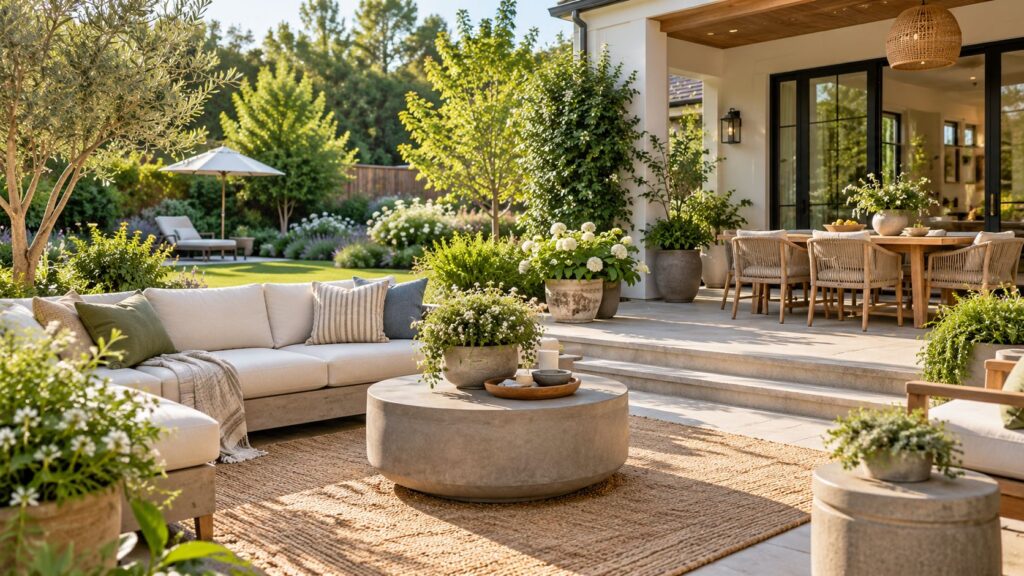
A patio feels like a second living room when it has the same basics you expect inside: a place to sit, a place to set drinks, light after sunset, and some protection from sun or wind. The trick is not buying more stuff. It is arranging the space so people can actually stay out there for an hour.
Comfort beats size. A 12 by 14 foot patio can feel better than a larger one if the chairs fit, the path is clear, and the grill is not blocking traffic. If the space is too tight, people notice fast. Nobody relaxes while dodging chair legs.
The best patios behave like a room with no walls. You can move through them easily, sit down without rearranging everything, and use them in more than one season.
Current patio trends lean practical. Homeowners are asking for built-in seating, low-voltage lighting, shade structures, and simple fire features that extend the season. Neutral pavers, larger-format slabs, and mixed materials are popular because they look clean without feeling fussy. Simple usually ages better than a trendy finish that only works in one style of house.
If you are deciding between a patio and another outdoor surface, think about how you live. A deck can help with height changes. A gravel seating area may cost less and drain well. A patio is usually the better pick when you want a stable surface for dining, grilling, and heavier furniture.
How can I make my patio feel like a second living room?
Use furniture that fits the footprint, add layered lighting, and include some kind of shade. A rug, side table, and a couple of plantings help the space feel finished. Keep the walking path open from the door to the seating area so it works like a room, not just a slab.
What are some current patio trends for creating an outdoor living room?
Homeowners are leaning toward built-in benches, covered seating, warm lighting, and cleaner paver layouts. Outdoor kitchens and fire features still show up, but the bigger shift is toward spaces that feel calm and usable rather than packed with extras. Low-maintenance materials are getting more attention too.
What to have instead of a patio?
A gravel seating area, deck, or screened porch can make more sense if your yard slopes, drains poorly, or needs a softer budget. Each option has trade-offs. Gravel is cheaper and drains well. A deck handles height changes. A porch gives more weather protection, but usually costs more.
Does adding an outdoor patio increase home value?
It can help, especially if the patio is well built, drains properly, and fits the house and yard. Buyers usually respond to usable outdoor space, not just square footage. The value lift depends on your neighborhood, climate, and how much outdoor living matters in your local market.