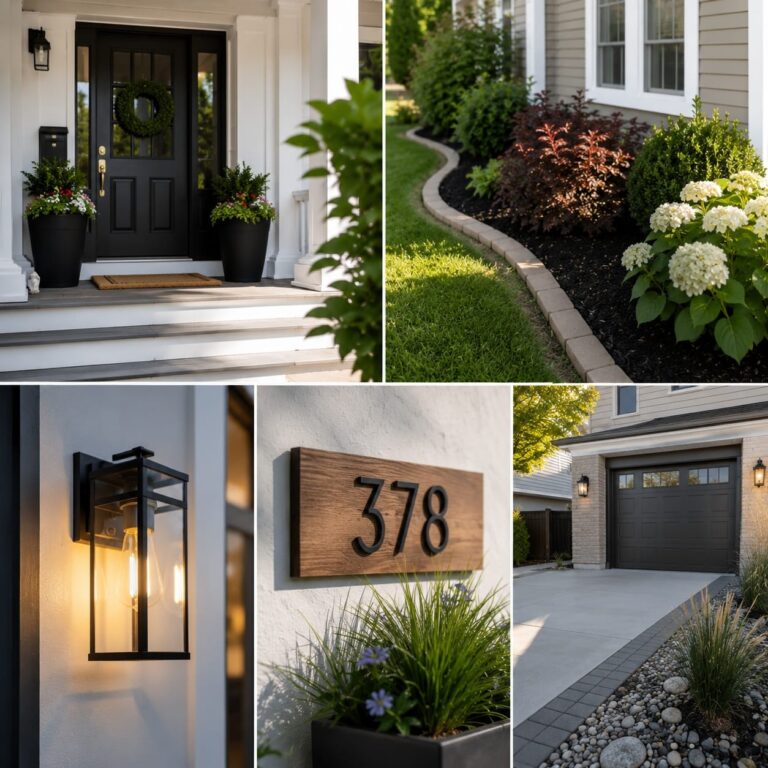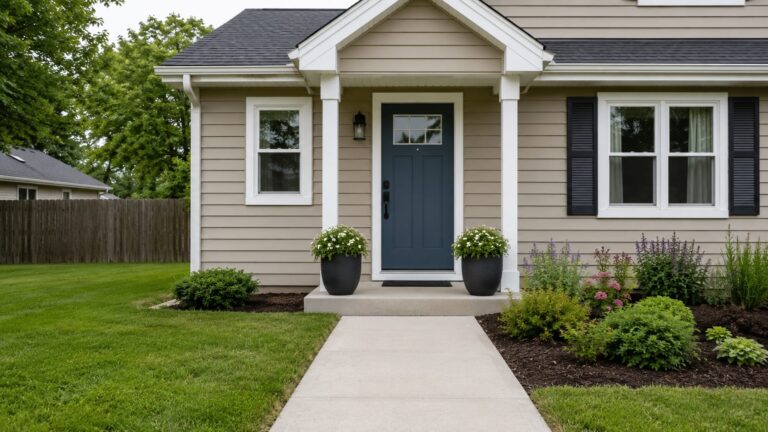
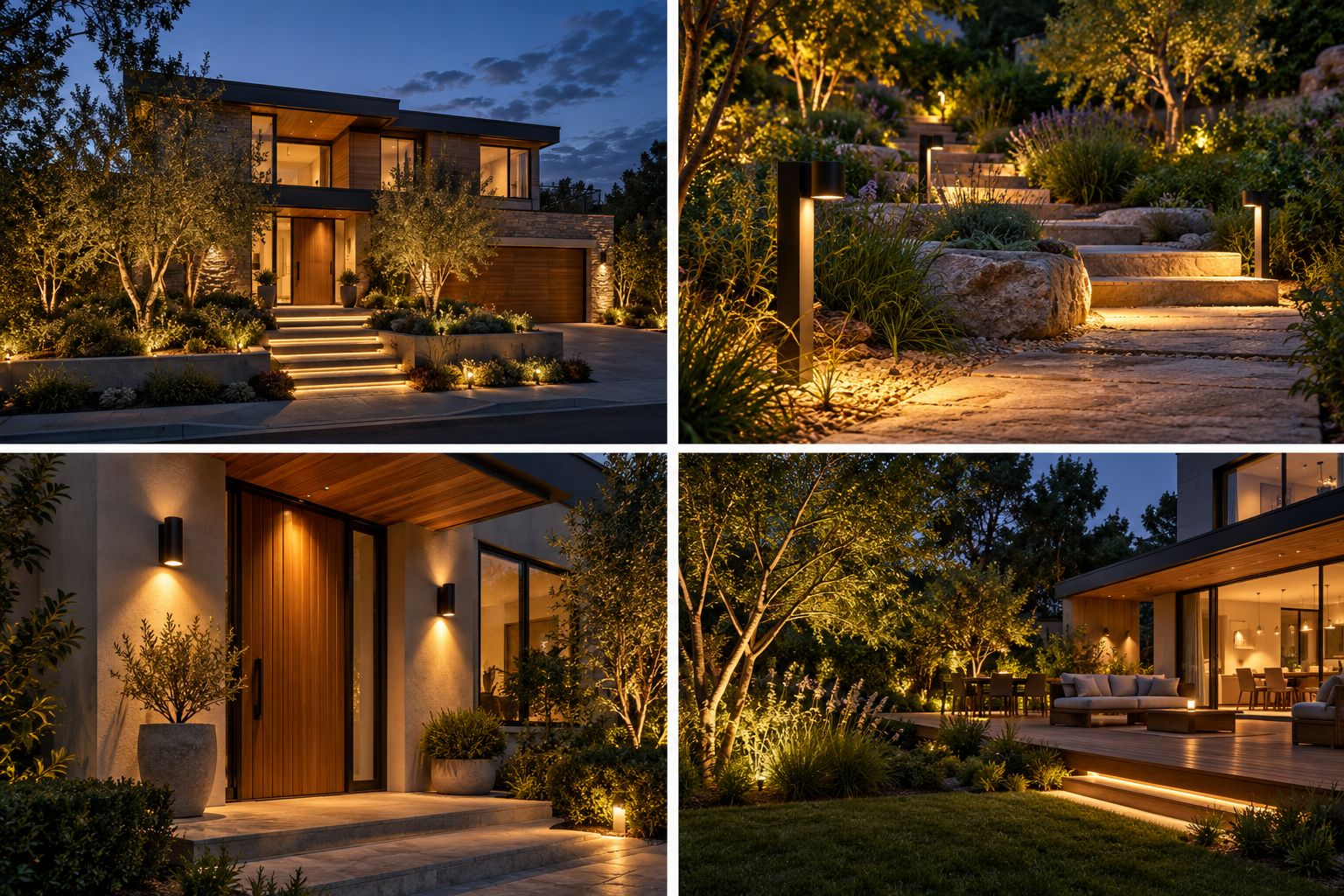
Your exterior can look tired for one simple reason, the house is dark after sunset. A few well-placed lights can improve safety, comfort, and curb appeal without turning your yard into a runway.
The real problem is picking the fix that gives you the biggest visible return this year. A homeowner on a budget has to think about wiring, bulb changes, HOA rules, and what will still look good in January, not just on a sunny afternoon. Cheap lights that glare are worse than no lights at all.
Good exterior lighting should help people see the path, notice the front door, and feel comfortable walking up at night.
That means the smartest upgrades usually start where people actually move, park, and enter the home, then work outward from there.
The fastest fixes with the biggest payoff
If you only have room in the budget for a few changes, start where the light does the most work: the front walk, the entry, and the driveway edge. Those are the places people notice first, and they are the places where poor lighting creates real risk.
Path lights come first when the walk is dark or uneven. You do not need a row of bright fixtures. A few low lights that show the edge of the path are usually enough. If your front steps are the problem, add a light where the tread changes. That helps guests, delivery drivers, and you on a rainy night.
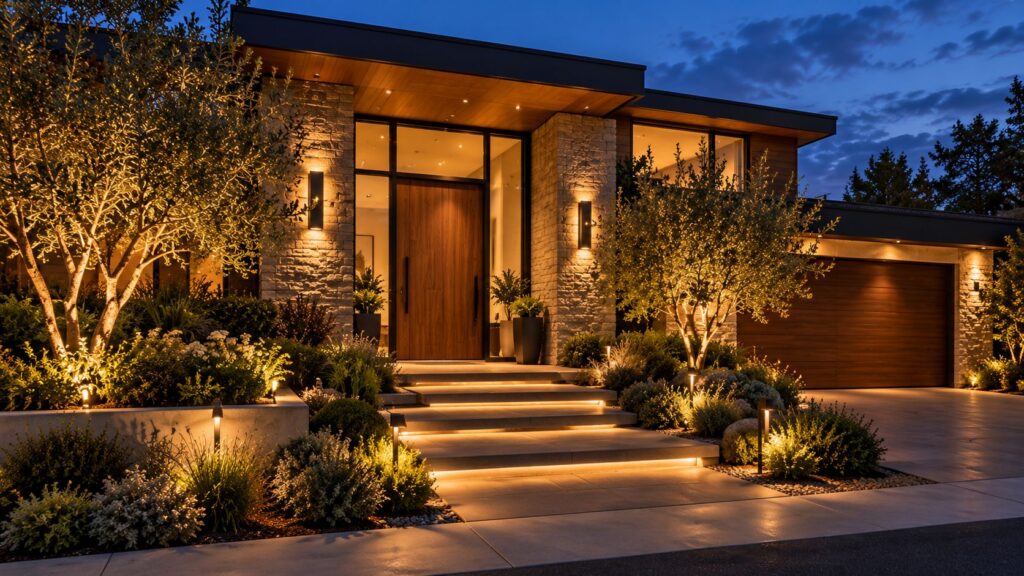
Next, put light on the front door itself. A porch light or a pair of small sconces makes the entry feel finished and easier to use. This is one of the best returns on a modest budget, because it improves both comfort and curb appeal at the same time. If your current fixture throws glare into your eyes, replacing it can make the whole front of the house feel calmer.
After that, look at the driveway and garage area. A dark garage face makes the house look closed off. One fixture on each side of the garage, or a light that washes the area evenly, can clean up the front view fast. If you are choosing between lighting the yard and lighting the entry, start with the entry. People need to find the door before they admire the shrubs.
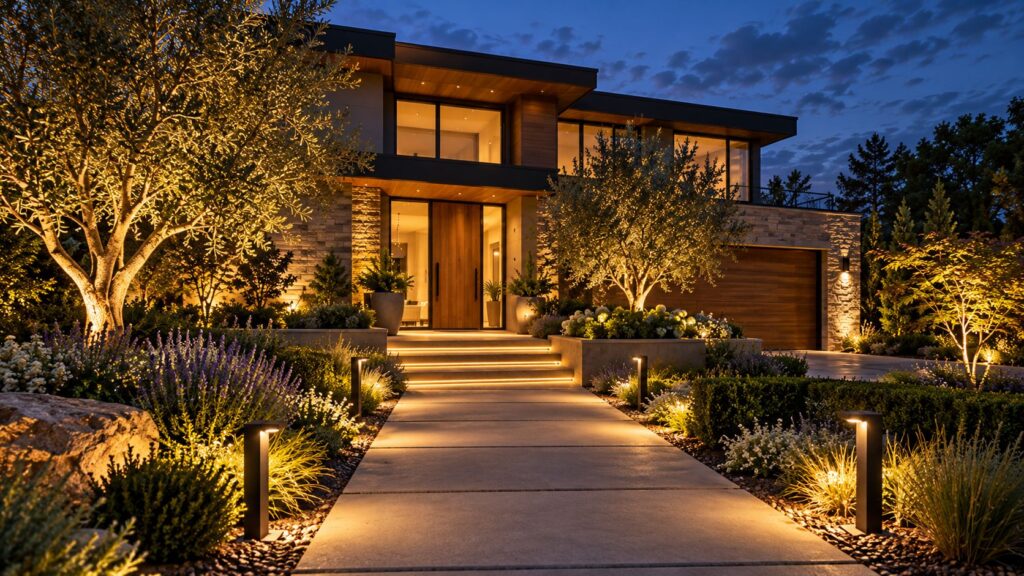
The best budget lighting plan is simple, useful, and easy to maintain. If a fixture is hard to reach, hard to clean, or hard to replace, it will cost you more later.
For homeowners trying to stretch dollars, this is a good place to pair lighting with improving curb appeal on a budget. Small upgrades work best when they solve more than one problem.
- Light the path first, then the entry, then the driveway edge if money is tight.
- Choose fixtures that reduce glare and show the walking surface clearly at night.
- Match the lighting plan to your climate, HOA rules, and how often you can maintain it.
Key takeaways
- Start with the front walk, because safe footing usually beats decorative lighting.
- Put your next dollar at the front door, where light improves use and appearance.
- Use fewer fixtures with better placement, so you avoid glare and future maintenance headaches.
Match the light to the job
Different fixtures do different work. That sounds obvious, but a lot of front yards get one bright light trying to do everything, and it usually does none of it well.
Porch lighting is for the front door area. It should make faces visible, help you find keys, and make the entry feel welcoming. A single fixture can work on a small porch, while a pair of sconces usually looks better on wider fronts. Keep the light aimed down or shielded so it does not blast into your eyes.
Path lights are for guidance, not drama. They mark the edge of a walk, steps, or a short side path. Use them where people actually place their feet. A few low fixtures spaced out along a 20-foot walk often do more than a bright floodlight across the whole yard. Too much light can make the path harder to read.
Security lighting covers larger areas like driveways, side yards, and back corners. Motion-activated fixtures are useful here because they save energy and only turn on when needed. They are best for dark spots, not for the front door itself. If the light is too harsh, it can feel like a spotlight instead of protection.
Accent lights are the finishing touch. They highlight a tree, brick detail, or a nice entry column. Use them sparingly. One or two well-placed accents can add depth, but a yard full of them starts to look busy and costs more to maintain. If you are also thinking about improving curb appeal on a budget, this is where restraint pays off.
The right fixture is the one that solves one problem clearly. If it is trying to light the door, the walk, and the whole yard, it is probably doing all three badly.
| Option | Typical cost | Best for |
|---|---|---|
| Porch light or wall sconce | $50 to $300 per fixture, plus installation if needed | Front door visibility and a finished entry |
| Path lights | $20 to $100 each, depending on wiring or solar | Walkways, steps, and narrow side paths |
| Motion-activated security light | $40 to $250 per fixture, plus installation if needed | Driveways, side yards, and dark corners |
| Accent light | $30 to $150 each | Trees, columns, stonework, or a focal point |
Size and placement matter more than style
A fixture can look fine in the store and still look wrong on your house. The problem is usually scale. A tiny sconce on a wide two-story front can feel lost. A huge lantern on a small ranch can look crowded and awkward.
Start by thinking about the wall, not the catalog. On a single-story entry, a porch light between about 8 and 12 inches wide is often enough. On a taller front, fixtures around 12 to 18 inches usually read better from the street. The goal is balance, not size for its own sake.
Placement matters just as much. Mount wall lights so the center of the fixture sits near eye level, often around 5 to 6 feet from the ground, depending on the porch height and trim layout. That keeps the light useful without shining straight into someone’s face. For a pair of lights, line them up with the door or columns so the front looks intentional.
Brightness is where a lot of homeowners overspend. A light that is too strong can wash out the entry and make the house feel harsher at night. Use enough light to see the steps, the lock, and the walkway, then stop. More light is not the same thing as better light.
If a fixture looks like jewelry on the house, it is probably too small. If it looks like equipment, it is probably too big.
Before you buy, stand at the curb and look at the front in daylight and again after dark. Check these three things:
- Does the fixture fit the width of the door or porch wall?
- Does the light land where people walk and reach?
- Does the fixture stay in scale with the rest of the house?
If you are still sorting out priorities, this is part of planning an exterior renovation. The right size now can save you from replacing a fixture that looked good online but never looked right on the house.
Budget-friendly ideas that still look finished
You do not need a full rewiring job to make the front of the house feel safer and cleaner at night. A few small upgrades can handle the most-used areas and still stay inside a modest budget. The trick is to fix the spots people actually use, then leave the rest alone.
Solar path lights are the cheapest way to mark a walk or driveway edge, especially if you have a short front path or a side route to the gate. They are easy to install, but they can fade faster in shaded yards or cloudy climates. If your front yard gets weak sun, wired low-voltage lights may last longer and save you from replacing batteries and dead heads every season.
For the porch, a simple fixture swap often gives the best visible return. A dated light with yellowed glass or rust stains pulls the whole entry down. A clean, plain wall sconce in the right size usually looks better than a fancier shape that does not fit the house. Finish matters more than flash.
If you have an outlet or existing junction box, a motion light near the side yard or garage can solve a real safety problem without lighting the whole block. Keep the sensor aimed at the area you need, not the neighbor’s window or the street. That is where a lot of cheap installs go wrong.
Simple upgrades beat full rewiring when the wiring is already in decent shape and the goal is to improve one entry, one walk, or one dark corner. If the house needs new boxes, buried cable, or trenching across a hardscape, costs climb fast. In that case, it may make more sense to do one section this year and leave the rest for later, especially if you are also working around HOA rules or permit limits.
A lot of good-looking lighting plans are really just one clean porch light, two path markers, and one motion fixture placed where it earns its keep.
From the field
The jobs that pay off fastest are usually the unglamorous ones. If water is getting behind the gutter line or pooling at the base of the wall, a fresh light fixture will not hold up the paint or the trim for long. I have seen homeowners spend money on new sconces and then repaint the same fascia board two years later because the roof edge was never right. Fix the drainage path first, then add the lights that finish the front of the house.
Avoid common mistakes before you buy
Outdoor lights fail in a few predictable ways. The first is glare. A bare bulb or a fixture aimed too high can make the front feel harsh instead of welcoming, and it can leave the steps harder to see.
Color temperature matters too. Very cool light can make brick, siding, and paint look flat or bluish. For most homes, a warmer tone usually feels better on the eye and more natural at the door. Too much blue-white light is one of the fastest ways to make a house look less inviting.
Coverage is another common miss. One bright light at the porch does not help if the side path, garage corner, or front steps stay dark. You want light where people walk, turn, and unlock doors. Bright in the wrong place is still a problem.
Before you buy, check the practical stuff:
- Is the fixture rated for wet or damp locations, based on where it will sit?
- Does your HOA limit fixture style, size, or color?
- Do you need a permit or an electrician for new wiring, a new box, or added circuits?
- Will the light survive your climate, from summer heat to freeze-thaw cycles and coastal salt air?
If you are replacing an old fixture, look at the mounting box and the surrounding trim before you order anything. Rust, cracked siding, or loose wood can turn a simple swap into a repair job. That is why planning an exterior renovation matters, even for a small lighting update.
A good outdoor light should disappear into the house by day and do its job at night. If it draws attention for the wrong reasons, it is probably the wrong choice.
If you are trying to stretch the budget, start with one front entry and one dark side area. That gives you safety, comfort, and a cleaner look without paying for more than the house can use right now. For more ideas on improving curb appeal on a budget, focus on the spots people see first and touch every day.
What homeowners ask before installing lights
The first question is usually about size. For most front entries, a fixture that is too large looks awkward, and one that is too small disappears. A good rule is to match the light to the door and porch scale, not to the catalog photo. Proportion beats decoration every time.
Bulb color matters more than people expect. Warm white, around 2700K to 3000K, usually feels best on siding, brick, and wood trim. Cooler light can read harsh and make the front of the house feel more like a parking lot. That is rarely the look anyone wants.
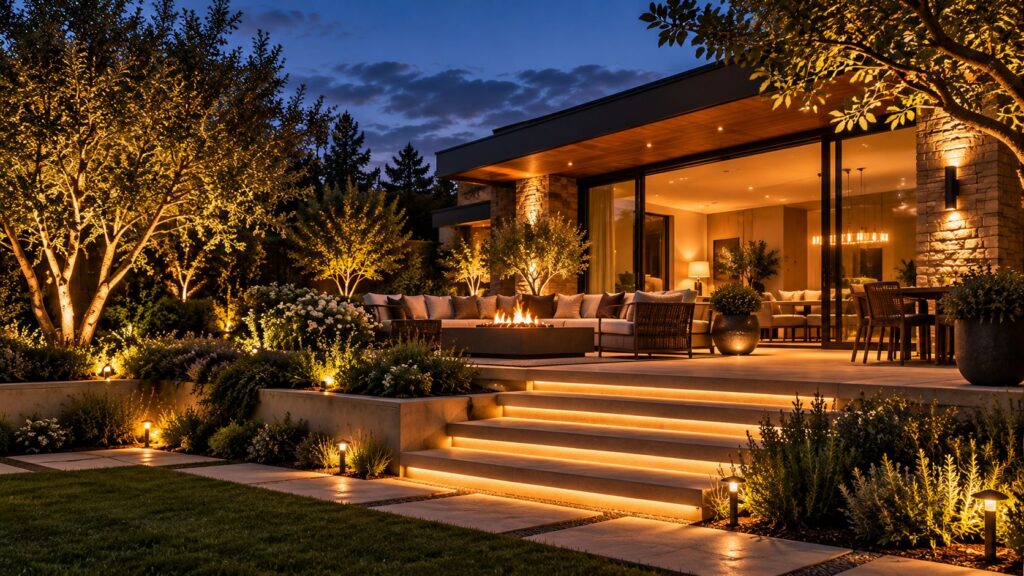
Placement is about function first. Put light where you walk, step down, unlock the door, or turn a corner. A single bright fixture over the porch does little if the steps, side yard, or garage approach stay dark. One well-placed light can do more than three random ones.
Cost depends on what already exists. A simple fixture swap may stay in the low hundreds if the wiring is sound. Adding a new box, trenching cable, or hiring an electrician for multiple runs can push the job into the $1,000 to $3,000 range or more, depending on the house and local labor.
The best visible return usually comes from fixing the entry, then the darkest path you use every night. That is where safety and curb appeal overlap.
How big should a porch light be?
A porch light should look balanced with the door and the wall around it. On many homes, a fixture about one-quarter to one-third the height of the door works well. If the porch is wide or the front elevation is tall, you may need a larger sconce or a pair of fixtures to keep the scale right.
What bulb color looks best outside?
Warm white is the safest choice for most homes. It gives brick, siding, and trim a softer look and feels more welcoming at night. Cooler bulbs can make the front look flat or overly bright. If you want the house to feel calm and finished, stay in the warm range.
Which upgrade gives the biggest visible return?
A clean front entry light usually gives the quickest payoff, especially if the current fixture is rusty, dated, or too small. After that, lighting the main walk or steps makes the house feel safer and more cared for. Those two changes are often more visible than adding light all over the yard.
Do I need an electrician for exterior lights?
Not always. If you are replacing an existing fixture and the box is sound, many homeowners hire the work out or handle it themselves if they are comfortable with basic electrical tasks. New wiring, new circuits, buried cable, or work near damaged trim is a different job and usually calls for a licensed electrician.
How much light is enough?
Enough light lets you see the steps, the lock, and the path without glare. You do not need the front of the house lit like a storefront. If your eyes have to adjust hard when you walk up, the fixture is probably too bright or aimed wrong. Good lighting should feel easy, not dramatic.