A homeowner has a leaking roof, an overgrown yard, a cracked patio, or a deck that needs repair. What do they do first? Most of the time, they grab their phone and search for someone nearby who looks trustworthy, available, and easy to contact.
That moment matters. If your contracting business is hard to find online, has outdated contact information, shows very few photos, or makes people work too hard to request a quote, you may lose the lead before you even know it existed.
The good news is that being easier to find online does not have to mean complicated marketing talk or chasing every new trend. For most contractors, it starts with the basics: a clear website, a complete business profile, real project photos, consistent contact details, good reviews, and simple ways for homeowners to reach you. 🛠️
This guide keeps things practical for contractors, remodelers, landscapers, roofers, deck builders, patio installers, lawn care companies, painters, and other local service businesses that want to show up better and earn more trust online.
Quick Summary
Contractors can be easier to find online by making their business information clear, keeping their website useful, showing real work, collecting reviews, and making it simple for homeowners to call or request an estimate.
- Be clear: say what services you offer, where you work, and how people can contact you.
- Build trust: use real project photos, reviews, licenses when relevant, and simple explanations.
- Stay consistent: keep your phone number, business name, service area, and hours updated everywhere.
📍 Start With the Basics: Can People Tell What You Do?
This sounds obvious, but many contractor websites and online profiles make people guess. A visitor should be able to understand three things in just a few seconds:
- What type of work you do
- Where you provide service
- How to contact you
For example, “Quality Outdoor Solutions” might sound professional, but it does not tell a homeowner whether you build decks, install patios, maintain lawns, design landscapes, repair fences, or do all of the above.
A clearer message would be something like: Deck building, patio installation, and backyard upgrades for homeowners in the Phoenix area.
You do not need fancy wording. You need clarity. Homeowners are often busy, stressed, or comparing several contractors at once. Make it easy for them to know they are in the right place.
🏠 Make Your Website Simple and Useful
A contractor website does not have to be huge. It does need to answer the questions homeowners already have before they call.
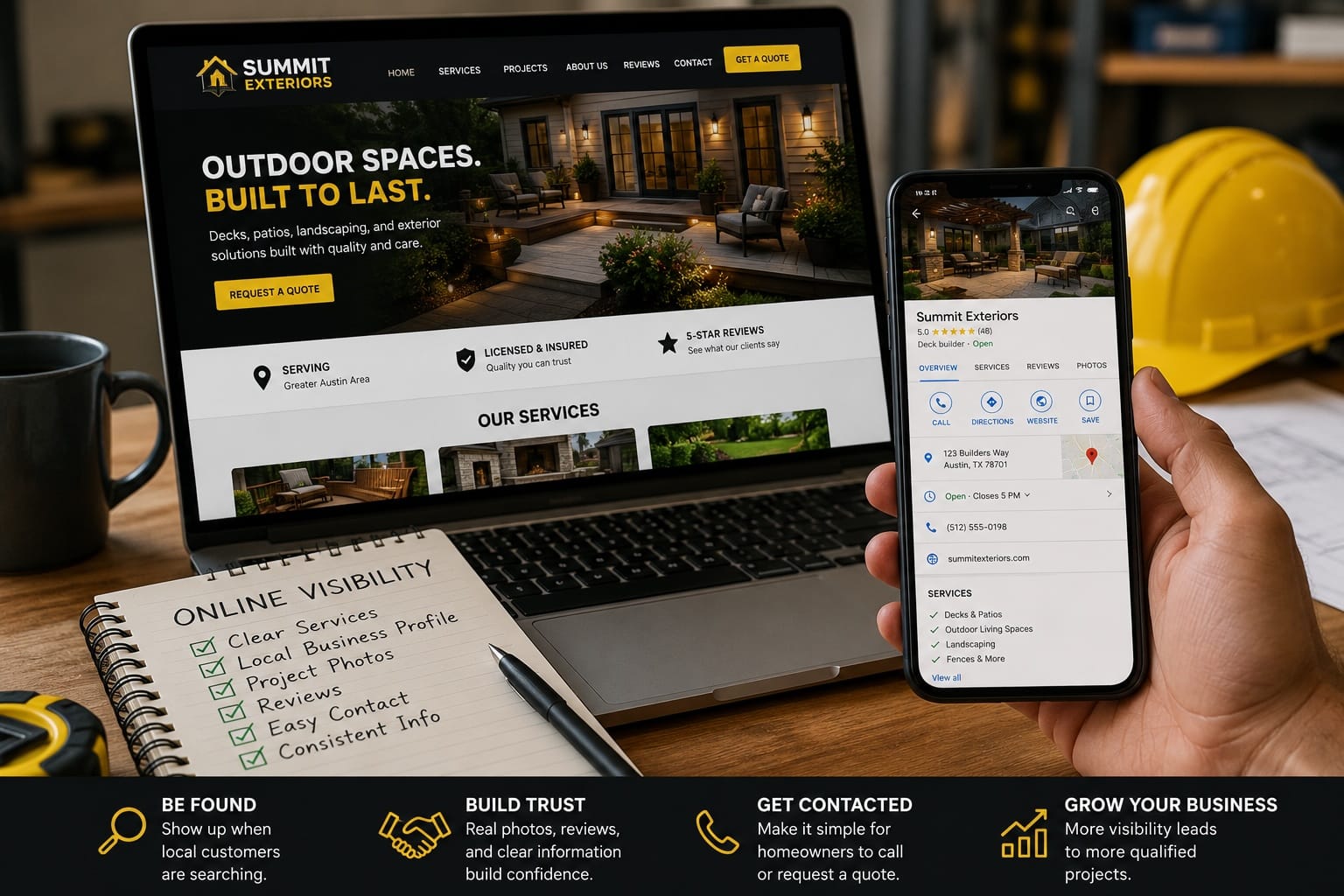
At minimum, your website should include:
- Your main services: clearly listed and explained in plain language.
- Your service area: towns, counties, neighborhoods, or region you cover.
- Project photos: real examples of your work whenever possible.
- Contact options: phone, form, email, and business hours.
- Trust signals: reviews, years in business, insurance, licenses, certifications, or associations if relevant.
The site should also work well on a phone. Many homeowners search while standing in the yard, sitting in the car, or comparing contractors after work. If your website is slow, hard to read, or difficult to tap, people may leave.
Keep the call button easy to find
Your phone number should not be buried at the bottom of one page. Put it in the header, footer, contact page, and key service pages. On mobile, use a tap-to-call button if possible. A homeowner ready to call should not have to hunt for your number. 📞
🧭 Keep Your Business Information Consistent Everywhere
One of the simplest ways to become easier to find is to keep your business information consistent across the web. That means your business name, phone number, address or service area, website, and hours should match wherever your company appears.
Places to check include your website, Google Business Profile, Facebook page, Yelp, Angi, Houzz, HomeAdvisor-style directories, local chamber pages, industry directories, and any old listings that may still show up.
Inconsistent information creates confusion. If one listing has an old phone number and another says you serve a different city, customers may hesitate or call someone else.
| Online Item | What to Check | Why It Matters | Simple Fix |
|---|---|---|---|
| Business name | Spelling, punctuation, legal or trade name | Helps customers recognize the same company everywhere | Use one clear business name across profiles |
| Phone number | Old numbers, tracking numbers, typos | Missed calls can mean missed jobs | Update listings and test click-to-call links |
| Service area | Cities, counties, neighborhoods, travel radius | Homeowners need to know if you work in their area | List your main service areas clearly |
| Hours | Weekdays, weekends, emergency availability | Sets expectations before people call | Keep hours accurate on your site and profiles |
| Website link | Broken links or old domains | People may leave if the link fails | Check every major profile quarterly |
⭐ Treat Your Google Business Profile Like a Front Door
For many contractors, a Google Business Profile is one of the first things a homeowner sees. It may show your photos, reviews, hours, service area, phone number, directions, and website link before someone ever visits your site.
That profile should feel active and complete. Add your main services, upload real photos, keep your hours updated, answer common questions, and respond to reviews when appropriate.
Think of it like a digital storefront. Even if you do not have a physical showroom, your online profile gives people a first impression of how organized and trustworthy your business feels.
📸 Show Real Photos of Real Work
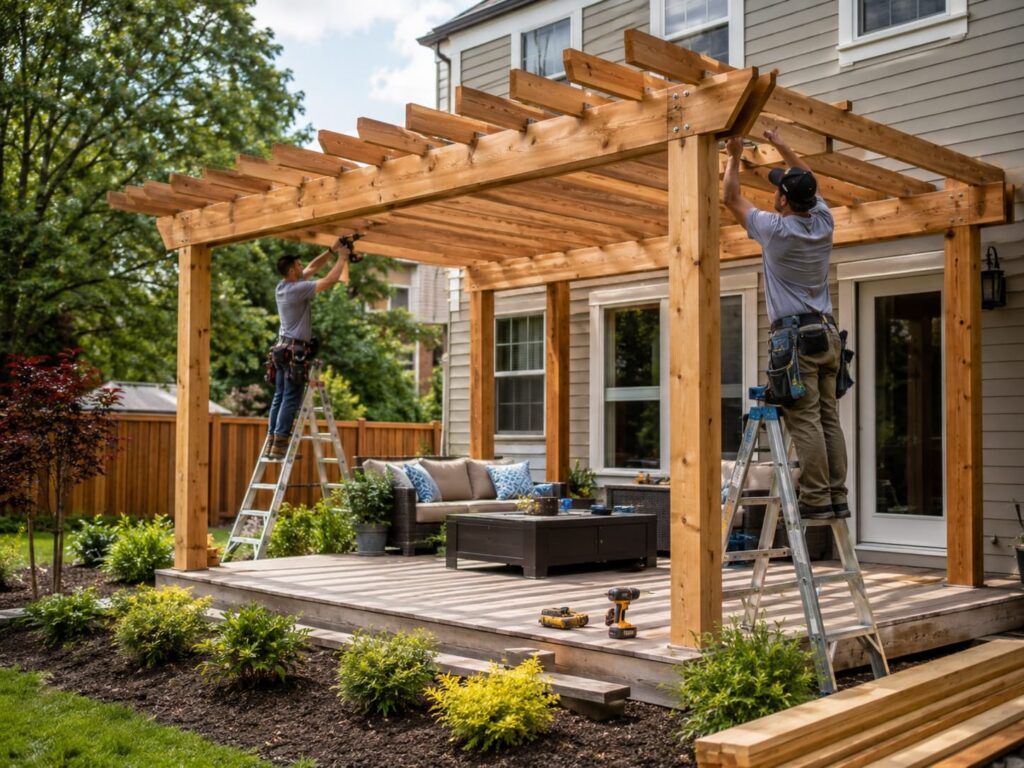
Contractors often underestimate how powerful photos are. Homeowners want to see what you can actually do. Stock images may look polished, but real project photos build more trust.
Use photos of completed decks, patios, landscaping projects, exterior painting jobs, roof repairs, fences, outdoor kitchens, concrete work, or whatever service you provide. Before-and-after photos are especially useful because they show the transformation.
You do not need professional photography for every job. Clear phone photos can work if they are bright, sharp, and show the work well. Take photos before tools and debris are in the way, then take finished photos once the site is cleaned up.
Photo ideas contractors can collect
- Before-and-after shots
- Finished projects from different angles
- Close-ups of craftsmanship and details
- Team members working safely on site
- Work trucks, equipment, or branded uniforms
- Seasonal examples, such as spring landscaping or winter roof repairs
Always get permission before using customer property photos, especially if the home number, street, people, or private areas are visible.
🧰 Create Clear Service Pages
If you offer several services, give each important service its own clear page. A landscaper might have separate pages for lawn maintenance, landscape design, patio installation, drainage solutions, and seasonal cleanup. A home exterior contractor might have pages for siding repair, window replacement, gutter installation, deck repair, and exterior painting.
Each page should answer practical questions:
- What does the service include?
- What problems does it solve?
- What types of homes or yards is it best for?
- What should the customer expect during the process?
- How can someone request an estimate?
This helps homeowners land directly on the page that matches their need. It also makes your business easier to understand for people comparing options.
🗺️ Be Clear About Where You Work
Contractors lose leads when homeowners cannot tell whether the company serves their area. Do you work in one city? A whole county? A 30-mile radius? Several nearby towns?
Add your service area to your homepage, contact page, footer, business profile, and service pages where it feels natural. You can keep it simple: “Serving homeowners in Nashville, Franklin, Brentwood, and nearby communities.”
Avoid claiming areas you do not actually want to serve. That can create wasted calls, frustrated customers, and poor lead quality. Better visibility should bring better-fit leads, not just more noise.
💬 Ask Happy Customers for Reviews
Reviews help homeowners feel safer contacting you. They show that real people hired you, worked with you, and had an experience worth sharing.
The best time to ask for a review is usually soon after a successful project, when the customer is happy and the work is fresh in their mind. Keep the request simple and polite.
You might say: “Thanks again for trusting us with the project. If you were happy with the work, a quick review would really help other local homeowners find us.”
Do not pressure people, and do not offer rewards in ways that violate platform rules. The goal is honest feedback. A steady flow of real reviews is more helpful than a sudden burst that looks forced.
📞 Make Contact Easy and Low-Stress
Some contractors do a good job getting found, then lose people at the contact stage. Maybe the form is too long. Maybe there is no phone number. Maybe no one answers. Maybe the voicemail is full. Maybe the contact page looks outdated.
Make it easy for a homeowner to take the next step. Include:
- A visible phone number
- A short quote request form
- An email address if you use it regularly
- Business hours
- Expected response time
- What information the customer should provide
A good contact form asks enough to qualify the lead without overwhelming people. Name, phone, email, location, service needed, and a short project description are often enough to start.
🧑🔧 Show the People Behind the Business
Homeowners are not just hiring a service. They are letting someone onto their property. Trust matters.
Add a short “About” section that explains who you are, what you do, and how you work. Mention your experience, values, team, service area, and what customers can expect. Keep it human.
Photos of your team, owner, work trucks, or crew on a job site can help. You do not need to pretend to be a giant company if you are a small crew. Many homeowners like working with local contractors because the relationship feels direct and personal.
🧾 Explain Your Process
Many homeowners are nervous because they do not know what happens after they call. Do you offer free estimates? Do you visit the property? Do they need measurements? How long does scheduling take? What happens after approval?
A simple process section can reduce hesitation:
- Step 1: Call or request an estimate.
- Step 2: We review your project and service area.
- Step 3: We schedule a site visit or consultation if needed.
- Step 4: You receive a clear estimate.
- Step 5: Work is scheduled after approval.
This is not flashy, but it works. People are more likely to reach out when they know what to expect.
📱 Keep Social Media Practical
Contractors do not need to dance on camera or post every day to be visible online. Social media can be useful when it shows real work, answers common questions, and reminds local customers that your business is active.
Simple post ideas include recent project photos, before-and-after shots, seasonal tips, crew updates, maintenance reminders, storm preparation advice, and answers to common homeowner questions.
The key is consistency. A Facebook or Instagram page that has not been updated in three years may make people wonder whether the business is still active.
🧱 Get Listed in the Right Local Places
You do not need to be listed everywhere. Focus on places homeowners might realistically check. Depending on your trade and area, that may include local directories, neighborhood groups, chamber of commerce pages, trade associations, review platforms, and manufacturer contractor lists.
Quality matters more than quantity. A clean profile with accurate information, photos, and reviews is better than dozens of forgotten listings with old details.
🚫 Common Online Mistakes Contractors Make
Many visibility problems come from small things that are easy to fix. Watch out for these:
- No website, or a website that only says “coming soon”
- Phone number hard to find on mobile
- Old service areas or outdated hours
- No project photos
- Reviews left unanswered for years
- Services described too vaguely
- Contact forms that do not work
- Social media pages that look abandoned
- No mention of licenses, insurance, or qualifications where relevant
The fix is not always expensive. Sometimes it is simply organizing what you already have.
✅ A Simple Online Visibility Checklist for Contractors
Use this checklist as a starting point:
- Website: clear services, service area, project photos, and contact options.
- Business profile: updated hours, phone, services, photos, and reviews.
- Photos: real examples of your work added regularly.
- Reviews: ask happy customers and respond professionally.
- Contact: test your phone number, form, email, and voicemail.
- Listings: make sure your business name and phone number match across major sites.
- Trust: show your team, process, qualifications, and real local experience.
🌱 Being Easier to Find Is Really About Being Easier to Trust
Getting found online is not just about showing up in search results. It is about giving homeowners enough confidence to choose you over the next contractor on the list.
Be clear about what you do. Show where you work. Use real photos. Keep your information updated. Ask for reviews. Make contact simple. Explain your process. Those basics help homeowners feel like they are dealing with a real, organized, trustworthy local business.
You do not need to sound like a marketing agency. You need to sound like a contractor people can understand, contact, and trust. That is what makes your business easier to find — and easier to hire. 👍
❓ FAQ: Helping Contractors Get Found Online
What is the easiest way for a contractor to be found online?
Start with a complete business profile, a simple website, clear service areas, real project photos, and accurate contact information. These basics help homeowners find and understand your business quickly.
Does a contractor really need a website?
In most cases, yes. A website gives you a place to explain your services, show project photos, list service areas, answer common questions, and make it easy for people to contact you.
How important are reviews for contractors?
Reviews are very important because they help build trust. Homeowners often compare contractors before calling, and recent honest reviews can make your business feel more reliable.
What should contractors post online?
Good posts include before-and-after photos, completed projects, seasonal tips, maintenance reminders, team updates, and answers to common customer questions.
How can contractors get better local leads?
Be clear about your services and service area, show real examples of your work, collect reviews, and make the contact process simple. Better information usually attracts better-fit customers.
How often should a contractor update online profiles?
Check major profiles at least a few times a year, and update them whenever your hours, phone number, services, photos, or service area changes.