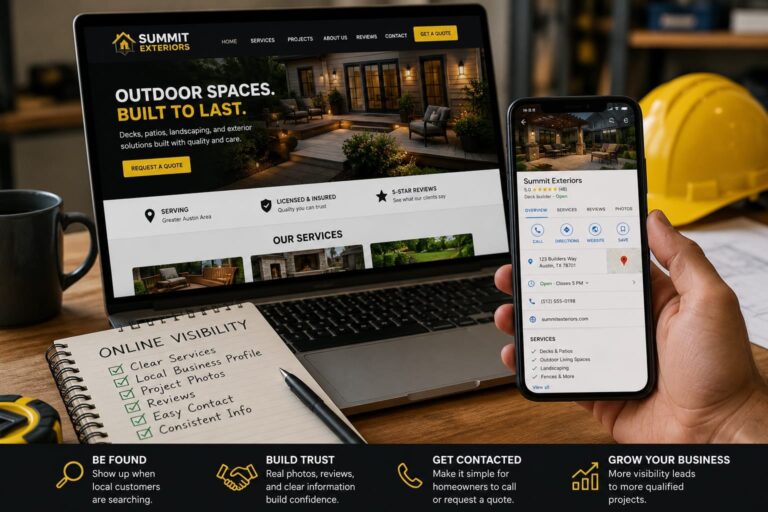
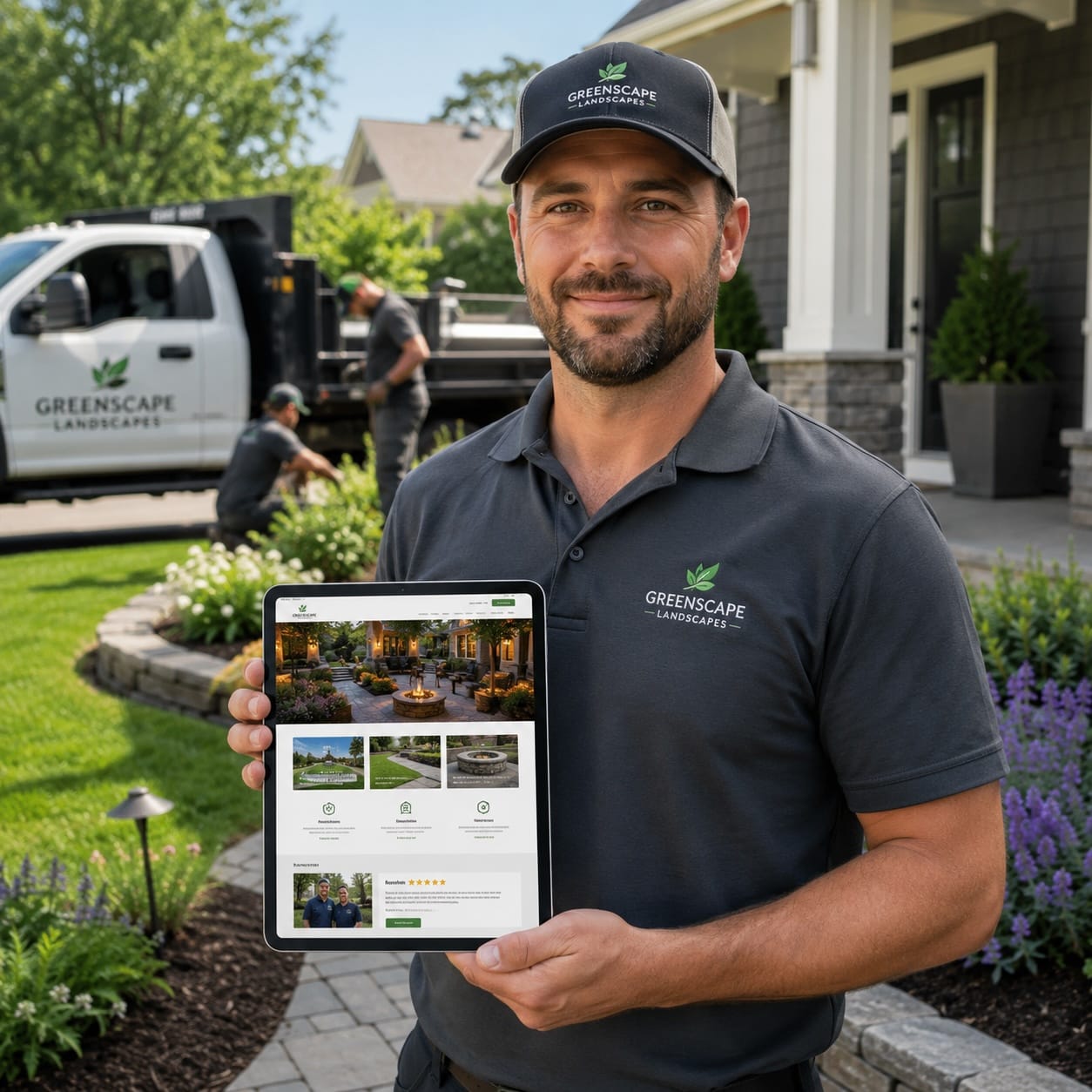
A homeowner looks out at their yard and thinks, “This needs help.” Maybe the lawn is patchy, the shrubs are overgrown, the front beds look tired, or they want a patio, planting plan, or seasonal cleanup. Then they do what most people do now: they search online.
They are not always looking for the fanciest landscaping company. They are looking for someone who seems reliable, local, easy to understand, and simple to contact. If your landscaping website is confusing, outdated, slow, or missing basic information, that homeowner may move on before you ever get a chance to talk.
A clear website does not have to be complicated. It does not need flashy animations, heavy marketing language, or a hundred pages. For most landscaping businesses, the goal is much simpler: explain what you do, show real work, build trust, and make it easy for someone to request a quote. 🌿
Quick Summary
A landscaping business needs a clear website because homeowners want fast answers before they call. Your site should explain your services, show your service area, display real project photos, include reviews, and make contact simple.
- Clarity wins: visitors should quickly know what you do and where you work.
- Photos build trust: real lawns, patios, plantings, and cleanups show what customers can expect.
- Easy contact matters: phone numbers, quote forms, and service details should be easy to find.
🌱 A Website Helps Homeowners Understand What You Actually Do
“Landscaping” can mean a lot of different things. One company may focus on lawn mowing and maintenance. Another may design planting beds. Another may build patios, retaining walls, pergolas, outdoor lighting, or drainage systems.
If your website only says “professional landscaping services,” people still have to guess. And when homeowners are comparing several companies, guessing is friction.
A clear website should tell visitors exactly what you offer. For example:
- Lawn mowing and weekly maintenance
- Mulch installation and bed edging
- Landscape design and planting
- Seasonal cleanups
- Patio and walkway installation
- Drainage solutions
- Tree and shrub planting
- Outdoor lighting
You do not need to list every tiny task, but your main services should be obvious. A homeowner should know within seconds whether your company is a possible fit.
📍 It Shows Where You Work
One of the most common questions homeowners have is simple: “Do they serve my area?”
If your website does not clearly show your service area, people may hesitate to call. They may assume you are too far away, or they may choose a competitor who clearly lists nearby towns, neighborhoods, or counties.
Add your service area to your homepage, contact page, footer, and service pages where it feels natural. Keep it simple and honest. For example:
Serving homeowners in Raleigh, Cary, Apex, Wake Forest, and nearby communities.
This is especially helpful for landscaping businesses because local work matters. Travel time, crew scheduling, equipment routes, and recurring maintenance routes all affect profitability. A clear service area helps attract better-fit leads, not just more random calls.
📸 Real Project Photos Do More Than Words
Landscaping is visual. Homeowners want to see lawns, gardens, patios, plantings, mulch beds, walkways, outdoor lighting, and finished outdoor spaces. A clear website gives you a place to show that work in an organized way.
Stock photos may look polished, but real photos usually build more trust. They show your style, your quality, and the kind of properties you actually work on.
Good landscaping photos include:
- Before-and-after transformations
- Fresh mulch and edging projects
- New plantings and garden beds
- Lawn maintenance results
- Patio, walkway, or hardscape projects
- Seasonal cleanup results
- Outdoor lighting at dusk
The photos do not need to be perfect, but they should be clear, bright, and tidy. Take pictures after tools, bags, hoses, and debris are removed. A clean jobsite photo says a lot about how your business works. 📷
⭐ A Clear Website Builds Trust Before the First Call
Homeowners are careful about who they hire. They are inviting someone onto their property, sometimes for recurring service. Trust matters.
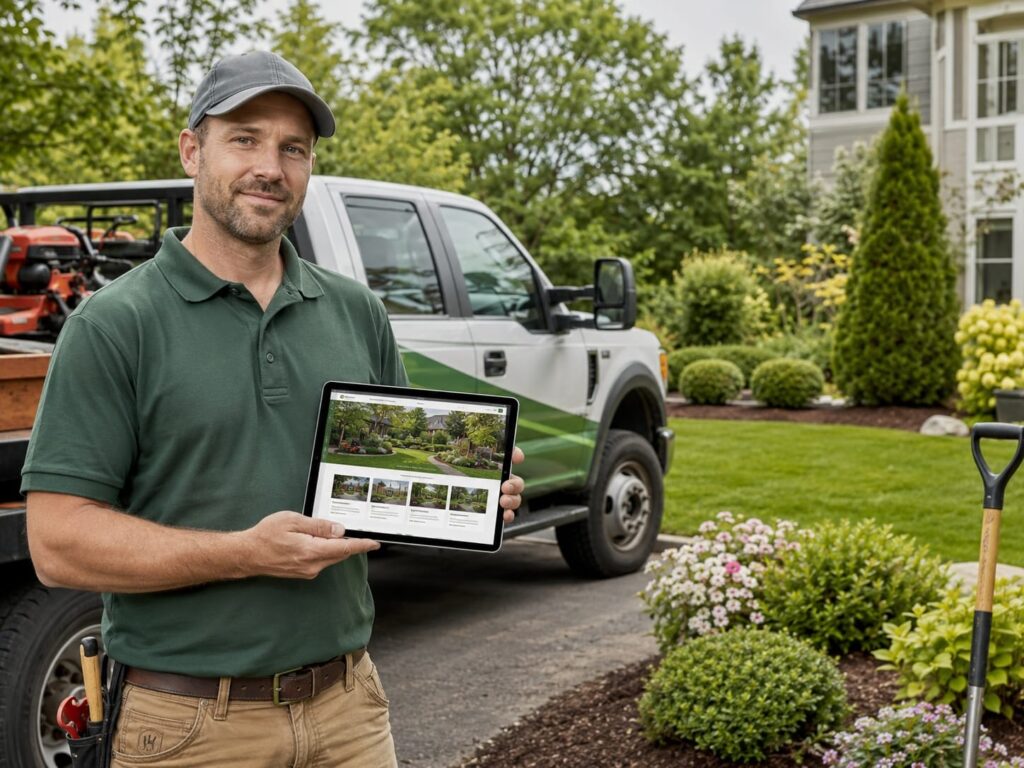
Your website can answer trust questions before the customer picks up the phone. It can show that your business is real, active, organized, and experienced.
Helpful trust signals include:
- Customer reviews or testimonials
- Years in business, if relevant
- Photos of your team or work trucks
- Licensing, insurance, or certifications where applicable
- Clear explanations of your process
- Real project examples
- Professional contact information
You do not need to sound like a giant company. Many homeowners like hiring local landscaping businesses because they feel personal and responsive. Your website should make that strength clear.
📞 It Makes Contact Easier
A landscaping website should make the next step obvious. If someone wants a quote, they should not have to search through five pages to find your phone number.
Put contact options in several places: the header, footer, contact page, homepage, and service pages. On mobile, a tap-to-call button can make a big difference.
A simple quote form is also helpful. Ask for enough information to understand the lead, but not so much that people give up.
| Website Element | What It Should Do | Why It Helps | Simple Tip |
|---|---|---|---|
| Phone number | Let customers call quickly | Many homeowners prefer fast contact | Place it in the header and make it tappable on mobile |
| Quote form | Collect project details | Helps qualify the request before calling back | Keep it short: name, phone, email, location, service needed |
| Service area | Show where you work | Reduces wasted calls from outside your area | List main cities or neighborhoods clearly |
| Project photos | Show real results | Builds confidence in your work | Use clean before-and-after images when possible |
| Reviews | Show customer satisfaction | Helps homeowners feel safer contacting you | Add recent reviews to key pages |
🧭 It Helps People Choose the Right Service
Not every homeowner knows what they need. Someone may search for “yard cleanup” when they really need shrub pruning, mulch, edging, and lawn repair. Someone else may ask for “landscaping” when they mean a full planting design.
A clear website can guide people. Service pages can explain what each service includes, when it makes sense, and what the customer can expect.
For example, a page about seasonal cleanups might explain leaf removal, bed cleanup, cutting back perennials, branch removal, and preparation for spring or fall. A patio installation page might explain planning, base preparation, paver options, drainage, and project timing.
This helps customers request the right thing. It also helps your team avoid spending time on calls that are not a good fit.
🧑🌾 It Shows Your Process
A lot of homeowners hesitate because they do not know what happens after they contact a landscaping company. Will someone visit the property? Is there a design fee? How fast can work begin? Do you offer recurring maintenance? Do they need to be home?
Your website can explain the process in a simple way:
- Step 1: Request a quote online or by phone.
- Step 2: Share your address, service needs, and photos if helpful.
- Step 3: Schedule a site visit or estimate.
- Step 4: Review the plan, price, and timeline.
- Step 5: Approve the work and get on the schedule.
This does not need to be fancy. It just needs to reduce uncertainty. People are more likely to reach out when the next step feels easy.
🌿 It Separates Maintenance, Design, and Installation
Landscaping businesses often offer different types of work, and those customers may have different needs.
A weekly lawn maintenance customer wants reliability, scheduling, pricing clarity, and consistent results. A design customer wants ideas, plant knowledge, style, and a sense of what the finished yard could look like. A hardscape customer wants confidence in construction, drainage, materials, and durability.
If all these services are mixed together on one vague page, visitors may feel lost. A clear website organizes your work so each customer can find what matters to them.
For many landscaping companies, separate pages for core services are worth it. They help homeowners understand your specialties and help your business look more professional.
📱 A Mobile-Friendly Website Is Non-Negotiable
Many homeowners will visit your website from a phone. They may be outside looking at their yard, checking companies during lunch, or comparing options while sitting on the couch.
If your website is hard to use on mobile, you may lose leads. Text should be readable, buttons should be easy to tap, photos should load properly, and forms should be simple.
Important mobile details include:
- Tap-to-call phone number
- Fast-loading pages
- Readable service descriptions
- Simple navigation
- Short quote form
- Clear project photos
A homeowner should be able to go from “I need help with my yard” to “I requested a quote” without frustration.
🛻 It Supports Your Local Reputation
Your landscaping business may already get referrals from neighbors, past customers, builders, real estate agents, or local groups. A website supports those referrals.
Imagine someone hears your company name from a neighbor. Before calling, they look you up. If they find a clean website with photos, services, reviews, and contact details, the referral feels stronger. If they find nothing, or an outdated page from years ago, the trust may weaken.
A clear website acts like your digital business card, portfolio, and front desk all in one place.
💬 It Gives You a Place to Answer Common Questions
Landscaping companies often answer the same questions again and again:
- Do you offer one-time cleanups?
- Do you handle weekly mowing?
- Can you install mulch?
- Do you design planting beds?
- What areas do you serve?
- Do you work with residential or commercial properties?
- How do estimates work?
Your website can answer these questions before the call. That saves time and helps customers feel more informed.
A short FAQ section on your homepage or service pages can be very useful. Keep the answers simple. Contractors and landscaping companies do not need complicated language to be effective.
🌼 It Makes Seasonal Services Easier to Promote
Landscaping is seasonal in many parts of the United States. Spring cleanups, mulch installation, mowing, summer maintenance, fall leaf removal, winter pruning, and holiday lighting all have timing.
A clear website gives you a place to highlight what is available now. You can update a section of the homepage, add a seasonal service page, or publish simple guides that answer timely homeowner questions.
For example:
- Spring cleanup and mulch scheduling
- Weekly mowing route openings
- Fall leaf cleanup availability
- Storm cleanup after heavy weather
- Landscape refresh packages before selling a home
This helps homeowners understand when to contact you and what services are currently relevant.
🚫 What Makes a Landscaping Website Confusing?
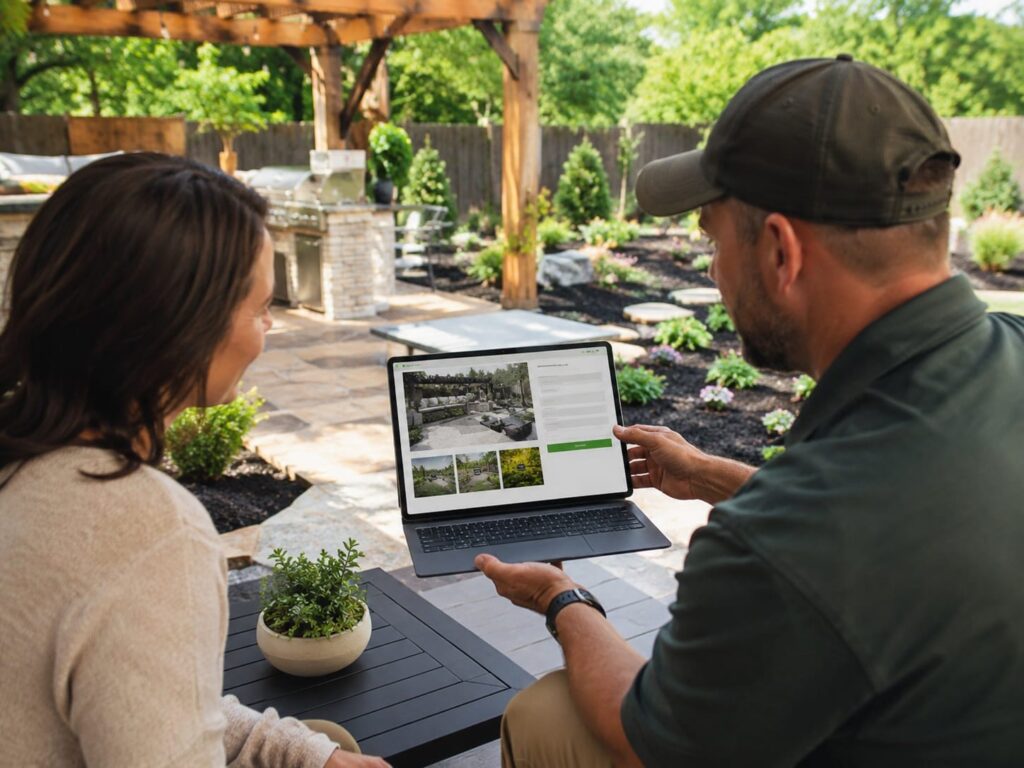
Sometimes a website exists, but it does not help much. Common issues include:
- No clear list of services
- No service area listed
- Old photos or no photos at all
- Phone number hard to find
- Contact form that asks too many questions
- No reviews or trust signals
- Slow pages on mobile
- Too much vague wording like “quality solutions” without specifics
- No explanation of process, pricing approach, or scheduling
Fixing these issues does not always require a full redesign. Sometimes the best improvement is simply making the site more direct.
✅ A Simple Website Checklist for Landscaping Businesses
Use this checklist to review your site:
- Homepage: says what you do, where you work, and how to contact you.
- Services: explains your main landscaping, lawn care, design, or hardscape services.
- Photos: shows real projects, before-and-after examples, and finished work.
- Reviews: includes customer feedback or links to review profiles.
- Service area: clearly lists the communities you serve.
- Contact: includes phone, form, hours, and expected response time.
- Mobile: works smoothly on phones.
- Trust: shows your team, process, experience, and qualifications where relevant.
🌱 A Clear Website Makes Your Landscaping Business Easier to Hire
A landscaping website should not make homeowners work hard. It should answer the basics quickly, show your work clearly, and help the right customers contact you with confidence.
For landscaping businesses, clarity is powerful. Say what you do. Show where you work. Use real photos. Explain the next step. Make the phone number easy to find. Keep the site updated.
You do not need to sound like a big agency or use complicated marketing language. You need a website that feels useful, honest, and easy to navigate. That is what helps homeowners trust you — and that is what makes them more likely to reach out. 👍
❓ FAQ: Landscaping Business Websites
Does a landscaping business really need a website?
Yes, in most cases. A website helps homeowners understand your services, see your work, check your service area, read reviews, and contact you when they are ready for help.
What should a landscaping website include?
It should include your main services, service area, project photos, contact information, reviews, business hours, and a simple way to request a quote.
Are project photos important for landscapers?
Very important. Landscaping is visual, and real photos help homeowners see your quality, style, and range of work before they contact you.
How many pages does a landscaping website need?
It depends on the business, but many landscaping companies benefit from a homepage, service pages, project gallery, about page, contact page, and FAQ section.
Should a landscaping website list prices?
That depends on your business model. Some companies list starting prices or package ranges, while others explain that pricing depends on property size, scope, materials, and site conditions.
How often should a landscaping website be updated?
Update it whenever services, hours, service areas, photos, team details, or contact information changes. Adding fresh project photos seasonally is also helpful.