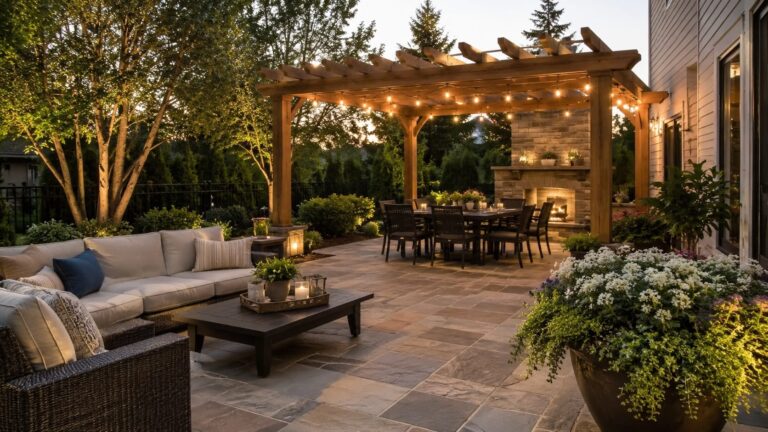
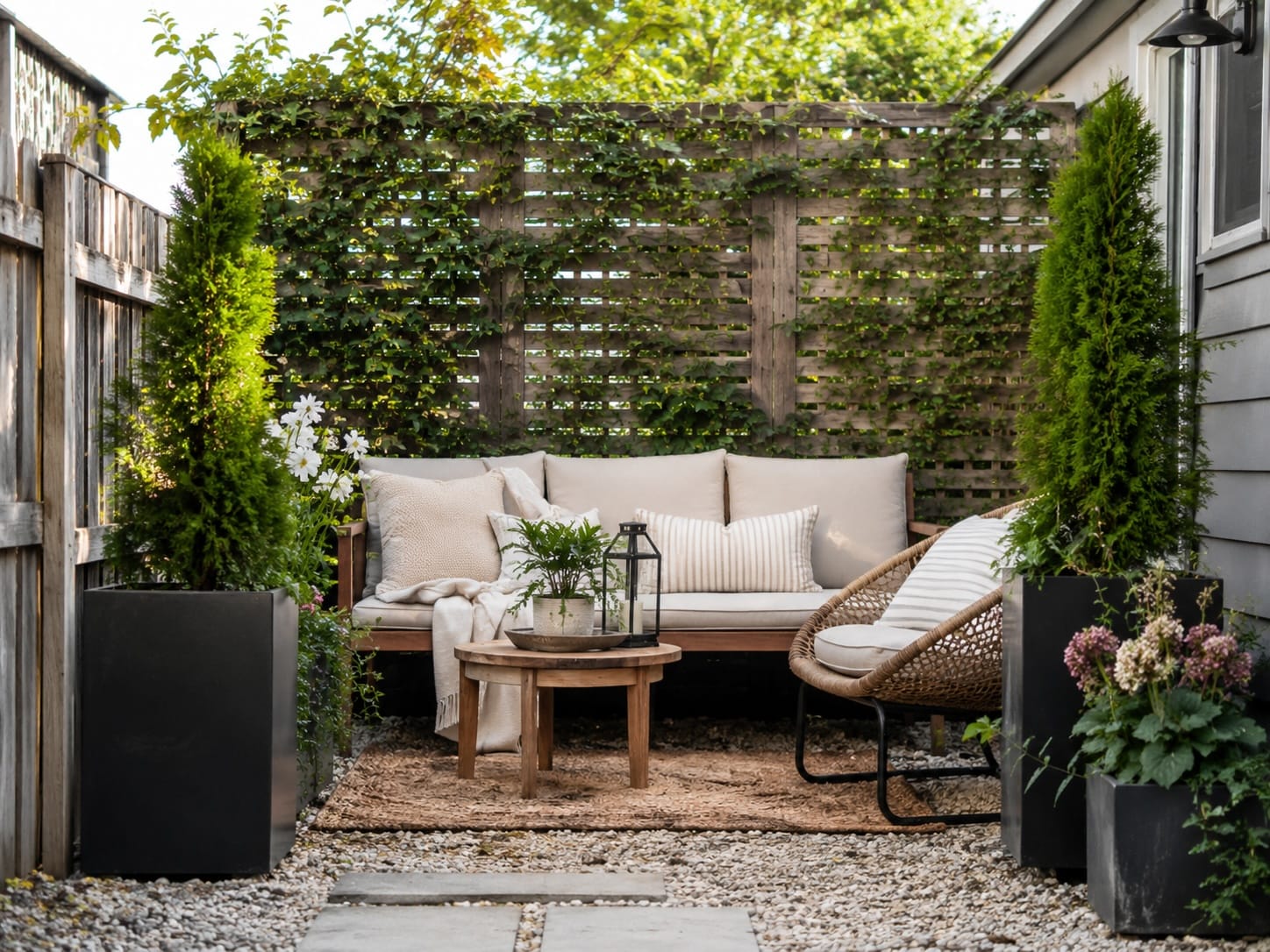
A cozy outdoor seating area does not have to mean a full backyard renovation. You do not need a giant sectional, a built-in fireplace, a custom pergola, and a cart full of trendy accessories to make your patio or backyard feel inviting.
Most of the time, comfort comes from simpler choices: the right place to sit, a little shade, soft lighting, a few plants, and enough room to move around without bumping into everything. Sounds obvious, right? Yet this is where many outdoor spaces go wrong. They get filled before they get planned.
If your backyard, patio, deck, or side yard feels underused, this guide will help you create a cozy outdoor seating area without overcomplicating the space. The goal is simple: make it comfortable, practical, and easy to enjoy. 🌿
Quick Summary
A cozy outdoor seating area starts with a clear purpose, comfortable furniture, good flow, shade, lighting, and a few natural elements. Keep the layout simple and choose pieces that fit your space instead of trying to recreate a showroom setup.
- Point one: choose one main use for the space, such as relaxing, dining, reading, or casual entertaining.
- Point two: scale matters more than size; small seating areas can feel very inviting when furniture fits properly.
- Point three: lighting, plants, cushions, and privacy details make the space feel finished without major construction.
🪑 Start With One Clear Purpose
Before buying furniture or rearranging your patio, decide what the seating area is mainly for. This one step prevents a lot of clutter.
Do you want a quiet spot for morning coffee? A place to read? A conversation area for two or four people? A relaxed corner near the grill? A family-friendly space where people can sit while kids or pets play nearby?
Trying to make one small area do everything can make it feel cramped. A cozy space usually works best when it has a clear identity. For example, a two-chair coffee corner does not need a large dining table. A conversation zone does not need to be centered around a TV. A reading nook may only need one comfortable chair, shade, and a small table.
Here is a helpful way to think about it: design for how you actually live outside, not how outdoor spaces look in catalogs.
📐 Pick the Right Location First
The coziest seating area is not always in the biggest empty spot. It is often in the place that feels most comfortable at the time of day you plan to use it.
If you enjoy coffee in the morning, look for a sunny or softly shaded area near the kitchen door. If you want evening conversations, choose a place with privacy and space for lighting. If your backyard gets intense afternoon sun, a shaded side of the house may be much more practical than the middle of the patio.
Pay attention to:
- Sun exposure: full sun may be nice in spring but uncomfortable in summer.
- Wind: open corners can feel chilly or blow cushions around.
- Privacy: avoid placing chairs directly in view of neighbors if that makes you less likely to use the space.
- Access: seating near the house is easier for drinks, snacks, and everyday use.
- Views: face the best part of the yard, not the trash bins or blank wall.
A comfortable location can make even simple furniture feel special.
🌿 Keep the Layout Simple and Easy to Move Through
A cozy seating area should feel inviting, not crowded. One of the biggest mistakes homeowners make is using too much furniture for the available space.
Leave enough room to walk around chairs, pull out seats, open doors, and move naturally between the house and yard. If people have to squeeze sideways to reach a chair, the layout is probably too tight.
For small patios, a pair of chairs and a small table may be perfect. For medium-sized patios, a loveseat with two chairs can create a flexible conversation area. For larger decks, a sectional may work, but only if it does not block traffic or dominate the space.
Use a Conversation Shape
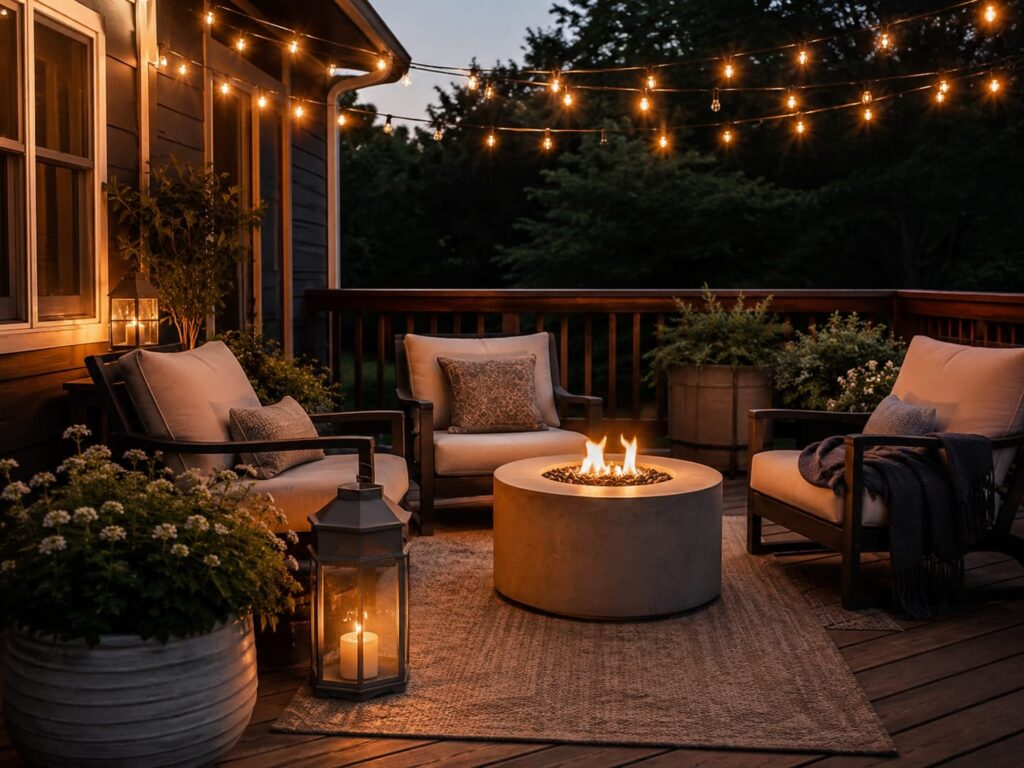
Instead of pushing all the furniture against the wall or fence, try arranging seats so people can talk comfortably. Chairs angled slightly toward each other often feel warmer than chairs lined up in a row.
A round coffee table, fire table, or large planter can help anchor the arrangement. Just make sure it does not take up too much walking space.
Let the Furniture Breathe
Negative space matters outdoors, too. Empty space around furniture helps the area feel calm. It also lets plants, lighting, and materials stand out.
Cozy does not mean packed. It means comfortable, balanced, and easy to use. 😊
🧺 Choose Furniture That Fits Your Real Space
Outdoor furniture looks smaller online than it does on your patio. Always check dimensions before buying, especially for compact spaces.
For small and medium-sized homes, furniture with slim frames, open legs, and lighter visual weight often works best. Wicker, metal, teak, and modern aluminum pieces can all look good, but proportion is key.
| Seating Type | Best For | Why It Works | Watch Out For |
|---|---|---|---|
| Two Lounge Chairs | Small patios, balconies, quiet corners | Simple, flexible, easy to rearrange | May not seat enough people for entertaining |
| Loveseat + Chairs | Medium patios and casual conversation areas | Comfortable without taking over the whole space | Needs enough room for circulation |
| Outdoor Sectional | Larger decks or open patios | Great for families and lounging | Can overwhelm small yards quickly |
| Built-In Bench | Narrow patios, fence lines, deck edges | Saves space and can include storage | Less flexible if your layout changes |
| Bistro Set | Coffee corners and compact decks | Small footprint and easy to style | Not ideal for deep lounging |
Comfort is not just about cushions. Seat height, back support, armrests, and table placement all matter. If possible, test furniture before buying or read reviews carefully for comfort notes.
☀️ Add Shade Without Building a Whole Structure
Shade can completely change how often you use your outdoor seating area. A beautiful patio in full sun may sit empty during hot afternoons. A simple shaded corner, on the other hand, can become the best spot in the yard.
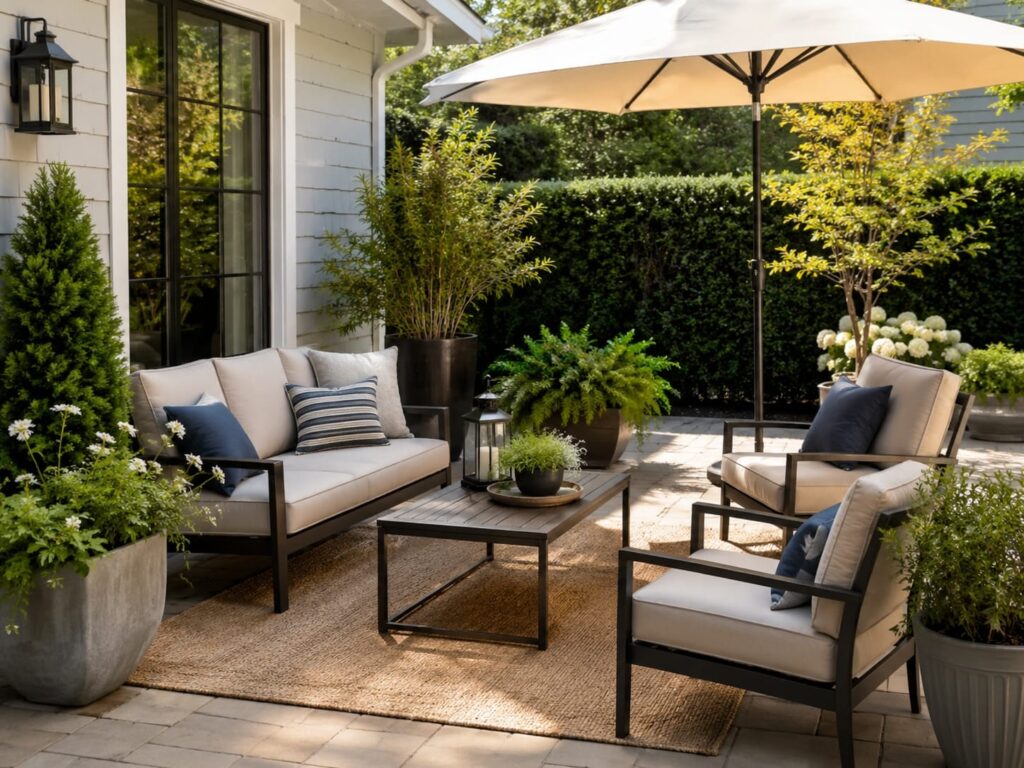
You do not always need a pergola or covered patio. In many cases, a market umbrella, shade sail, outdoor curtains, or strategically placed tree can do the job.
For renters or homeowners who want flexibility, a freestanding umbrella is often the easiest option. For a more designed look, a shade sail can work well over a compact seating area, as long as it is installed securely. A pergola adds structure and style, but it may require more planning, especially if it is attached to the house or built near property lines.
Check local rules or HOA guidelines before adding permanent structures. Even simple projects can have restrictions depending on your area.
💡 Use Warm Lighting to Make the Space Feel Cozy
Lighting is one of the fastest ways to make an outdoor seating area feel finished. During the day, furniture and plants do most of the work. At night, lighting sets the mood.
Avoid relying on one harsh floodlight. Bright security lighting is useful, but it does not create a relaxing atmosphere. Instead, layer softer lighting around the seating area.
Good options include:
- String lights: great over patios, pergolas, fences, and small seating zones.
- Lanterns: easy to move and useful for a casual, relaxed look.
- Solar path lights: helpful along walkways and garden edges.
- Low-voltage landscape lights: more polished and reliable for long-term use.
- Battery candles: cozy on side tables without open flame concerns.
Warm white lighting usually feels more inviting than cool white lighting. Think soft glow, not parking lot brightness.
For hardwired lighting or outlets, work with a qualified electrician. Outdoor electrical work needs to be safe, weather-appropriate, and code-compliant.
🪴 Bring in Plants for Softness and Privacy
Plants are what make an outdoor seating area feel connected to the yard instead of dropped onto a slab of concrete.
You do not need a complicated garden plan. A few well-chosen containers can soften the edges of a patio, add color, create privacy, and make the space feel more relaxed.
Use Containers to Frame the Area
Large planters near the corners of a seating area can create a subtle “outdoor room” feeling. Choose containers that are large enough to make an impact, but not so large that they block walkways.
For a low-maintenance setup, use a mix of evergreen shrubs, ornamental grasses, herbs, or drought-tolerant plants suited to your climate. In hot areas, choose plants that can handle sun and dry soil. In shaded yards, use shade-friendly plants like hostas, ferns, coral bells, or other regionally appropriate options.
Add Vertical Greenery
If floor space is limited, go vertical. A trellis, wall planter, hanging basket, or narrow plant stand can add greenery without crowding the patio.
Vertical planting is especially useful near fences, blank walls, or small decks where you want more texture but not more furniture.
🧱 Define the Space With a Rug, Pavers, or Gravel
A seating area feels more intentional when it has a defined “floor.” This does not mean you need expensive hardscaping. Even a simple outdoor rug can visually pull the furniture together.
Outdoor rugs work well on patios and decks, especially under a coffee table or seating group. Choose a rug made for outdoor use so it can handle moisture and sun exposure. In rainy climates, make sure it can dry properly to avoid mildew.
If the seating area is in the yard, consider gravel, stepping stones, pavers, or mulch as a base. A defined surface helps prevent chairs from sinking into grass and reduces muddy spots.
For permanent patios or paver work, proper base preparation and drainage are important. Poor drainage can lead to uneven surfaces, puddles, or long-term maintenance headaches.
🔥 Add a Focal Point, But Keep It Practical
A cozy seating area often benefits from one focal point. Not three. Not five. One.
This could be a fire pit, a small fountain, a beautiful planter, an outdoor coffee table, a garden wall, or even a view into the yard. The focal point gives the space a reason to gather.
Fire features are popular because they add warmth, light, and atmosphere. But they also need thoughtful placement. Keep safe clearance from fences, walls, furniture, plants, roof overhangs, and other structures. Local fire rules may apply, especially in dry or wildfire-prone regions.
If a fire pit feels like too much, use a simple coffee table, lantern grouping, or large planter instead. Cozy does not have to mean complicated.
🧡 Add Comfort With Textiles and Small Details
Once the layout, furniture, and lighting are in place, small details make the space feel personal.
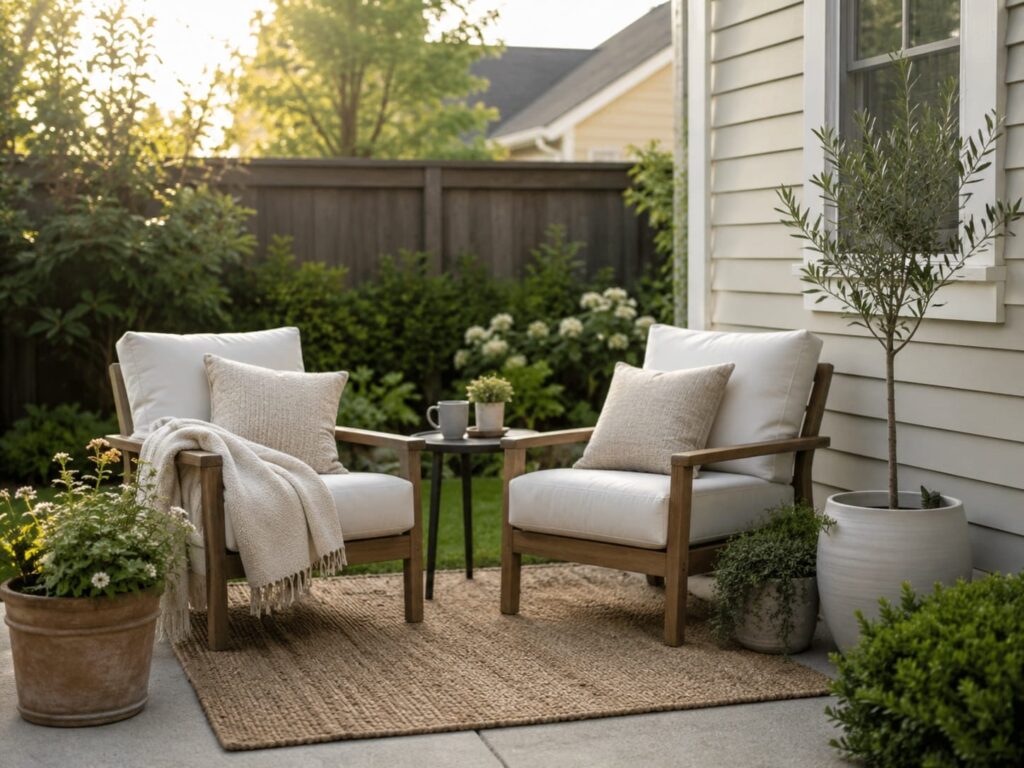
Outdoor pillows, cushions, throws, side tables, lanterns, and planters can all help. Just keep them edited. Too many accessories can make a patio feel busy and harder to maintain.
Choose outdoor fabrics designed to resist moisture and fading. Store cushions when not in use if your area gets heavy rain, pollen, or strong sun. A small deck box or storage bench can make this much easier.
Color also matters. Neutral furniture with a few warm accents often feels timeless. Earth tones, soft greens, warm whites, rust, terracotta, navy, and charcoal can all work beautifully outdoors.
🧹 Make Maintenance Easy From the Start
A seating area that is hard to clean will not stay cozy for long.
Think about leaves, pollen, dust, rain, pets, kids, and seasonal storage. Choose materials that fit your lifestyle. If you do not want to move cushions every evening, look for quick-dry foam and weather-resistant fabrics. If you hate sweeping gravel, choose larger pavers. If you do not enjoy watering containers daily, install drip irrigation or choose tougher plants.
Simple maintenance habits help too:
- Keep a small outdoor storage box nearby.
- Use furniture covers during harsh weather.
- Choose washable cushion covers when possible.
- Group planters by watering needs.
- Leave enough space to sweep or hose down the area.
The easier the space is to maintain, the more likely you are to use it.
🌟 A Cozy Outdoor Space Should Feel Effortless
The best outdoor seating areas are not always the biggest or most expensive. They are the ones that feel natural to use.
Start with a good location. Choose furniture that fits. Add shade where needed. Use warm lighting. Bring in plants. Define the floor. Include one focal point. Then stop before the space becomes overdesigned.
A cozy backyard corner can be as simple as two comfortable chairs, a small table, a planter, and string lights along the fence. That might be all you need for coffee in the morning, a glass of iced tea after work, or a quiet evening outside. 🌙
Outdoor living should make home feel better, not give you another complicated project to manage. Keep it simple, comfortable, and realistic. That is usually where the magic happens.
❓ FAQ: Creating a Cozy Outdoor Seating Area
What makes an outdoor seating area feel cozy?
A cozy outdoor seating area usually includes comfortable furniture, a clear layout, soft lighting, plants, shade, and a sense of privacy. It should feel easy to use and not overcrowded.
How do I create outdoor seating in a small space?
Use compact furniture such as two lounge chairs, a bistro set, or a built-in bench. Add a small side table, vertical plants, and warm lighting to make the area feel complete without taking up too much room.
Do I need an outdoor rug?
No, but an outdoor rug can help define the seating area and make it feel more like an outdoor room. Choose a rug made for exterior use and make sure it can dry properly after rain.
What is the best lighting for a cozy patio?
Warm, layered lighting works best. String lights, lanterns, low-voltage landscape lights, and battery candles can create a soft glow without making the space feel too bright.
How can I make my outdoor seating area more private?
Use planters, trellises, outdoor curtains, lattice panels, shrubs, or privacy screens. In many cases, partial screening around the seating area is enough to make the space feel more comfortable.