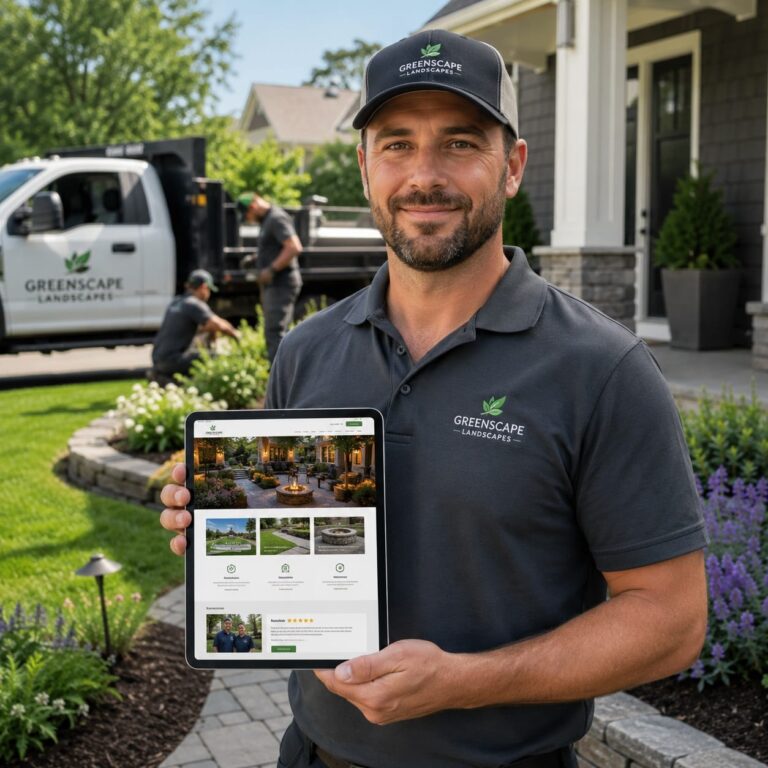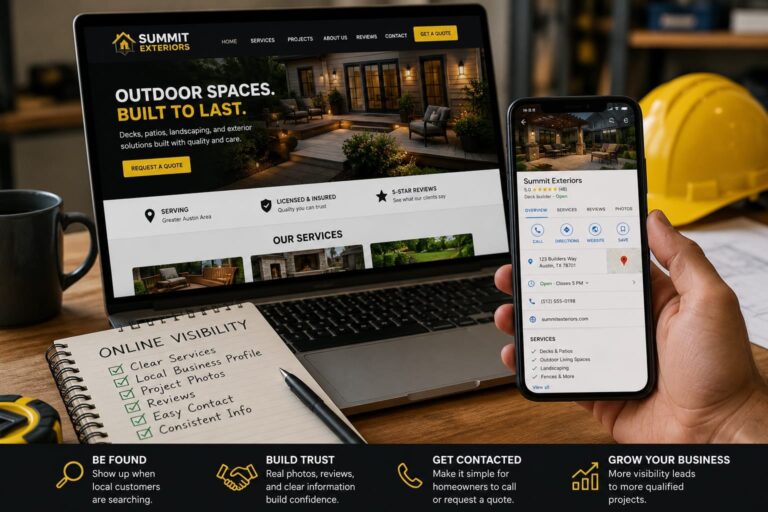

Your work may be solid, but if a homeowner cannot tell what you do, where you work, or how to reach you in ten seconds, they move on. Quick understanding beats fancy marketing when people are comparing contractors on a phone between dinner and the next errand.
Most local homeowners are not shopping for the cheapest bid first. They are looking for signs that you are real, nearby, and easy to trust. A thin website, old photos, missing service areas, or a voicemail that never gets returned all make the decision harder. That hesitation costs jobs.
People do not call the best contractor on paper. They call the one they understand fastest.
For a homeowner, the choice usually comes down to one thing: can they picture you showing up, doing the job, and answering the phone if something changes? Clarity builds confidence, and confidence gets the call.
What homeowners notice first
A homeowner usually does not study every detail. They skim your name, your service area, your photos, and your phone number. If those pieces line up fast, you feel local and dependable. If they do not, they keep scrolling.
Clarity beats polish because people are busy and they want less risk. A clean sentence about what you do, the towns you serve, and the kind of jobs you handle can matter more than a fancy design. That is especially true for landscaping, repairs, and other work people need in a hurry.
They also look for proof that you handle real jobs, not just stock photos and broad promises. A few current job photos, a short list of services, and a working contact form tell a homeowner you are active. Old websites send the opposite signal.
Homeowners usually are not comparing every contractor line by line. They are asking one quick question, “Do I understand this company well enough to trust them with my yard or house?”
That is why simple details pull weight. If you serve north of town, say it. If you handle weekly mowing, spring cleanup, and drainage fixes, say that plainly. If you want to see how that plays out online, a a clear website for a landscaping business gives visitors fewer reasons to hesitate.
Homeowners also notice friction. Slow pages, broken links, buried phone numbers, and vague service descriptions all make the first call less likely. A contractor who is easy to understand usually feels easier to hire. That is the real advantage.
Key takeaways
- Put your service area, main jobs, and phone number where homeowners see them fast.
- Use current job photos that show real work, real yards, and real results.
- Cut anything that makes people hunt for answers, because confusion kills calls.

Clear communication builds homeowner trust
Homeowners do not have time to decode your business. They want to know what you do, what it costs to get started, and when you can show up. If your message is plain, they relax. That calm feeling matters.
Simple language works because it removes guesswork. Say “weekly mowing and edging,” not a vague promise to “enhance curb appeal.” Say “we return calls by the next business day,” not “fast response times.” People trust what they can picture.
Fast answers matter just as much. If a homeowner has to wait two days to learn whether you handle a 12 by 14 foot patio, a drainage fix, or a spring cleanup, they usually call someone else. The contractor who answers the basic questions first often gets the first shot at the job.
A homeowner is not looking for a perfect sales pitch. They are looking for a contractor who sounds like they know the work and respect their time.
Direct expectations also cut down on no-shows and bad fits. If you serve a certain town, say it. If you only take jobs over a certain size, say that too. If permits, HOA rules, or weather delays can affect the schedule, spell that out before the estimate. Clear boundaries feel professional.
This is where a simple site or profile helps. A short service list, a real phone number, and a few lines about how you work can do more than a long page full of filler. If you want a stronger example of being easier to find online, the same principle applies, keep the path to contact obvious.
Homeowners are not trying to be difficult. They are trying to avoid surprises. When you answer plainly, set expectations early, and make the next step obvious, you feel reliable before you ever visit the property.
Proof beats polished promises
Homeowners trust what they can verify fast. A clean homepage helps, but proof closes the gap. That means real job photos, recent reviews, and project details that sound like actual work, not ad copy.
Photos matter because they show scale and finish. A before-and-after of a muddy side yard, a 12 by 14 foot patio, or a clean mulch install tells a homeowner more than a paragraph ever will. If the pictures show different seasons, different neighborhoods, and different types of jobs, that helps too. It feels real because it is real.
Reviews do a different job. They answer the quiet question every homeowner has: did this contractor show up, communicate, and leave the place in good shape? If you want a deeper look at what customer reviews really do, the short version is simple, they reduce doubt.
People do not need a perfect brand story. They need signs that you have done this kind of work before, in yards like theirs, with neighbors like them.
Local familiarity matters just as much. If you mention the towns you serve, the soil issues you see, or the HOA rules that slow down certain projects, you sound like someone who knows the area. That kind of detail tells a homeowner you are not guessing.
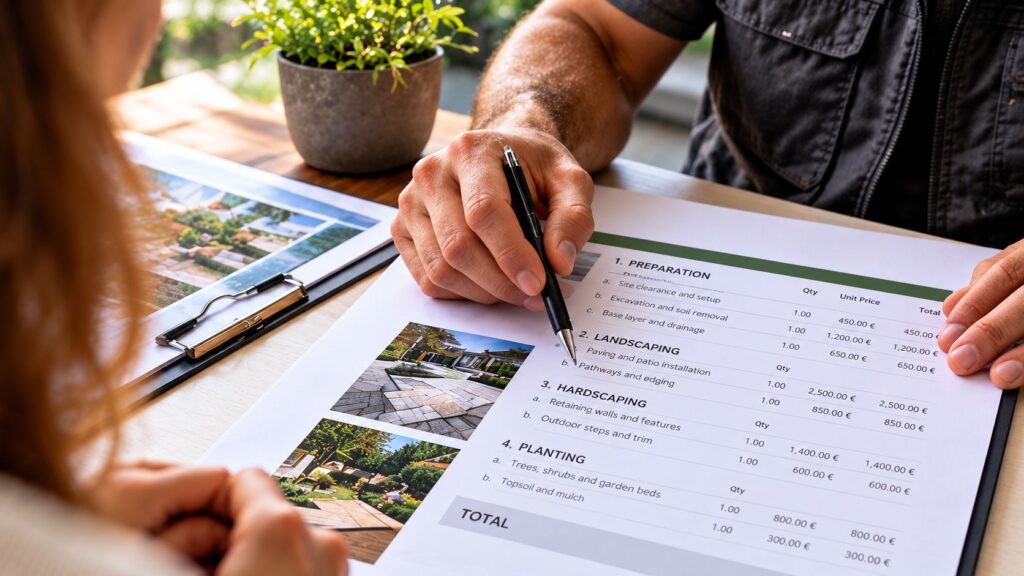
Strong proof usually shows up in a few places:
- Current photos with clear lighting and no stock-image feel.
- Reviews that mention scheduling, cleanup, and follow-through.
- Project notes that explain what was done, not just that the job was “completed.”
- Local references, service areas, or seasonal details that fit the region.
If your online presence is thin, start with the facts you already have. Show the work. Show the towns. Show the kind of jobs you actually want. That is enough to make the next homeowner feel safer picking up the phone.
| Proof point | Typical cost | Best for |
|---|---|---|
| Job photos | $0 to $500 | Showing real work, scope, and finish quality |
| Customer reviews | $0 to $300 | Building trust before the first call |
| Project descriptions | $0 to $200 | Explaining what you do in plain language |
| Local service area details | $0 to $100 | Showing you work in their town and understand local rules |
How unclear websites lose good leads
A thin or outdated website creates doubt fast. Not because homeowners expect fancy design, but because they use the site like a quick job check. If the phone number is hard to find, the service area is vague, or the last project photo looks five years old, they move on.
That matters more in home services than a lot of contractors realize. A homeowner might be comparing three companies in ten minutes between school pickup and dinner. If your site makes them work to figure out what you do, you lose the easy call.
From the truck, this is what usually happens. The homeowner lands on your page, scans for service area, project type, and proof you handle jobs like theirs, then looks for a fast way to reach you. If any of those pieces are missing, they do not wait around.
Confusion costs you speed. A site that says “services” but never says which neighborhoods you cover, or shows photos with no context, sends a simple message: maybe they are busy, maybe they are not a fit, maybe they are not really active anymore. That is enough for the next company to get the call.
Clean wording helps more than sales language. A plain page that says you do mulch installs, irrigation repairs, and small patio work in specific towns is easier to trust than a polished page that hides the basics. If your site is thin, start with the core facts and build from there. A good place to compare that approach is a clear website for a landscaping business.
Homeowners do not know how to judge craftsmanship from a screen. They judge how fast they understand your work, your service area, and what kind of job you actually take. A plain page with real photos usually beats a prettier site that hides the details.
From the field
Most homeowners are not trying to compare craftsmanship online. They cannot really do that from a phone screen. What they compare is how fast they understand what you do, where you work, and what kind of job you are set up to handle. If that answer is clear in a few seconds, you stay in the running. If it is buried, they assume the company is either too busy, too vague, or not the right fit. Plain beats polished when the goal is getting a call.
Simple changes that help you get called
You do not need a full rebuild to look reliable online. You need a few clear signals that tell a homeowner, fast, that you do the work, you serve their area, and you are still active.
Start with the basics on your homepage and contact page. Put your service area in plain English. List the main jobs you want. Add a phone number that is easy to spot on a phone screen. Do not make people hunt for the one thing they came for.
Then clean up the photos. Use recent job photos, even if they are simple. A straight shot of a finished driveway, a trimmed hedge row, or a 12 by 14 foot patio tells more truth than a fancy banner image. Real work beats stock photos every time.
- Replace old photos with 6 to 12 current ones from jobs you want more of.
- Write one sentence under each photo so people know what they are seeing.
- Add your town names, not just a broad region.
- Make sure your phone number and contact form work on mobile.
- Put reviews near the top if you have them, especially ones that mention cleanup, timing, or communication.
If your site is thin, build one strong page instead of five weak ones. A clear page for each main service is easier to manage and easier for homeowners to understand. That is also where a clear website for a landscaping business starts to pay off.
Most homeowners are not comparing design. They are asking, “Can this company handle my job, in my town, and answer the phone when I call?” If your site answers those three questions quickly, you are ahead of the pack.
Keep the wording plain. Say what you do, where you work, and how to reach you. If you want to go one step further, tighten your online visibility with being easier to find online, but start with the parts a homeowner sees first.

What homeowners ask before hiring
Homeowners usually ask the same few things before they make a call. They want to know if you are reliable, if the price makes sense, and if you will cause problems once the job starts. Fast, plain answers do more than polished sales talk.
Most people are not buying the cheapest bid. They are trying to avoid a headache, a surprise change order, or a contractor who disappears after the deposit.
What are red flags when hiring a contractor?
Red flags include no written estimate, no local address or service area, weak or missing photos of real work, and pressure to sign right away. A contractor who will not explain materials, timing, or cleanup in plain English is another bad sign. If the details stay fuzzy, the job usually does too.
What is the 30% rule in remodeling?
The 30% rule usually means a remodel can run about 30% over the original budget once real-world changes show up. That can happen with hidden damage, permit issues, or material upgrades. It is not a guarantee, just a reminder to leave room in your budget so one surprise does not stall the whole project.
What not to tell your contractor?
Do not tell a contractor to skip permits, hide a problem, or cut a corner that could create code issues. Also avoid saying the job is fine if you know it is not, because that can lead to a weak estimate. Be honest about your budget, timeline, and concerns. Clear facts get better bids.
Is $50 an hour reasonable for a contractor?
$50 an hour can be reasonable for some smaller jobs, but it depends on the trade, the region, insurance, overhead, and whether materials are included. A handyman in one market may charge that much, while a licensed specialist may charge far more. What matters is the total scope, not just the hourly number.
How do I know a contractor is a good fit?
A good fit is someone who answers quickly, explains the work without jargon, and shows recent jobs like yours. You should feel clear on what is included, what is extra, and when the work starts. If you still have to guess after the first conversation, keep looking.